Story code: ST-000632
Part 1: The Air-Gapped Room
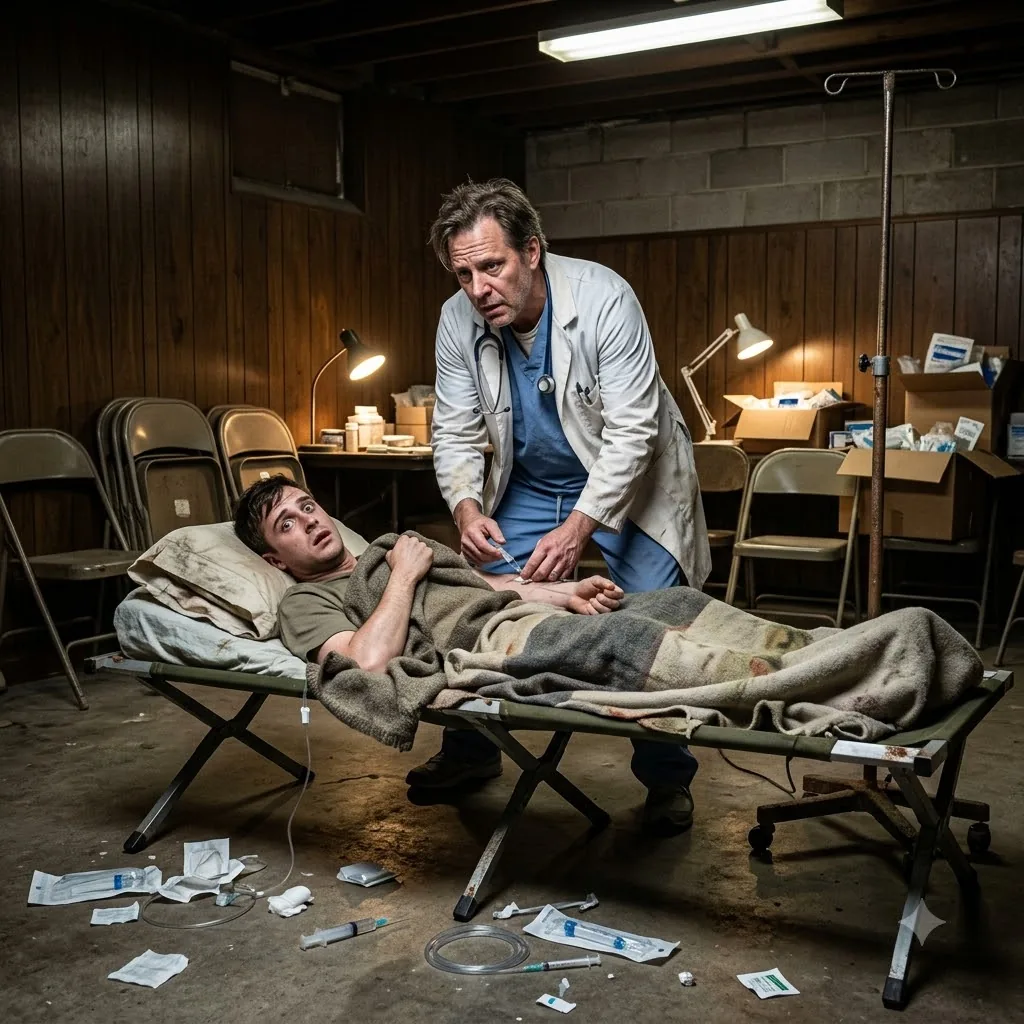
The reek of garlic and industrial sulfur filled the damp air of the church basement as Mateo convulsed against the examination table. Aris pinned the man’s shoulders to the vinyl padding, clamping a gloved hand over Mateo’s mouth to muffle his panicked groans. Silence was the only currency that mattered down here. Mateo’s muscles locked in violent tremors, a textbook reaction to the neurotoxins saturating his clothes. The agricultural runoff had soaked right through his denim in the fields, creating a transdermal nightmare.
Aris reached blindly for the pre-drawn syringe of atropine on the metal tray, keeping his body weight pressed against his thrashing patient. The clinic was nothing more than a retrofitted storage room beneath the sanctuary, walled in by three feet of unyielding concrete. There was no cell service, no landline, no emergency panic button. That was the entire point. Aris slid the needle into Mateo’s rigid forearm, depressing the plunger with a steady thumb. He waited for the anticholinergic to take effect, counting the erratic thumps of the man’s pulse beneath his fingertips. Mateo’s eyes rolled back, his jaw tight.
If this were a licensed emergency room, Aris would have a team of trauma nurses, a crash cart, and an endless supply of oxygen. Here, he had a stolen IV stand, a single tank of O2, and a supply closet stocked with expired gauze and cash-purchased pharmaceuticals. Mateo had arrived twenty minutes ago, dragged in through the alley door by a terrified cousin. The cousin had dumped him on the cracked linoleum and fled into the night, whispering that an ambulance meant deportation. The fear of immigration enforcement was a stronger deterrent than death for the men and women who worked the valley’s pesticide-drenched orchards.
Aris had surrendered his prestigious residency for exactly this reason. He had built this subterranean haven for the untouchables, the invisible people who kept the local economy running but were never allowed to exist in it. The basement was a fortress. Aris had spent weeks scraping lead paint and installing heavy soundproofing foam along the ceiling tiles to ensure not a single cough or cry reached the public areas upstairs.
More importantly, he had severed the room from the digital world. The patient intake system consisted of a single, refurbished tablet. Aris had physically opened the casing and removed the Wi-Fi and Bluetooth antennas from the device’s motherboard. It was a sterile, air-gapped slab of glass and aluminum, functioning only as a local hard drive for his encrypted medical logs. It could not send data, and it certainly could not receive it.
The atropine finally began to override the organophosphates. Mateo’s violent shivering downshifted into exhausted, wet gasps. Aris maintained his grip, leaning close to the man’s ear, instructing him in a low, even tone to breathe and let the medicine work. Slowly, the rigid tension in Mateo’s neck melted away. The immediate crisis was passing. Aris exhaled a long breath, wiping a line of sweat from his own forehead with the back of his forearm. He secured the IV line with a strip of medical tape and stepped back to survey the cramped room.
He grabbed a pair of heavy trauma shears and carefully cut away the rest of Mateo’s soaked shirt. The fabric sloughed off heavily, dripping with the toxic chemical cocktail. Aris shoved the ruined garments into a thick biohazard bag, twisting the neck tight and sealing it with silver duct tape. He carried the heavy plastic to the far corner, isolating the fumes. The air purifier beside the sink hummed, a low mechanical drone that masked the faint rumbles of the subway trains blocks away. Down here, the outside world simply did not exist.
Aris walked over to the small steel basin, peeling off his nitrile gloves and turning on the faucet. The cold water ran over his hands, washing away the lingering adrenaline of the past half hour. He dried his hands on a rough paper towel and walked over to his makeshift metal desk. The intake tablet lay face down on a stack of sterile burn pads. He needed to log the dosage of atropine and note the exact time of administration. Precision was still required, even in a shadow clinic.
He picked up the heavy tablet, feeling the familiar cold aluminum case. He pressed the side button to wake the screen. The lock screen illuminated, casting a pale blue glow across his tired features. He tapped in his six-digit passcode, waiting for the offline database to load. The screen flickered to the familiar black-and-white grid of his local notes application.
Then, the impossible happened.
A bright, cheerful chime echoed off the cinderblock walls. It was a sharp, digital bell, cutting cleanly through the heavy silence of the basement. Aris froze. He stared down at the glass screen in his hands. A white banner had just dropped down from the top edge of the display, indicating an incoming push notification.
The reek of garlic and industrial sulfur filled the damp air of the church basement as Mateo convulsed against the examination table. Aris pinned the man’s shoulders to the vinyl padding, clamping a gloved hand over Mateo’s mouth to muffle his panicked groans. Silence was the only currency that mattered down here. Mateo’s muscles locked in violent tremors, a textbook reaction to the neurotoxins saturating his clothes. The agricultural runoff had soaked right through his denim in the fields, creating a transdermal nightmare.
Aris reached blindly for the pre-drawn syringe of atropine on the metal tray, keeping his body weight pressed against his thrashing patient. The clinic was nothing more than a retrofitted storage room beneath the sanctuary, walled in by three feet of unyielding concrete. There was no cell service, no landline, no emergency panic button. That was the entire point. Aris slid the needle into Mateo’s rigid forearm, depressing the plunger with a steady thumb. He waited for the anticholinergic to take effect, counting the erratic thumps of the man’s pulse beneath his fingertips. Mateo’s eyes rolled back, his jaw tight.
If this were a licensed emergency room, Aris would have a team of trauma nurses, a crash cart, and an endless supply of oxygen. Here, he had a stolen IV stand, a single tank of O2, and a supply closet stocked with expired gauze and cash-purchased pharmaceuticals. Mateo had arrived twenty minutes ago, dragged in through the alley door by a terrified cousin. The cousin had dumped him on the cracked linoleum and fled into the night, whispering that an ambulance meant deportation. The fear of immigration enforcement was a stronger deterrent than death for the men and women who worked the valley’s pesticide-drenched orchards.
Aris had surrendered his prestigious residency for exactly this reason. He had built this subterranean haven for the untouchables, the invisible people who kept the local economy running but were never allowed to exist in it. The basement was a fortress. Aris had spent weeks scraping lead paint and installing heavy soundproofing foam along the ceiling tiles to ensure not a single cough or cry reached the public areas upstairs.
More importantly, he had severed the room from the digital world. The patient intake system consisted of a single, refurbished tablet. Aris had physically opened the casing and removed the Wi-Fi and Bluetooth antennas from the device’s motherboard. It was a sterile, air-gapped slab of glass and aluminum, functioning only as a local hard drive for his encrypted medical logs. It could not send data, and it certainly could not receive it.
The atropine finally began to override the organophosphates. Mateo’s violent shivering downshifted into exhausted, wet gasps. Aris maintained his grip, leaning close to the man’s ear, instructing him in a low, even tone to breathe and let the medicine work. Slowly, the rigid tension in Mateo’s neck melted away. The immediate crisis was passing. Aris exhaled a long breath, wiping a line of sweat from his own forehead with the back of his forearm. He secured the IV line with a strip of medical tape and stepped back to survey the cramped room.
He grabbed a pair of heavy trauma shears and carefully cut away the rest of Mateo’s soaked shirt. The fabric sloughed off heavily, dripping with the toxic chemical cocktail. Aris shoved the ruined garments into a thick biohazard bag, twisting the neck tight and sealing it with silver duct tape. He carried the heavy plastic to the far corner, isolating the fumes. The air purifier beside the sink hummed, a low mechanical drone that masked the faint rumbles of the subway trains blocks away. Down here, the outside world simply did not exist.
Aris walked over to the small steel basin, peeling off his nitrile gloves and turning on the faucet. The cold water ran over his hands, washing away the lingering adrenaline of the past half hour. He dried his hands on a rough paper towel and walked over to his makeshift metal desk. The intake tablet lay face down on a stack of sterile burn pads. He needed to log the dosage of atropine and note the exact time of administration. Precision was still required, even in a shadow clinic.
He picked up the heavy tablet, feeling the familiar cold aluminum case. He pressed the side button to wake the screen. The lock screen illuminated, casting a pale blue glow across his tired features. He tapped in his six-digit passcode, waiting for the offline database to load. The screen flickered to the familiar black-and-white grid of his local notes application.
Then, the impossible happened.
A bright, cheerful chime echoed off the cinderblock walls. It was a sharp, digital bell, cutting cleanly through the heavy silence of the basement. Aris froze. He stared down at the glass screen in his hands. A white banner had just dropped down from the top edge of the display, indicating an incoming push notification.