Story code: ST-000449
Part 1: The Silent Deletion
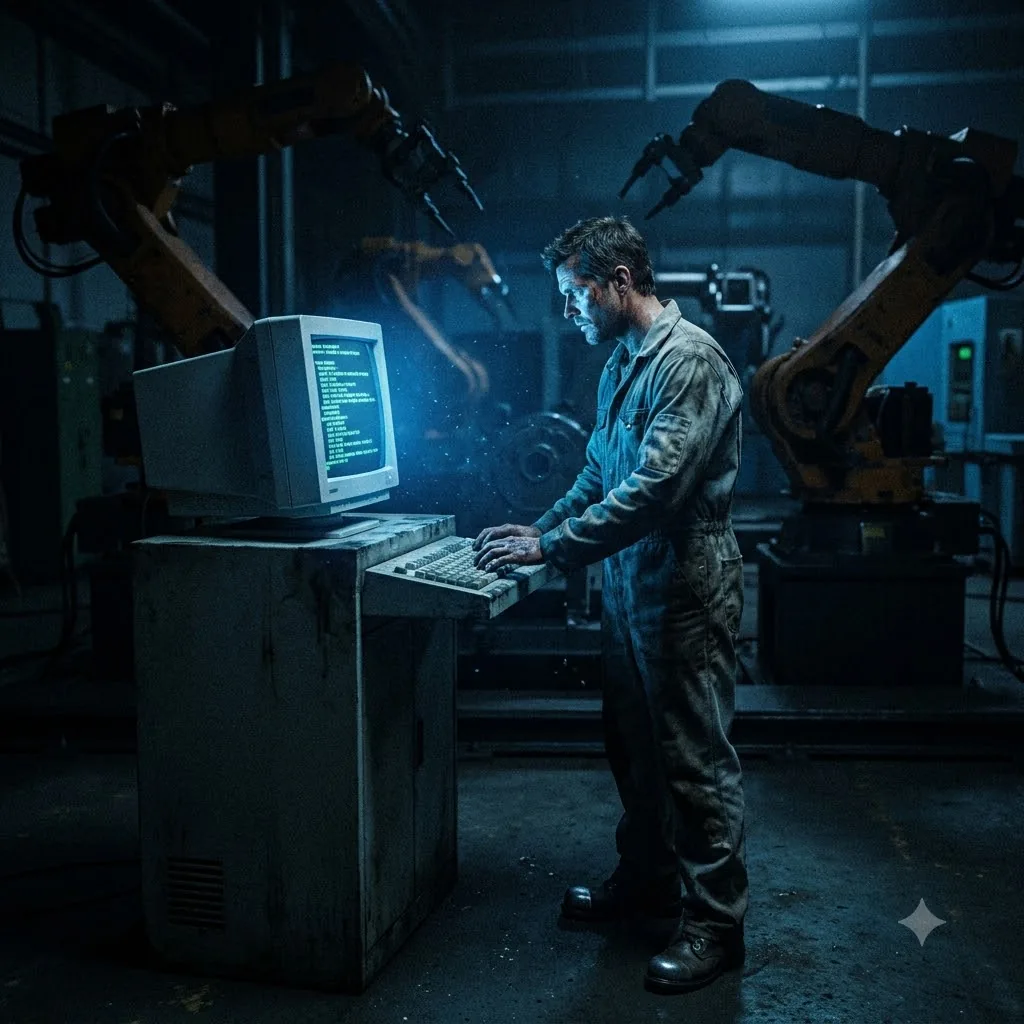
The silence left behind by the paramedics was heavier than the machinery. Elias stared at the smear of red on the concrete beneath the newly installed XT-7 automated robotic arm. Marcus was gone, loaded into the back of an ambulance on a spinal board, and the vast factory floor was unnervingly still. The amber emergency lights rotated on the high ceiling, casting long, sweeping shadows across the inactive production lines. Then, the central diagnostic terminal at Elias’s elbow emitted a sharp double-beep.
The screen flared bright blue. Elias blinked against the glare and turned his attention to the monitor. The safety audit directory had opened itself. A green progress bar ticked across the top of the window. Below it, the real-time operational logs began to vanish. These were the exact second-by-second data points of the arm’s erratic swing, the precise telemetry of the mechanical failure that had pinned Marcus against the loading barricade. Line by line, the timestamped files turned into gray streaks and dissolved.
Someone was actively scrubbing the system.
Elias slammed his palm onto the desk and grabbed the mouse. He dragged the cursor toward the cancel prompt, his fingers slipping on the plastic. The arrow froze three pixels away from the button. He hammered the escape key, then typed the manual override sequence he used every morning. The keyboard produced a series of dull, unresponsive clicks. The deletion bar marched forward, consuming the telemetry data from the last forty-eight hours. The XT-7’s erratic calibration warnings were gone. The safety bypass alerts Elias had formally flagged on his previous shift disappeared into the void.
He reached for the heavy red kill-switch handle bolted to the side of the console. The lever was a hardwire failsafe designed to sever the terminal from the local network and isolate the server in case of a catastrophic software loop. Elias wrapped his hand around the textured grip and yanked it downward with all his weight.
A harsh metallic clack echoed in the quiet bay. The screen went black. Elias let out a tight breath, his chest heaving as he stared at the dark monitor.
A fraction of a second later, the monitor re-illuminated in solid crimson.
A flashing text block appeared dead center. ADMINISTRATIVE LOCKOUT. EXTERNAL ENCRYPTION ENGAGED.
Elias backed away from the desk. The manual kill-switch bypassed the software entirely. Bypassing a physical circuit meant someone had anticipated the shutdown and rerouted the network protocols from a remote access point before the accident even happened.
He looked up at the towering XT-7 arm. Its metallic joints were frozen in the reset position, hydraulic fluid pooling on the floor next to the discarded medical gauze. Without those logs, the machine’s malfunction simply did not exist in the company record. There was only an injured worker and the shift supervisor who was supposed to be managing the floor. The narrative was being rewritten while Elias was literally standing in the physical aftermath. The blame was shifting to him in real time. Every safety report he had filed, every maintenance request he had logged about the XT-7’s sudden, jerky movements, had been stored on that central drive. Without it, the company investigators would see a perfectly functioning machine and an operator who failed to enforce perimeter safety protocols.
Elias dropped to his knees, ignoring the slick patch of hydraulic fluid soaking into the denim of his work pants. If the main server was compromised, there was still a chance the secondary diagnostic tablet cached a local copy of the memory buffer. He remembered the tech installation crew mentioning a redundant localized drive. The tablet was permanently mounted under the workstation frame, hardwired directly into the motherboard to act as a physical black box. He reached under the cold metal lip of the desk, his fingertips searching for the familiar rubberized casing of the device.
His fingers brushed empty air.
He ducked his head under the console, pulling his flashlight from his belt. He clicked the beam on and aimed it at the underside of the desk. The aluminum mounting bracket was bent violently outward. The thick braided cable that connected the tablet to the mainframe hung uselessly toward the floor. A clean, sharp cut severed the wires, exposing the bright copper inside. Someone had physically ripped the backup drive from its casing.
Heavy boots clanged against the metal grating of the gantry walkway above.
Elias clicked off the flashlight and froze. The factory doors at the north end had been sealed by security the moment the emergency medical response was triggered. No one was allowed in or out of the sector until the corporate risk assessment team arrived. Whoever was walking on the catwalk had been inside the facility the entire time, lurking in the shadows, watching the medics load Marcus into the ambulance, waiting for the floor to empty.
The footsteps moved with deliberate, measured speed, descending the steel spiral staircase toward the production bay. The heavy thud of the boots echoed off the corrugated metal walls, vibrating through the concrete floor as the figure reached the ground level. Elias stayed crouched under the desk, his breathing shallow. The harsh red glow of the locked terminal above him cast a bloody hue over the severed diagnostic cable dangling in front of his face. The footsteps crossed the main aisle, moving past the barricade, and stopped directly on the other side of the XT-7 robotic arm.
The silence left behind by the paramedics was heavier than the machinery. Elias stared at the smear of red on the concrete beneath the newly installed XT-7 automated robotic arm. Marcus was gone, loaded into the back of an ambulance on a spinal board, and the vast factory floor was unnervingly still. The amber emergency lights rotated on the high ceiling, casting long, sweeping shadows across the inactive production lines. Then, the central diagnostic terminal at Elias’s elbow emitted a sharp double-beep.
The screen flared bright blue. Elias blinked against the glare and turned his attention to the monitor. The safety audit directory had opened itself. A green progress bar ticked across the top of the window. Below it, the real-time operational logs began to vanish. These were the exact second-by-second data points of the arm’s erratic swing, the precise telemetry of the mechanical failure that had pinned Marcus against the loading barricade. Line by line, the timestamped files turned into gray streaks and dissolved.
Someone was actively scrubbing the system.
Elias slammed his palm onto the desk and grabbed the mouse. He dragged the cursor toward the cancel prompt, his fingers slipping on the plastic. The arrow froze three pixels away from the button. He hammered the escape key, then typed the manual override sequence he used every morning. The keyboard produced a series of dull, unresponsive clicks. The deletion bar marched forward, consuming the telemetry data from the last forty-eight hours. The XT-7’s erratic calibration warnings were gone. The safety bypass alerts Elias had formally flagged on his previous shift disappeared into the void.
He reached for the heavy red kill-switch handle bolted to the side of the console. The lever was a hardwire failsafe designed to sever the terminal from the local network and isolate the server in case of a catastrophic software loop. Elias wrapped his hand around the textured grip and yanked it downward with all his weight.
A harsh metallic clack echoed in the quiet bay. The screen went black. Elias let out a tight breath, his chest heaving as he stared at the dark monitor.
A fraction of a second later, the monitor re-illuminated in solid crimson.
A flashing text block appeared dead center. ADMINISTRATIVE LOCKOUT. EXTERNAL ENCRYPTION ENGAGED.
Elias backed away from the desk. The manual kill-switch bypassed the software entirely. Bypassing a physical circuit meant someone had anticipated the shutdown and rerouted the network protocols from a remote access point before the accident even happened.
He looked up at the towering XT-7 arm. Its metallic joints were frozen in the reset position, hydraulic fluid pooling on the floor next to the discarded medical gauze. Without those logs, the machine’s malfunction simply did not exist in the company record. There was only an injured worker and the shift supervisor who was supposed to be managing the floor. The narrative was being rewritten while Elias was literally standing in the physical aftermath. The blame was shifting to him in real time. Every safety report he had filed, every maintenance request he had logged about the XT-7’s sudden, jerky movements, had been stored on that central drive. Without it, the company investigators would see a perfectly functioning machine and an operator who failed to enforce perimeter safety protocols.
Elias dropped to his knees, ignoring the slick patch of hydraulic fluid soaking into the denim of his work pants. If the main server was compromised, there was still a chance the secondary diagnostic tablet cached a local copy of the memory buffer. He remembered the tech installation crew mentioning a redundant localized drive. The tablet was permanently mounted under the workstation frame, hardwired directly into the motherboard to act as a physical black box. He reached under the cold metal lip of the desk, his fingertips searching for the familiar rubberized casing of the device.
His fingers brushed empty air.
He ducked his head under the console, pulling his flashlight from his belt. He clicked the beam on and aimed it at the underside of the desk. The aluminum mounting bracket was bent violently outward. The thick braided cable that connected the tablet to the mainframe hung uselessly toward the floor. A clean, sharp cut severed the wires, exposing the bright copper inside. Someone had physically ripped the backup drive from its casing.
Heavy boots clanged against the metal grating of the gantry walkway above.
Elias clicked off the flashlight and froze. The factory doors at the north end had been sealed by security the moment the emergency medical response was triggered. No one was allowed in or out of the sector until the corporate risk assessment team arrived. Whoever was walking on the catwalk had been inside the facility the entire time, lurking in the shadows, watching the medics load Marcus into the ambulance, waiting for the floor to empty.
The footsteps moved with deliberate, measured speed, descending the steel spiral staircase toward the production bay. The heavy thud of the boots echoed off the corrugated metal walls, vibrating through the concrete floor as the figure reached the ground level. Elias stayed crouched under the desk, his breathing shallow. The harsh red glow of the locked terminal above him cast a bloody hue over the severed diagnostic cable dangling in front of his face. The footsteps crossed the main aisle, moving past the barricade, and stopped directly on the other side of the XT-7 robotic arm.