Story code: ST-001057
Part 4: The Liquidation
The silence in the DOJ mediation room had lasted exactly forty-two seconds. Marcus had counted the beats, waiting for a crack in the system, a sudden realization of the profound absurdity sitting on the mahogany table.
Instead, Assistant United States Attorney Kessler had simply cleared her throat, slid a heavily redacted plea agreement across the wood, and told him the twenty-year minimum could be reduced to a felony probation and a crippling fine if he stopped making a scene.
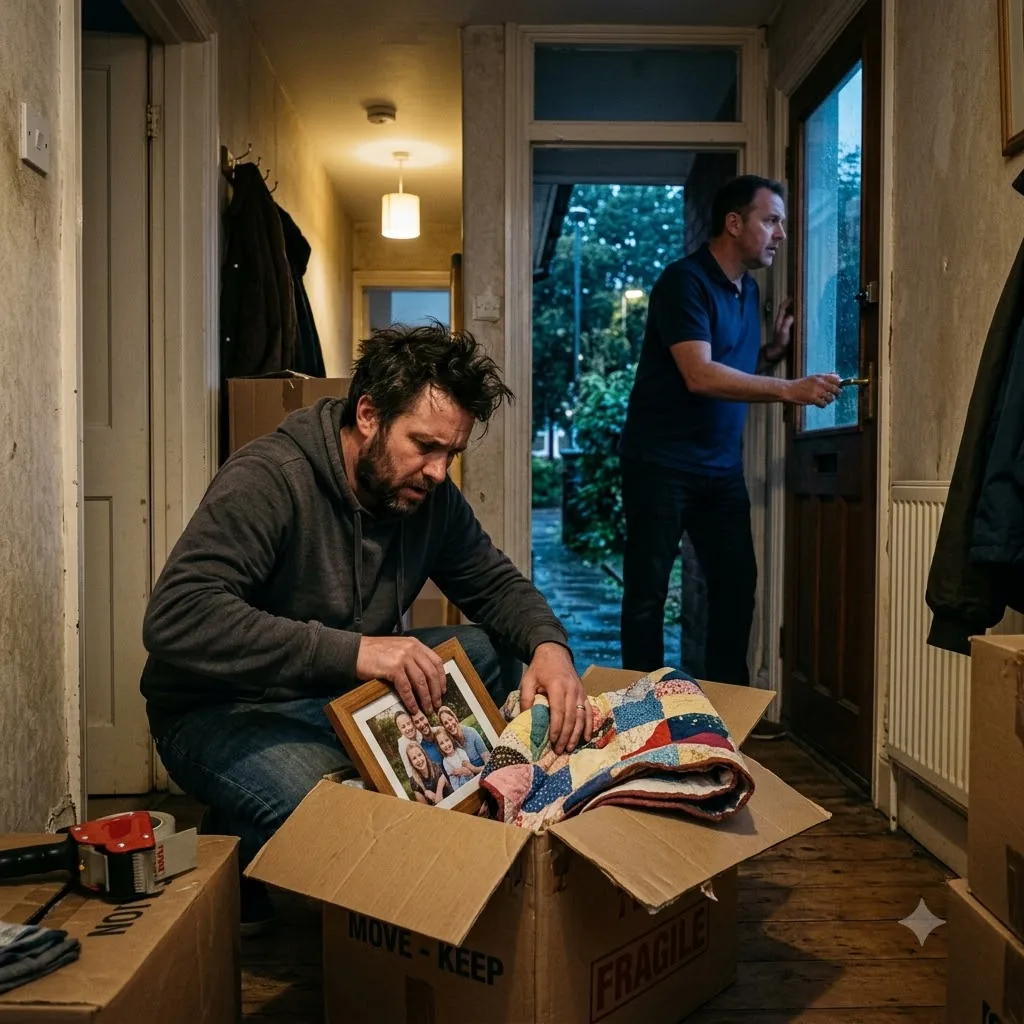
Now, four months later, Marcus sat on the bare floorboards of his living room. The same oak planks he had spent three weeks sanding by hand, breathing in the dust of a century, bringing the wood back to life. A single cardboard moving box sat beside him.
His laptop rested on his crossed knees. The screen cast a harsh, blue glow in the dim light of the empty house. He scrolled down the financial news site, his eyes burning as he read the headline for the third time.
*Heritage National Executive Steps Down Amid Restructuring.*
The article detailed Vice President Vance’s graceful exit from the bank. There was no mention of the DOJ mediation. No mention of the hardcoded racial bias in the Yield Optimizer algorithm. The text simply praised Vance’s long tenure and noted his desire to spend more time with his family. Buried in the fifth paragraph was the detail that made Marcus’s chest tight enough to crack: Vance was departing with a twenty-two-million-dollar severance package and an explicitly ironclad immunity clause against any future civil or criminal litigation. The twelve-million-dollar DOJ fine had been quietly paid out of the bank’s operational budget.
Vance had walked away a very rich man.
Marcus closed the laptop. The quiet of the house pressed in on him. He had avoided federal prison, but the victory was entirely hollow. His court-appointed lawyer, Aris, had proved so incompetent that Marcus had been forced to retain a private defense firm just to navigate the plea deal and keep himself out of a cell. The retainer alone had drained his savings. The subsequent billing hours, the forensic accountants required to unspool Dave’s involvement, and the massive federal fines had decimated everything else.
He was bankrupt. The equity he had fought so desperately to protect, the value he had risked a federal indictment to realize, was gone.
He pushed himself up from the floor, his knees popping in the cold room. He walked into the kitchen and ran his hand over the quartzite countertops. The stone was cool under his palm. He remembered the weekend he had installed the farmhouse sink, the pride he felt stepping back to admire the finished remodel. He had built a sanctuary for his daughters.
Tomorrow, it belonged to Apex Residential Holdings LLC.
When the legal bills had finally overwhelmed him, Marcus had tried to list the house on the open market. But a federal fraud conviction attached to the property’s title history, combined with the sudden, algorithmic devaluation of the entire zip code that Heritage Bank had initiated, scared away traditional buyers. Desperate to avoid a foreclosure that would destroy his family’s credit for a generation, Marcus had accepted an all-cash offer from a corporate holding company.
The offer was forty percent below the home’s actual value. A devastating loss. He had essentially handed the keys to a faceless corporation for pennies on the dollar, liquidating the only generational wealth he had ever managed to build.
Footsteps echoed on the front porch. A heavy knock rattled the brass fixtures.
Marcus walked slowly down the hallway. He didn’t check the peephole. He turned the deadbolt and pulled the door open.
A young man in a branded polo shirt stood on the welcome mat, holding a clipboard and a locked metal keybox. He barely looked at Marcus, his eyes already drifting past his shoulder to assess the empty interior.
“Marcus Hayes?” the young man asked, checking the address on his phone.
“Yes.”
“I’m with Apex Residential. Here to do the final walkthrough and collect the keys.” The representative clicked his pen. “House needs to be completely empty. No debris left in the garage or closets.”
“It’s empty,” Marcus said, his voice flat.
The representative stepped inside, wiping absolutely nothing off his shoes. The careless action mirrored the appraiser from four months ago, a ghost echoing through the hollowed-out space. The young man walked into the living room, nodding approvingly at the original crown molding and the custom built-in shelves Marcus had commissioned from a local artisan.
“Nice bones,” the representative murmured. “The company will probably just paint it gray, throw down some vinyl flooring, and list it as a premium rental. Corporate portfolio is gobbling up this whole block.”
Marcus felt a sickening lurch in his stomach. The algorithm hadn’t just denied him a fair refinance. It had artificially depressed the neighborhood’s value long enough for massive holding companies to swoop in, buy the distressed properties at a massive discount, and convert the community into permanent renters.
The theft was complete. It was perfectly legal, perfectly papered over, and brutally efficient.
“The keys?” the representative asked, holding out his hand.
Marcus reached into his coat pocket. His fingers brushed against a crumpled piece of paper-the grocery list Dave had written, featuring the cartoon of the Black woman with an afro. He had kept it in his pocket all these months, a bizarre talisman of the day everything fell apart.
He pulled out the heavy brass keys. They felt cold in his palm. He dropped them into the representative’s waiting hand. They hit the clipboard with a sharp, final clatter.
Marcus turned and walked out the front door, stepping down the gravel path toward his rusted sedan parked on the curb. He didn’t look back at the rowhouse. The violent erasure he had staged for the appraiser was no longer a temporary act. His home, his history, and his family’s foothold in the world had been completely scrubbed clean.