Story code: ST-000267
Part 1: The Flashing Timer
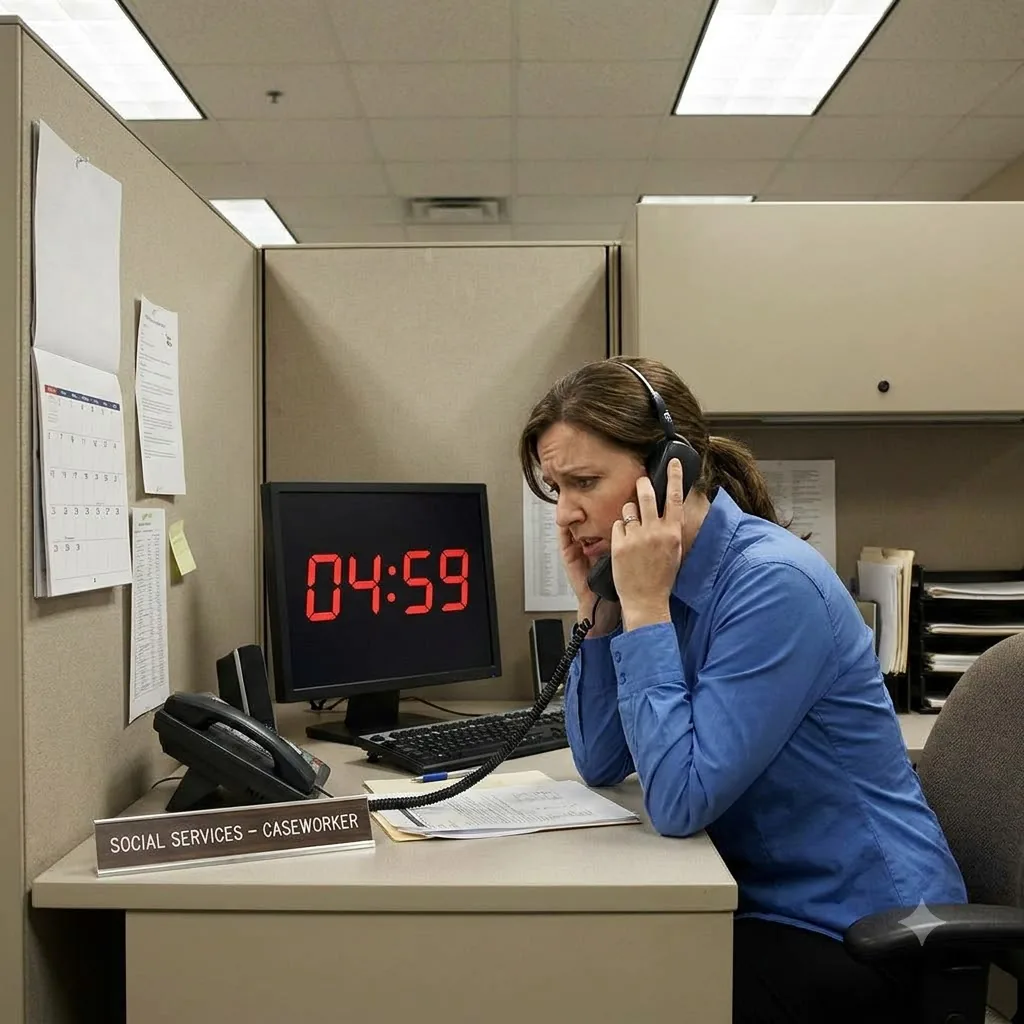
The digital timer in the upper right corner of Brenda’s dual-monitor setup flashed a harsh, pulsing red as it hit zero and reset. *05:00.* Her daily quota at the Veterans Affairs call center demanded strict adherence to the five-minute resolution window. Four minutes and fifty-nine seconds to assess the veteran, de-escalate the crisis, and route the ticket. Going over the limit meant a mandatory performance review, a threat that hung over the fluorescent-lit bullpen like a dark cloud. Brenda ignored the low murmur of dozens of other caseworkers around her and tapped the flashing icon on her headset to accept the next transfer in the queue. She braced herself against the worn ergonomic mesh of her office chair. Heavy, ragged breathing flooded her earpiece before she even spoke. The sound scraped against the microphone like sandpaper over raw wood.
“VA Outreach and Support, my name is Brenda,” she recited, keeping her tone flat and measured to avoid triggering the automated supervisor alert for emotional escalation. “State your name and your current situation.”
The breathing hitched, followed by the distinct sound of something heavy being dragged across a hard floor. Metal shrieked against linoleum. “Elias,” a rough voice whispered, the syllables tight with adrenaline. “They have the perimeter.”
Brenda’s fingers snapped to her keyboard. The timer ticked down without mercy. *04:48.* She typed the name into the global VA database, cross-referencing it with the incoming caller ID. “Elias, I need your last name and your physical location.”
“Hostiles in the main corridor,” Elias muttered. His voice dropped an octave, adopting the hushed, urgent cadence of a soldier trying to evade detection behind enemy lines. “I barricaded the primary entry point, but the structural integrity is severely compromised. I need an extraction team immediately.”
*04:30.* Brenda swallowed hard, the dry, recycled air of the call center suddenly feeling thick in her throat. Her crisis intervention training kicked in. She had handled dozens of these specific calls during her tenure-veterans caught in sudden, violent flashbacks, their minds completely hijacked by decades-old memories of Kandahar or Fallujah. She needed to ground him. She had to pull his consciousness out of the combat zone and back into the present reality before he hurt himself or a bystander.
“Listen to my voice, Elias. You are completely safe. Look at the floor and tell me exactly what you see.”
“Concrete,” he replied instantly, his tone tactical and clipped. “Industrial tile with a linoleum overlay. Sightlines are terrible. Too many blind corners. I am pinned down.”
Brenda’s screen populated with a match for his phone number. Elias Thorne. Honorable discharge three months prior. Combat engineer, multiple deployments to hostile territories.
“Focus on your breathing, Elias. Describe your breathing.”
“Breathing is optimal,” Elias snapped, the whisper turning into a frantic, wet hiss. “They are sweeping the adjacent sectors. I hear the targets moving. I need an armored transport at the front door right now. They are testing the walls for structural weaknesses.”
*03:55.* Brenda felt a cold bead of sweat slide down her ribs beneath her gray cardigan. She clicked into his residential file, loading an address in a quiet, tree-lined suburb of Columbus, Ohio. If he was having a severe psychological episode in his own home, she could dispatch local crisis authorities for a standard wellness check.
But the audio profile of the call was entirely wrong. The acoustics were echoing, bouncing off wide, hard surfaces. It did not sound like a carpeted living room or a cramped apartment bedroom. The background noise carried a hollow, cavernous resonance.
“Tell me exactly what is around you, Elias. Name three objects in your immediate vicinity.”
“Overturned desks,” he reported, the sound of his boots scuffling against the floor bleeding through the line. “Molded plastic chairs. I stacked them against the door frame to create a bottleneck, but it will not hold against a coordinated breach. I need backup.”
*Desks. Molded plastic chairs.* Brenda frowned at her screen, her hands freezing over the keyboard. *03:20.* The mental image of a makeshift military bunker did not align with molded plastic.
“Stay with me, Elias. Look at the door and describe it to me.”
“Solid core wood. Heavy metal frame,” Elias whispered. His breathing accelerated again, bordering on sheer hyperventilation. “There is a reinforced glass observation window at eye level. I am staying below the sightline to avoid drawing fire.”
*02:50.* Brenda stared at the flashing red digits on her monitor. Her heart began to hammer a frantic rhythm against her sternum. The pieces of his environment were forming a picture that made her stomach drop.
“Elias, tell me what you see on the glass. Do not stand up. Just look up from the floor and tell me what is attached to the glass.”
A long, agonizing pause stretched over the line. Brenda could hear a faint rhythmic thumping in the background, muffled and distant, but undeniably real. It sounded like small footsteps running in unison.
“Stickers,” Elias breathed, his voice suddenly losing its disciplined military edge, replaced by a raw, hollow terror. “Bright yellow. Butterflies. There are laminated butterfly stickers on the glass.”
Brenda froze, her hand hovering over the emergency police dispatch button as the horrifying reality of his location clicked into place.
The digital timer in the upper right corner of Brenda’s dual-monitor setup flashed a harsh, pulsing red as it hit zero and reset. *05:00.* Her daily quota at the Veterans Affairs call center demanded strict adherence to the five-minute resolution window. Four minutes and fifty-nine seconds to assess the veteran, de-escalate the crisis, and route the ticket. Going over the limit meant a mandatory performance review, a threat that hung over the fluorescent-lit bullpen like a dark cloud. Brenda ignored the low murmur of dozens of other caseworkers around her and tapped the flashing icon on her headset to accept the next transfer in the queue. She braced herself against the worn ergonomic mesh of her office chair. Heavy, ragged breathing flooded her earpiece before she even spoke. The sound scraped against the microphone like sandpaper over raw wood.
“VA Outreach and Support, my name is Brenda,” she recited, keeping her tone flat and measured to avoid triggering the automated supervisor alert for emotional escalation. “State your name and your current situation.”
The breathing hitched, followed by the distinct sound of something heavy being dragged across a hard floor. Metal shrieked against linoleum. “Elias,” a rough voice whispered, the syllables tight with adrenaline. “They have the perimeter.”
Brenda’s fingers snapped to her keyboard. The timer ticked down without mercy. *04:48.* She typed the name into the global VA database, cross-referencing it with the incoming caller ID. “Elias, I need your last name and your physical location.”
“Hostiles in the main corridor,” Elias muttered. His voice dropped an octave, adopting the hushed, urgent cadence of a soldier trying to evade detection behind enemy lines. “I barricaded the primary entry point, but the structural integrity is severely compromised. I need an extraction team immediately.”
*04:30.* Brenda swallowed hard, the dry, recycled air of the call center suddenly feeling thick in her throat. Her crisis intervention training kicked in. She had handled dozens of these specific calls during her tenure-veterans caught in sudden, violent flashbacks, their minds completely hijacked by decades-old memories of Kandahar or Fallujah. She needed to ground him. She had to pull his consciousness out of the combat zone and back into the present reality before he hurt himself or a bystander.
“Listen to my voice, Elias. You are completely safe. Look at the floor and tell me exactly what you see.”
“Concrete,” he replied instantly, his tone tactical and clipped. “Industrial tile with a linoleum overlay. Sightlines are terrible. Too many blind corners. I am pinned down.”
Brenda’s screen populated with a match for his phone number. Elias Thorne. Honorable discharge three months prior. Combat engineer, multiple deployments to hostile territories.
“Focus on your breathing, Elias. Describe your breathing.”
“Breathing is optimal,” Elias snapped, the whisper turning into a frantic, wet hiss. “They are sweeping the adjacent sectors. I hear the targets moving. I need an armored transport at the front door right now. They are testing the walls for structural weaknesses.”
*03:55.* Brenda felt a cold bead of sweat slide down her ribs beneath her gray cardigan. She clicked into his residential file, loading an address in a quiet, tree-lined suburb of Columbus, Ohio. If he was having a severe psychological episode in his own home, she could dispatch local crisis authorities for a standard wellness check.
But the audio profile of the call was entirely wrong. The acoustics were echoing, bouncing off wide, hard surfaces. It did not sound like a carpeted living room or a cramped apartment bedroom. The background noise carried a hollow, cavernous resonance.
“Tell me exactly what is around you, Elias. Name three objects in your immediate vicinity.”
“Overturned desks,” he reported, the sound of his boots scuffling against the floor bleeding through the line. “Molded plastic chairs. I stacked them against the door frame to create a bottleneck, but it will not hold against a coordinated breach. I need backup.”
*Desks. Molded plastic chairs.* Brenda frowned at her screen, her hands freezing over the keyboard. *03:20.* The mental image of a makeshift military bunker did not align with molded plastic.
“Stay with me, Elias. Look at the door and describe it to me.”
“Solid core wood. Heavy metal frame,” Elias whispered. His breathing accelerated again, bordering on sheer hyperventilation. “There is a reinforced glass observation window at eye level. I am staying below the sightline to avoid drawing fire.”
*02:50.* Brenda stared at the flashing red digits on her monitor. Her heart began to hammer a frantic rhythm against her sternum. The pieces of his environment were forming a picture that made her stomach drop.
“Elias, tell me what you see on the glass. Do not stand up. Just look up from the floor and tell me what is attached to the glass.”
A long, agonizing pause stretched over the line. Brenda could hear a faint rhythmic thumping in the background, muffled and distant, but undeniably real. It sounded like small footsteps running in unison.
“Stickers,” Elias breathed, his voice suddenly losing its disciplined military edge, replaced by a raw, hollow terror. “Bright yellow. Butterflies. There are laminated butterfly stickers on the glass.”
Brenda froze, her hand hovering over the emergency police dispatch button as the horrifying reality of his location clicked into place.