Story code: ST-001323
Part 4: The Phantom Threat
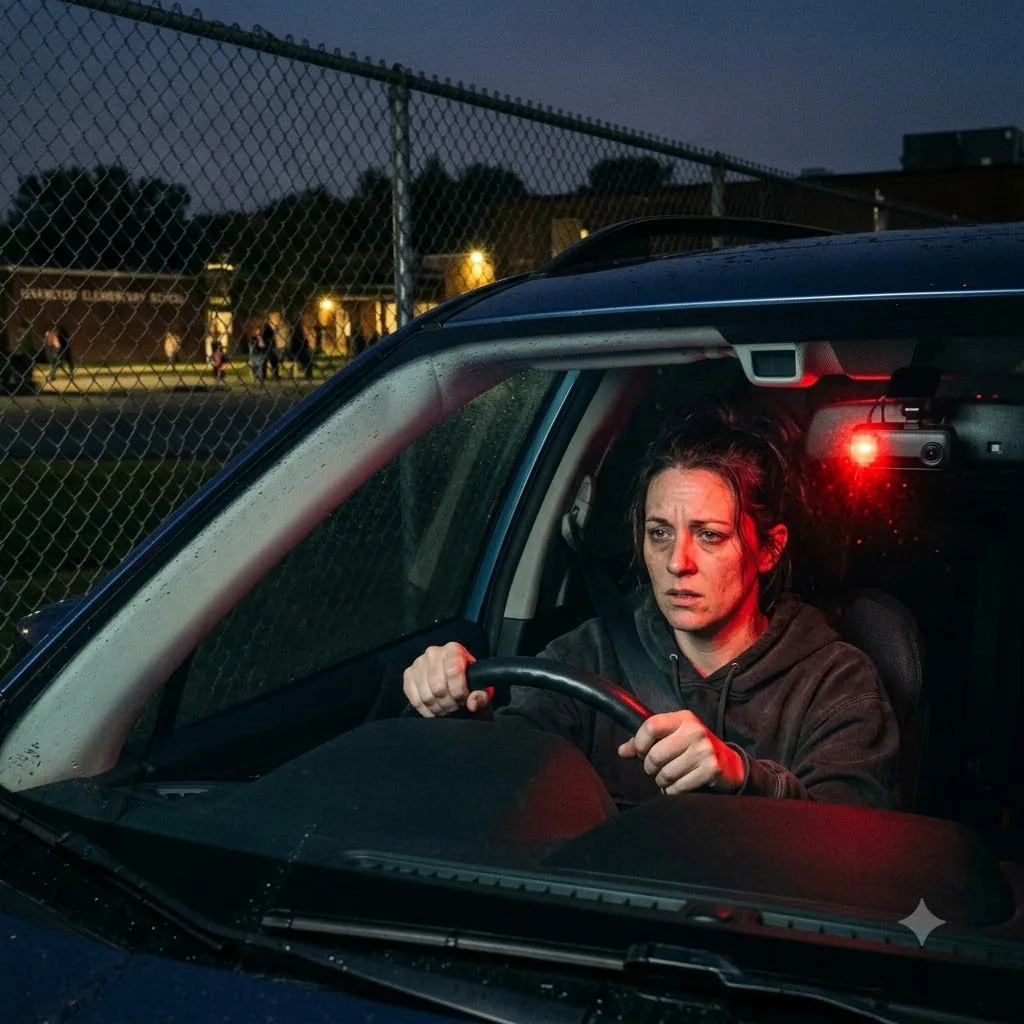
The flashing blue and red lights washed over the vaporized coolant still hissing from Elena’s crumpled hood. When the tactical teams finally arrived, they didn’t meet a hail of gunfire. They moved with methodical, sweeping precision, rifles raised, cutting through the empty courtyard and clearing the portable classrooms one by one. Elena remained in the driver’s seat, her hands resting uselessly on the steering wheel, shivering violently as the adrenaline receded. She waited for the crack of a gunshot, for the screams, for the validation that her sacrifice had mattered.
Instead, twenty minutes later, a heavy silence settled over the neighborhood, broken only by the squawk of police radios. Groundskeeper Miller walked out from the main building, his shoulders slumped, talking quietly with a patrol officer.
There was no gunman. There were no heavy weapons.
It was a swatting call. A digital phantom, conjured by a bored stranger miles away, broadcast over a scrambled line to watch the panic unfold on local scanners. The threat was entirely imaginary.
The damage to Elena’s life, however, was brutally real.
Officer Davis, the cop Miller had originally radioed, stood by her shattered driver’s side window, clicking his pen against a citation pad. He didn’t arrest her-the sheer panic of the false alarm and her lack of a prior record granted her a chaotic sort of leniency-but he didn’t offer sympathy, either.
“You can’t leave this here,” Davis said, gesturing to the sedan, its nose permanently fused to the iron stanchion. “It’s blocking a fire lane. A city truck is going to drag it to the curb on the opposite side of the block, but you have twenty-four hours before it gets impounded for good.”
Elena didn’t argue. She couldn’t speak at all. She watched numbly as a heavy flatbed backed up to her ruined car. Chains clanked against the bent chassis. The sickening screech of tearing metal echoed across the asphalt as the tow winch ripped the sedan backward, leaving pieces of her front bumper in the driveway. The truck dragged her car across the street, dumping the dead, two-ton weight of it against the far curb. The front left wheel bent inward at a grotesque angle. The radiator was a punctured, hollowed-out mess. The engine would never turn over again.
Sitting in the tilted, freezing cabin, Elena picked up her phone from the passenger seat. The screen was spider-webbed with fresh cracks from the impact, but the LCD glowed with a sterile white light.
An automated email from the delivery company sat at the top of her inbox.
*Notice of Permanent Deactivation.*
She scrolled through the boilerplate text, her thumbs numb. There was no human representative to call, no appeal process for intentionally destroying corporate hardware and abandoning a shift. The AI had finalized its judgment. Her gig-contract was terminated. The abandonment fee had already been withdrawn, triggering the overdraft she had spent months terrified of. Her balance was a glaring, negative red number.
The heavy metal side doors by the cafeteria opened again. This time, the transition was quiet, organized, and utterly exhausted. The lockdown had been lifted. The school was releasing the students early into the custody of panicked parents swarming the front lawn.
Elena pushed her battered door open, ignoring the groaning hinges, and stepped out onto the sidewalk.
She found him walking near the edge of the chain-link fence. The faded blue puffy jacket with the silver duct tape on the elbow. His backpack looked too heavy for his shoulders, and his eyes were wide, scanning the chaos of police cruisers and crying adults.
“Mom,” he breathed, breaking into a run when he spotted her.
She caught him, pulling him tightly against her chest. She buried her face in his hair, breathing in the scent of cheap institutional soap and nervous sweat. He was safe. The taller boy who had shoved him earlier was standing a few yards away, crying into his own mother’s coat, just another terrified child who had survived the phantom terror.
But the relief was fleeting, instantly swallowed by the biting afternoon wind.
Elena led her son back to the broken sedan. They climbed into the rear bench, the interior smelling sharply of burnt plastic and dried antifreeze. Without the engine, there was no way to run the heater. The tepid air inside the cabin was rapidly dropping to match the freezing temperature outside.
Wordlessly, Elena reached for the meticulously organized pile in the corner. She unzipped the heavy duffel bags. She pulled out the thick moving blankets and the compressed sleeping bags.
“Are we driving somewhere?” her son asked quietly, his teeth beginning to chatter.
“Not tonight, baby,” Elena whispered, her throat raw.
She folded the back seats down, creating a flat, uneven surface over the trunk pass-through. She draped the heavy moving blankets over the side windows, shutting out the fading daylight and the flashing strobes of the remaining police cruisers.
They had built a barricade against a monster that didn’t exist, sacrificing their only shelter in the process. Elena pulled the sleeping bag up to her son’s chin, wrapping her arms around him in the dark, silent cabin. The dashcam lay in jagged, dead pieces on the front floorboard, finally blind to them. But as the bitter cold seeped through the shattered headlight and crept into the floorboards, Elena knew the real threat had finally arrived, and she had no weapons left to fight it.