Story code: ST-000339
Part 1: The Box by the Stage
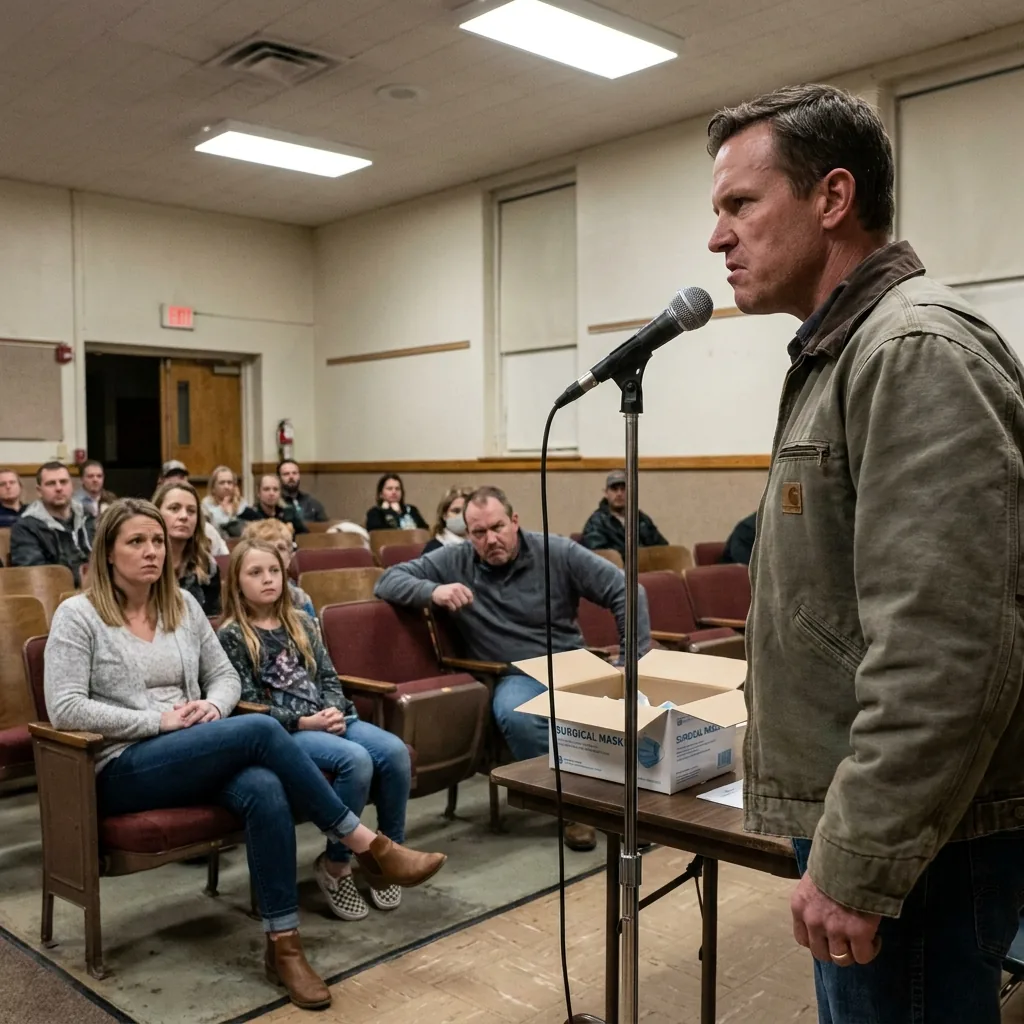
Trent Holloway was already at the front row microphone in the school auditorium, using that calm, hard voice to demand that Dana Mercer be banned from the stage in front of her own family, while the old mask box sat open by the side table in the stage apron of the pandemic_legacy_divide_school_auditorium_hypocritical_moral_trap. Owen Pike could see the old cardboard box of leftover masks in the same fluorescent glare that caught the stacked folding chairs along the back wall, and the argument hit Dana’s name before the meeting had even settled into its seats. Trent kept pointing at the box as if it belonged to his side of the room, not to the school, and the way he said her name made the damage plain before anybody had produced anything that looked like proof.
Owen had been lining up programs near the aisle, keeping close enough to hear and far enough not to get pulled in, when Trent leaned toward the mic and said the standard had to be the same for everybody. He did not shout. That made it worse. His voice stayed even as he said Dana should not be given a place on the stage if she had not followed the same rules he said the rest of the community lived under. A few heads turned at that. One parent near the center row looked back and forth between the stage and Dana as if waiting for someone else to say it made sense.
Dana stood near the aisle with her shoulders squared and her hands on a folded program. She did not move toward the microphone. She did not smile. When Trent named her and tied her to the school stage, she answered with only a few words that Owen could not quite catch over the mic hum and the scrape of folding legs. Lila Mercer was beside her, half a step ahead of the row, one hand gripping a paper program so tightly the corner bent. She started to speak twice and stopped both times when the room turned to look at her.
Principal Elise Navarro stayed at the stage edge with one palm open in the direction of the room, the kind of gesture that usually asked people to let the meeting go on. She did not take the microphone away from Trent. She did not go to the side table. She looked at the front row, then at the stage apron, then back at Dana as the pressure in the room changed shape. The stage lights buzzed overhead. The sound carried into the silence that followed Trent’s first demand.
He kept going. He said if the school was going to stand for standards, then it had to stand for them in public. He said a person who had treated the rules lightly did not get a place in front of students and families now. Every time the room started to settle, he repeated the same line, just firmer. He pointed again at the open box of leftover masks, and this time he stepped out of his seat toward it, as if the box itself could settle the matter.
Owen watched the movement and then watched the faces around him. A custodian paused by the back wall with a trash can in hand. Two volunteers stopped stacking chairs. Nobody laughed. Nobody spoke for Dana. That was the first visible harm, and it spread fast: not just the accusation, but the way people began looking at her as if she had already lost her place in the room.
Dana lifted her chin once when Trent demanded that the school make it visible. The words were still on the air when Trent said the standard had to apply here, too. He said it again, louder, and the line landed hard enough that even the people shifting in their seats went still. He had not dropped the standard. He had tightened it.
Then he reached toward the old mask box and pulled it closer to the front edge of the side table, still talking about fairness and public example, and Owen saw something in the way he handled it that did not fit the certainty in his voice. Trent was acting as if the box belonged to the punishment he wanted Dana to take. But the way his hand paused over the cardboard, and the way he kept looking at it instead of at her, made one question hang in the room: why did he seem to know exactly how that box would answer back?
Trent Holloway was already at the front row microphone in the school auditorium, using that calm, hard voice to demand that Dana Mercer be banned from the stage in front of her own family, while the old mask box sat open by the side table in the stage apron of the pandemic_legacy_divide_school_auditorium_hypocritical_moral_trap. Owen Pike could see the old cardboard box of leftover masks in the same fluorescent glare that caught the stacked folding chairs along the back wall, and the argument hit Dana’s name before the meeting had even settled into its seats. Trent kept pointing at the box as if it belonged to his side of the room, not to the school, and the way he said her name made the damage plain before anybody had produced anything that looked like proof.
Owen had been lining up programs near the aisle, keeping close enough to hear and far enough not to get pulled in, when Trent leaned toward the mic and said the standard had to be the same for everybody. He did not shout. That made it worse. His voice stayed even as he said Dana should not be given a place on the stage if she had not followed the same rules he said the rest of the community lived under. A few heads turned at that. One parent near the center row looked back and forth between the stage and Dana as if waiting for someone else to say it made sense.
Dana stood near the aisle with her shoulders squared and her hands on a folded program. She did not move toward the microphone. She did not smile. When Trent named her and tied her to the school stage, she answered with only a few words that Owen could not quite catch over the mic hum and the scrape of folding legs. Lila Mercer was beside her, half a step ahead of the row, one hand gripping a paper program so tightly the corner bent. She started to speak twice and stopped both times when the room turned to look at her.
Principal Elise Navarro stayed at the stage edge with one palm open in the direction of the room, the kind of gesture that usually asked people to let the meeting go on. She did not take the microphone away from Trent. She did not go to the side table. She looked at the front row, then at the stage apron, then back at Dana as the pressure in the room changed shape. The stage lights buzzed overhead. The sound carried into the silence that followed Trent’s first demand.
He kept going. He said if the school was going to stand for standards, then it had to stand for them in public. He said a person who had treated the rules lightly did not get a place in front of students and families now. Every time the room started to settle, he repeated the same line, just firmer. He pointed again at the open box of leftover masks, and this time he stepped out of his seat toward it, as if the box itself could settle the matter.
Owen watched the movement and then watched the faces around him. A custodian paused by the back wall with a trash can in hand. Two volunteers stopped stacking chairs. Nobody laughed. Nobody spoke for Dana. That was the first visible harm, and it spread fast: not just the accusation, but the way people began looking at her as if she had already lost her place in the room.
Dana lifted her chin once when Trent demanded that the school make it visible. The words were still on the air when Trent said the standard had to apply here, too. He said it again, louder, and the line landed hard enough that even the people shifting in their seats went still. He had not dropped the standard. He had tightened it.
Then he reached toward the old mask box and pulled it closer to the front edge of the side table, still talking about fairness and public example, and Owen saw something in the way he handled it that did not fit the certainty in his voice. Trent was acting as if the box belonged to the punishment he wanted Dana to take. But the way his hand paused over the cardboard, and the way he kept looking at it instead of at her, made one question hang in the room: why did he seem to know exactly how that box would answer back?