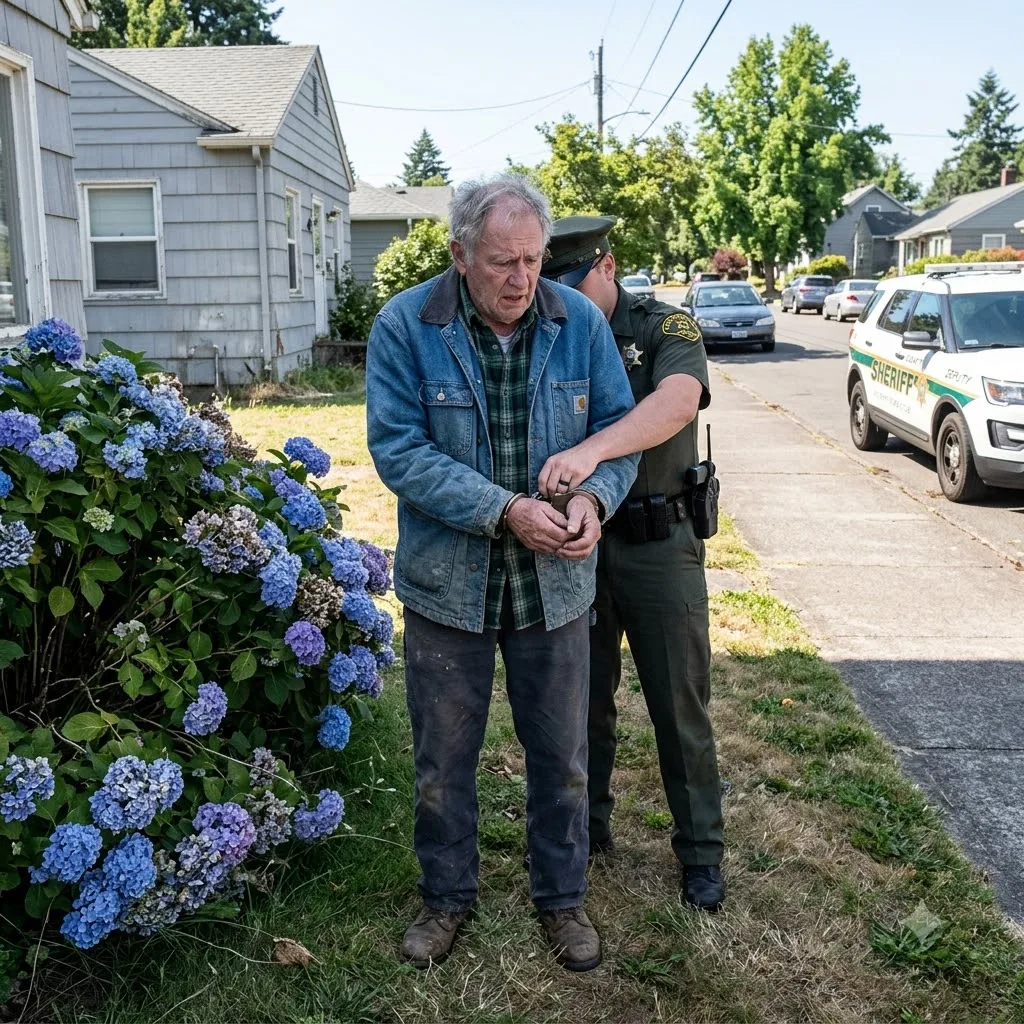
Story code: ST-000898
Part 2: The Compliance Agreement
The ride in the back of the cruiser was a blur of physical agony and mounting disbelief. Every pothole and sharp turn sent a fresh jolt of pain through Arthur’s overextended shoulders. He squeezed his eyes shut, trying to regulate his breathing, but the heavy plastic divider pressing against his knees and the suffocating smell of chemical cleaner made him feel claustrophobic. When the cruiser finally lurched to a halt, Arthur expected to see the familiar limestone facade of the county courthouse downtown. Instead, the deputy hauled him out in a sprawling industrial park on the edge of the city limit, before a massive, windowless warehouse fronted by tinted glass. A sleek, brushed-steel sign near the entrance read: *Apex Municipal Recovery Services*.
Arthur’s stiff, throbbing arms were finally released from the cuffs inside a sterile, fluorescent-lit intake room. He rubbed his bruised, deeply indented wrists, wincing as blood rushed back into his hands. A bored intake clerk behind bulletproof glass ordered him to empty his pockets into a plastic bin, remove his belt, and take out his shoelaces. Arthur complied in stunned silence, his faded chambray shirt clinging to his back with cold sweat. He attempted to ask the clerk who he could call to rectify the profound clerical error, but the young man didn’t look up from his monitor. He simply tapped a thick, manicured finger against a secondary screen facing Arthur. The display showed Arthur’s name, his home address, and a blinking red balance: $8,420.00. Below it, a line of smaller text read: *Daily Non-Compliance Holding Fee: $450.00.*
A guard in a polo shirt that matched the intake clerk’s uniform grabbed Arthur by his beltless jeans and guided him down a narrow, windowless cinderblock hallway. The air was frigid, smelling faintly of ozone and cheap floor wax. Arthur was shoved into a small consultation room containing only a bolted-down metal table and two rigid plastic chairs. Five minutes later, the heavy metal door clicked open, and a man in a sharp charcoal suit walked in, carrying a thin leather folio. The man did not introduce himself. He sat down opposite Arthur, opened the folio, and pulled out a gold-plated pen.
“Mr. Pendelton,” the man said, his voice smooth, practiced, and entirely devoid of empathy. “My name is Mr. Vance. I am a resolution officer with Apex. We handle the county’s privatized municipal blight portfolio. Your property has fallen severely out of compliance. You ignored the citations. You ignored the warnings. Now, you are in our custody.”
Arthur placed his hands flat on the cold metal table to hide their trembling. He explained, his voice shaking but remarkably clear, that he had never received a single piece of mail from the county regarding blight. He detailed his weekly yard maintenance, his pristine gutters, and his flawless tax record. He stated firmly that there had to be a mistake, perhaps a mix-up with a similar address on another street.
Vance sighed, a highly theatrical sound of strained patience, and slid a thick, multi-page document across the table. “This isn’t a courtroom, Arthur. We don’t adjudicate guilt here. The county already assessed the fines. We just collect them. The balance is eight thousand, four hundred and twenty dollars. However, considering your age and fixed income, Apex is authorized to offer you a hardship resolution.”
Arthur squinted at the document. His reading glasses were still sitting in the plastic bin at the intake desk. He pulled the paper closer, relying on the harsh overhead light to make out the small, densely packed font. The header read: *Compliance Acknowledgment and Restitution Agreement*.
“Just sign the bottom of the last page,” Vance instructed, uncapping the gold pen and offering it handle-first. “It rolls your balance into a manageable monthly payment plan of just two hundred dollars a month. The moment you sign, I release you. You walk out the front door, you call a cab, and you go back to your hydrangeas. The alternative is you stay in the holding block. At four hundred and fifty dollars a day, your balance will eclipse the county threshold for immediate property seizure in less than a week.”
Arthur stared at the pen. Two hundred dollars a month was tight, but it was better than the terrifying holding cells. He reached for the pen, but his eyes caught a bolded paragraph halfway down the second page. He leaned in, squinting so hard his eyes watered, forcing the blurry text into focus.
*…debtor acknowledges the validity of the municipal debt in full… further agrees to secure the aforementioned payment plan by granting Apex Municipal Recovery Services a priority lien and direct deed-of-trust against the collateral property located at 42 Elmwood Court…*
The words slammed into Arthur’s chest. The fog of the arrest, the pain in his wrists, the sheer disorientation of the morning suddenly crystallized into horrifying clarity. He remembered the man in the silver Tacoma, raising a coffee cup in a proprietary toast. The man hadn’t been watching an arrest; he had been watching an acquisition.
“This puts a lien on my home,” Arthur whispered, looking up at Vance. “If I sign this, I’m giving your company the right to take my house if I miss a payment. And I’m admitting the fines are real.”
“It’s standard boilerplate collateralization,” Vance said smoothly, his eyes narrowing slightly. “It’s the only way we can approve the release of a high-risk debtor. Sign the paper, Arthur. You want to sleep in your own bed tonight, don’t you?”
They didn’t want the eight thousand dollars. The fines were a fabricated pressure cooker designed to force an exhausted, terrified old man into signing over the equity of his life’s work. If he signed, he surrendered his home to a shadow corporation. If he didn’t, the daily fees would artificially inflate the debt until they seized it anyway. But they needed his signature to make the lien legal without a lengthy, public court battle. They needed him to validate the theft.
Arthur looked at his bruised, aching wrists. He thought of his late wife, who had picked out the brick ranch house forty years ago. He set the gold pen down on the table, deliberately pushing it away from the document.
“I am not signing this,” Arthur said, his voice dropping to a quiet, iron-clad register. “And I am not giving you my home.”
Vance’s practiced smile vanished, replaced by a cold, hardened glare. He didn’t argue. He simply stood up, scooped his pen off the table, and knocked twice on the heavy metal door. “Let him sit in general holding,” Vance told the guard who opened it. “Let’s see how brave he feels when his balance hits ten grand by Friday.”