Story code: ST-000895
Part 1: He Shouted Emergency and Took the Room
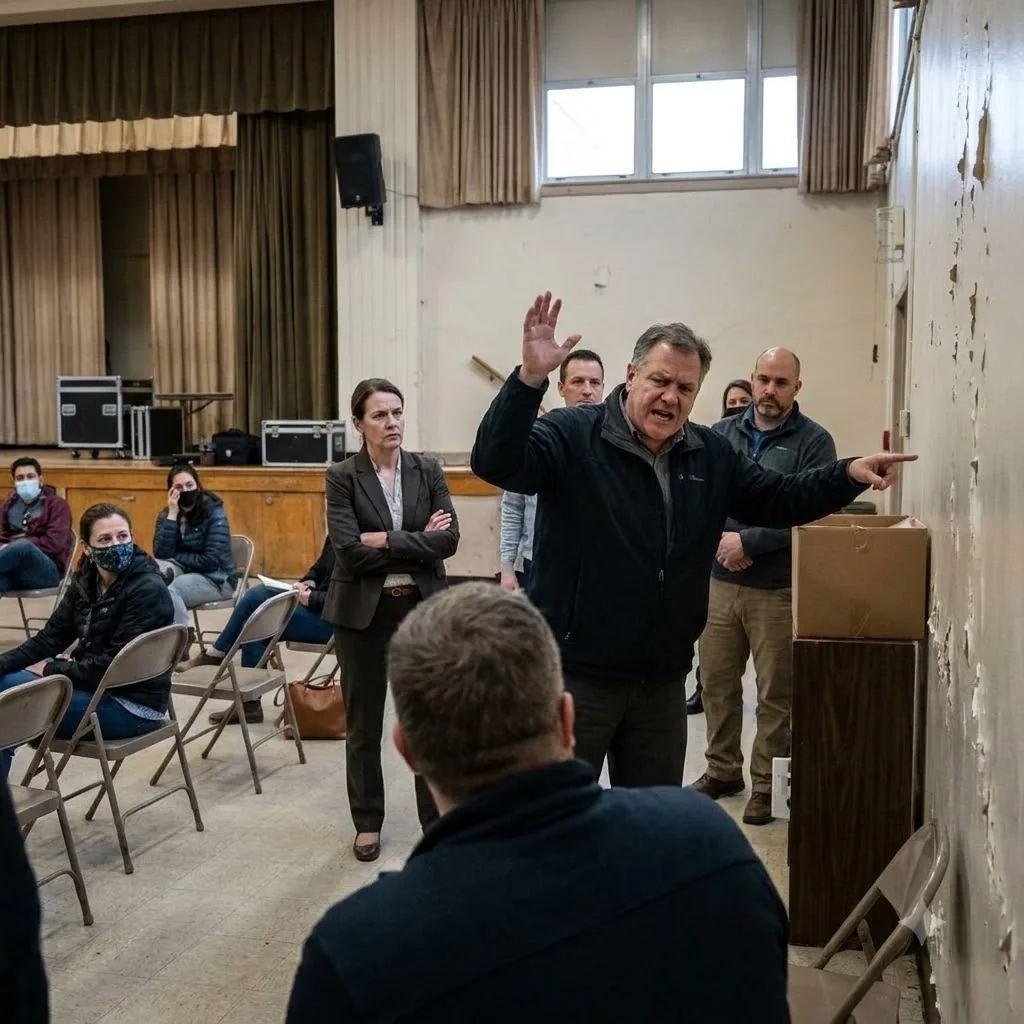
Derek Holt stopped our entire auditorium with one hand in the air and one finger pointed at an old mask box by the side wall, yelling that somebody was having a breathing emergency because we were stirring up contamination. We had folding chairs half-stacked by the stage steps, extension cords snaked across the aisle, and a mic check popping through the speakers, and in ten seconds his shouting had people backing away from their work like the room itself had turned dangerous. The worst part was that he got exactly what he wanted before anyone could even pin down who was supposedly in danger.
I was on the front half of the floor, counting chair rows out loud with my clipboard tucked under my arm, when he cut across my count.
“Stop moving those,” he yelled. “Stop right now. Nobody touch anything. Somebody can’t breathe in here.”
The sound tech on stage let the mic drop to his chest. Cal Barnes had both hands on a cart of folded chairs and froze with one wheel turned sideways. Two parent volunteers near the aisle stepped backward so fast one of them bumped a seat stack with her hip.
“Who?” I said. “Who is having trouble breathing?”
Derek did not answer that first. He pointed harder at the old cardboard box of masks sitting open on the custodial table by the side storage door. It had been there all morning, dusty on the corners, with loose packs slumped inside.
“That,” he said. “You people left that old contaminated stuff out in a packed room and now you’re dragging chairs around kicking everything into the air. Clear this section. Open those doors. Do not let anybody near that box.”
It was the kind of command voice that made people move first and sort facts second. One volunteer pushed the auditorium door bar. Another started pulling her scarf over her mouth. The sound guy looked at me from the stage and held up both hands like he was waiting for instructions he did not want to guess at.
I set the clipboard on a chair seat and said, “Cal, stop the cart. Everybody else, give me one aisle of space.”
I did not know if Derek had seen someone cough, or if somebody in the room had said something I had missed under the microphone pops. The event start time was getting close. We still had reserved signs to tape and a podium cable to rerun. But once the word breathing got shouted in a room like that, nobody was going to stand there and debate vocabulary.
Derek kept going.
“This is what I’ve been saying,” he said, loud enough for the stage and the back doors at the same time. “You can’t leave this stuff sitting around and pretend it’s normal. If somebody needs air, you call the nurse now. Not in ten minutes. Now.”
That landed on people fast. One of the volunteers looked at me and said, “Should I call somebody?”
Before I could answer, Principal Elena Ruiz came in from the lobby side carrying a roll of table signs. She took in the stopped chair stacks, open doors, and Derek planted in the aisle like he owned the center line of the room.
“What’s happening?” she said.
Derek turned toward her without lowering his voice. “Possible contamination exposure and breathing distress. You need a medical response in here now.”
Principal Ruiz set the signs on the stage apron and asked, “Who is in distress?”
He gave her the same point at the mask box. “You need to stop asking questions and start acting.”
Cal finally spoke from behind his cart. “That box has been on my table since seven-thirty. Nobody opened it today except me moving the tape gun off it.”
Derek swung toward him. “That’s not the point. The point is people were exposed.”
“Who is people?” I asked again.
His jaw worked once. He shifted his footing and looked past me toward the parent volunteer in the scarf, then toward the back row, then back to Principal Ruiz.
“You’re wasting time,” he said. “If this turns into an incident, that’s on this school.”
Principal Ruiz pulled out her radio. Her voice stayed level. “Front office, send Nurse Park to the auditorium now. Possible respiratory complaint connected to materials in the room.”
The room changed again at that. The volunteers stopped whispering. Cal let go of the chair cart handle and stood with his hands at his sides. Even the sound guy leaned down and cut the mic channel fully dead so we could hear the radio answer back.
“On my way,” a woman’s voice said.
And that was the exact second Derek changed.
He took one quick step toward Principal Ruiz and lifted his palm toward the radio like he could push the call back into it.
“No, hold on,” he said. “You don’t need to make it a whole thing. I’m saying deal with the box. Get it out of here first. Don’t bring somebody in here and turn this into paperwork over an old issue.”
He had been demanding emergency help in front of everyone less than a minute earlier. Now the nurse was on the way, and he was trying to stop the help he had just insisted we call.
Derek Holt stopped our entire auditorium with one hand in the air and one finger pointed at an old mask box by the side wall, yelling that somebody was having a breathing emergency because we were stirring up contamination. We had folding chairs half-stacked by the stage steps, extension cords snaked across the aisle, and a mic check popping through the speakers, and in ten seconds his shouting had people backing away from their work like the room itself had turned dangerous. The worst part was that he got exactly what he wanted before anyone could even pin down who was supposedly in danger.
I was on the front half of the floor, counting chair rows out loud with my clipboard tucked under my arm, when he cut across my count.
“Stop moving those,” he yelled. “Stop right now. Nobody touch anything. Somebody can’t breathe in here.”
The sound tech on stage let the mic drop to his chest. Cal Barnes had both hands on a cart of folded chairs and froze with one wheel turned sideways. Two parent volunteers near the aisle stepped backward so fast one of them bumped a seat stack with her hip.
“Who?” I said. “Who is having trouble breathing?”
Derek did not answer that first. He pointed harder at the old cardboard box of masks sitting open on the custodial table by the side storage door. It had been there all morning, dusty on the corners, with loose packs slumped inside.
“That,” he said. “You people left that old contaminated stuff out in a packed room and now you’re dragging chairs around kicking everything into the air. Clear this section. Open those doors. Do not let anybody near that box.”
It was the kind of command voice that made people move first and sort facts second. One volunteer pushed the auditorium door bar. Another started pulling her scarf over her mouth. The sound guy looked at me from the stage and held up both hands like he was waiting for instructions he did not want to guess at.
I set the clipboard on a chair seat and said, “Cal, stop the cart. Everybody else, give me one aisle of space.”
I did not know if Derek had seen someone cough, or if somebody in the room had said something I had missed under the microphone pops. The event start time was getting close. We still had reserved signs to tape and a podium cable to rerun. But once the word breathing got shouted in a room like that, nobody was going to stand there and debate vocabulary.
Derek kept going.
“This is what I’ve been saying,” he said, loud enough for the stage and the back doors at the same time. “You can’t leave this stuff sitting around and pretend it’s normal. If somebody needs air, you call the nurse now. Not in ten minutes. Now.”
That landed on people fast. One of the volunteers looked at me and said, “Should I call somebody?”
Before I could answer, Principal Elena Ruiz came in from the lobby side carrying a roll of table signs. She took in the stopped chair stacks, open doors, and Derek planted in the aisle like he owned the center line of the room.
“What’s happening?” she said.
Derek turned toward her without lowering his voice. “Possible contamination exposure and breathing distress. You need a medical response in here now.”
Principal Ruiz set the signs on the stage apron and asked, “Who is in distress?”
He gave her the same point at the mask box. “You need to stop asking questions and start acting.”
Cal finally spoke from behind his cart. “That box has been on my table since seven-thirty. Nobody opened it today except me moving the tape gun off it.”
Derek swung toward him. “That’s not the point. The point is people were exposed.”
“Who is people?” I asked again.
His jaw worked once. He shifted his footing and looked past me toward the parent volunteer in the scarf, then toward the back row, then back to Principal Ruiz.
“You’re wasting time,” he said. “If this turns into an incident, that’s on this school.”
Principal Ruiz pulled out her radio. Her voice stayed level. “Front office, send Nurse Park to the auditorium now. Possible respiratory complaint connected to materials in the room.”
The room changed again at that. The volunteers stopped whispering. Cal let go of the chair cart handle and stood with his hands at his sides. Even the sound guy leaned down and cut the mic channel fully dead so we could hear the radio answer back.
“On my way,” a woman’s voice said.
And that was the exact second Derek changed.
He took one quick step toward Principal Ruiz and lifted his palm toward the radio like he could push the call back into it.
“No, hold on,” he said. “You don’t need to make it a whole thing. I’m saying deal with the box. Get it out of here first. Don’t bring somebody in here and turn this into paperwork over an old issue.”
He had been demanding emergency help in front of everyone less than a minute earlier. Now the nurse was on the way, and he was trying to stop the help he had just insisted we call.