Story code: ST-000462
Part 1: The Noise Under the Pier
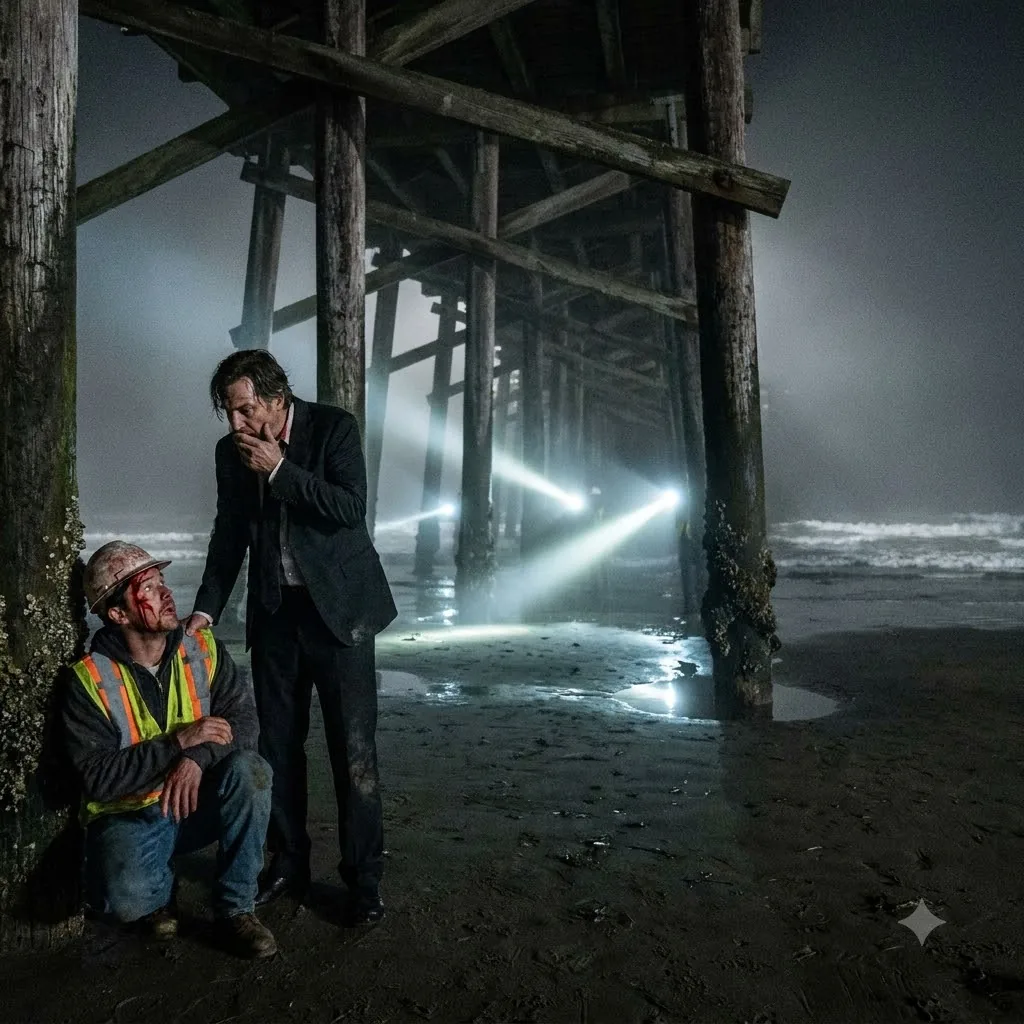
Thomas Vance stepped away from the white linen tablecloth, leaving behind his half-empty glass of merlot and the impatient tapping of Inspector Aris’s fork. He had spent the last hour begging the FEMA representative for emergency funds to halt the rapid coastal erosion swallowing Sapphire Dunes. The dinner was the most important political maneuver of his career. But the wet, heavy dragging sound he had heard over the restaurant balcony railing had pulled him away, drawing him down the wooden stairs to the cold, damp sand beneath the municipal pier.
The flashlight app on his phone cut a harsh white beam through the maze of barnacle-encrusted pilings. The light swept past tangles of rotting kelp and landed on a man in a neon-yellow vest, curled into a tight ball against the furthest wooden support. The man’s hands were clamped over his ribs. Dark fluid soaked through the reflective tape of his uniform, dripping steadily into the wet sand.
The Sapphire Dunes construction logo was stitched onto the shoulder of the man’s torn jacket. Thomas recognized the uniform. The night crews had been running heavy machinery out on the sandbars all week, racing to build the sea wall before the next king tide. Now, one of those workers was huddled under the pier, shivering so violently his steel-toed boots kicked up clumps of wet earth.
Thomas took a step closer, holding his phone up. The metallic smell of fresh blood hit him, sharp and distinct over the scent of the low tide.
He thumbed the keypad on his screen, opening the emergency dialer to call for an ambulance.
The worker lunged out of the shadows.
A heavy, blood-slicked hand clamped over Thomas’s wrist. The man twisted the Mayor’s arm down with terrifying, desperate strength. Thomas stumbled backward, his shoulder slamming hard against a wooden piling. His phone slipped from his fingers, landing with a soft splash in a puddle of seawater.
The man did not let go. His breathing was a wet, ragged rattle that echoed in the dark space beneath the boardwalk. He shoved his entire weight into Thomas, pinning the Mayor’s arm flat against the damp wood.
“Let me get you help,” Thomas said. He tried to pull his arm free, but the worker’s grip was absolute iron, sticky and hot against his skin.
“No hospital.” The worker’s voice was a frantic, bubbling hiss. “No sirens.”
Thomas stared in shock at the massive dark patch spreading across the man’s stomach. The worker was losing blood at an alarming rate. He was dying right in front of him, yet he was using every ounce of his remaining strength to stop a rescue. Thomas reached into his wool coat with his free hand, searching for a napkin or a handkerchief to press against the horrific wound.
The worker slammed his other hand flat against Thomas’s chest, pushing him back again. The panic in the man’s eyes was far worse than the physical agony etched into his face. The worker kept staring past Thomas, looking out toward the black expanse of the ocean. His head darted back and forth, tracking the dark, rolling waves as if waiting for something to emerge from the surf.
Thomas pointed back toward the illuminated stairs leading up to the restaurant. He told the man he could run up to the patio and grab a doctor without making a scene.
“If they know I’m hurt, they track the blood.” The worker squeezed Thomas’s wrist hard enough to grind the tendons together. “If I go to the hospital, I’m dead before morning.”
Thomas stopped fighting the man’s grip. He looked closely at the worker’s pale face, recognizing the hollowed-out exhaustion of the dredging crews. The town had authorized the midnight excavation specifically to save the beachfront. It was supposed to be a standard, boring industrial contract. There was no reason for a man to be bleeding out in the dark, terrified of an ambulance.
The worker finally released Thomas’s wrist, swaying heavily on his feet. He reached into his own ruined pocket with a trembling, blood-stained hand.
Thomas braced himself to catch the man, fully expecting him to collapse face-first into the tide pool. Instead, the worker yanked out a thick, industrial cell phone. The screen was completely shattered, heavily spider-webbed with deep cracks that distorted a harsh blue glow. The man shoved the heavy device directly into the center of Thomas’s chest, forcing the Mayor to grab it with both hands or let it fall into the rising water.
Thomas gripped the cracked casing. His thumb brushed over a fresh smear of red on the glass. The phone was locked, but a single, unread text message notification dominated the display.
Thomas read the glowing words. He read them a second time, his pulse hammering in his ears. The text completely contradicted every geological survey, every expert engineering report, and every desperate plea Thomas had just delivered to the FEMA inspector sitting thirty feet above them.
The worker staggered backward, clutching his ruined ribs. His chest heaved as he pointed a trembling finger at the screen in Thomas’s hand.
“The erosion isn’t from the tide,” the worker whispered, his voice cracking with absolute terror. “Look at what we dug up.”
Thomas stared down at the words on the broken glass, sent from a number simply labeled ‘Site Foreman.’ The harsh blue light illuminated the blood coating Thomas’s own fingers.
Heavy footsteps thumped onto the wooden boardwalk directly above their heads.
Dust, sand, and flecks of dried salt drifted down through the gaps in the planks, raining onto Thomas’s shoulders. The deliberate pacing stopped exactly over the spot where the worker had been hiding.
The worker clamped a hand over his own mouth, shrinking back against the piling. A blindingly bright, narrow beam of a high-powered tactical flashlight clicked on, sweeping down through the cracks in the boards and slicing through the darkness just inches from Thomas’s face.
Thomas Vance stepped away from the white linen tablecloth, leaving behind his half-empty glass of merlot and the impatient tapping of Inspector Aris’s fork. He had spent the last hour begging the FEMA representative for emergency funds to halt the rapid coastal erosion swallowing Sapphire Dunes. The dinner was the most important political maneuver of his career. But the wet, heavy dragging sound he had heard over the restaurant balcony railing had pulled him away, drawing him down the wooden stairs to the cold, damp sand beneath the municipal pier.
The flashlight app on his phone cut a harsh white beam through the maze of barnacle-encrusted pilings. The light swept past tangles of rotting kelp and landed on a man in a neon-yellow vest, curled into a tight ball against the furthest wooden support. The man’s hands were clamped over his ribs. Dark fluid soaked through the reflective tape of his uniform, dripping steadily into the wet sand.
The Sapphire Dunes construction logo was stitched onto the shoulder of the man’s torn jacket. Thomas recognized the uniform. The night crews had been running heavy machinery out on the sandbars all week, racing to build the sea wall before the next king tide. Now, one of those workers was huddled under the pier, shivering so violently his steel-toed boots kicked up clumps of wet earth.
Thomas took a step closer, holding his phone up. The metallic smell of fresh blood hit him, sharp and distinct over the scent of the low tide.
He thumbed the keypad on his screen, opening the emergency dialer to call for an ambulance.
The worker lunged out of the shadows.
A heavy, blood-slicked hand clamped over Thomas’s wrist. The man twisted the Mayor’s arm down with terrifying, desperate strength. Thomas stumbled backward, his shoulder slamming hard against a wooden piling. His phone slipped from his fingers, landing with a soft splash in a puddle of seawater.
The man did not let go. His breathing was a wet, ragged rattle that echoed in the dark space beneath the boardwalk. He shoved his entire weight into Thomas, pinning the Mayor’s arm flat against the damp wood.
“Let me get you help,” Thomas said. He tried to pull his arm free, but the worker’s grip was absolute iron, sticky and hot against his skin.
“No hospital.” The worker’s voice was a frantic, bubbling hiss. “No sirens.”
Thomas stared in shock at the massive dark patch spreading across the man’s stomach. The worker was losing blood at an alarming rate. He was dying right in front of him, yet he was using every ounce of his remaining strength to stop a rescue. Thomas reached into his wool coat with his free hand, searching for a napkin or a handkerchief to press against the horrific wound.
The worker slammed his other hand flat against Thomas’s chest, pushing him back again. The panic in the man’s eyes was far worse than the physical agony etched into his face. The worker kept staring past Thomas, looking out toward the black expanse of the ocean. His head darted back and forth, tracking the dark, rolling waves as if waiting for something to emerge from the surf.
Thomas pointed back toward the illuminated stairs leading up to the restaurant. He told the man he could run up to the patio and grab a doctor without making a scene.
“If they know I’m hurt, they track the blood.” The worker squeezed Thomas’s wrist hard enough to grind the tendons together. “If I go to the hospital, I’m dead before morning.”
Thomas stopped fighting the man’s grip. He looked closely at the worker’s pale face, recognizing the hollowed-out exhaustion of the dredging crews. The town had authorized the midnight excavation specifically to save the beachfront. It was supposed to be a standard, boring industrial contract. There was no reason for a man to be bleeding out in the dark, terrified of an ambulance.
The worker finally released Thomas’s wrist, swaying heavily on his feet. He reached into his own ruined pocket with a trembling, blood-stained hand.
Thomas braced himself to catch the man, fully expecting him to collapse face-first into the tide pool. Instead, the worker yanked out a thick, industrial cell phone. The screen was completely shattered, heavily spider-webbed with deep cracks that distorted a harsh blue glow. The man shoved the heavy device directly into the center of Thomas’s chest, forcing the Mayor to grab it with both hands or let it fall into the rising water.
Thomas gripped the cracked casing. His thumb brushed over a fresh smear of red on the glass. The phone was locked, but a single, unread text message notification dominated the display.
Thomas read the glowing words. He read them a second time, his pulse hammering in his ears. The text completely contradicted every geological survey, every expert engineering report, and every desperate plea Thomas had just delivered to the FEMA inspector sitting thirty feet above them.
The worker staggered backward, clutching his ruined ribs. His chest heaved as he pointed a trembling finger at the screen in Thomas’s hand.
“The erosion isn’t from the tide,” the worker whispered, his voice cracking with absolute terror. “Look at what we dug up.”
Thomas stared down at the words on the broken glass, sent from a number simply labeled ‘Site Foreman.’ The harsh blue light illuminated the blood coating Thomas’s own fingers.
Heavy footsteps thumped onto the wooden boardwalk directly above their heads.
Dust, sand, and flecks of dried salt drifted down through the gaps in the planks, raining onto Thomas’s shoulders. The deliberate pacing stopped exactly over the spot where the worker had been hiding.
The worker clamped a hand over his own mouth, shrinking back against the piling. A blindingly bright, narrow beam of a high-powered tactical flashlight clicked on, sweeping down through the cracks in the boards and slicing through the darkness just inches from Thomas’s face.