Story code: ST-001706
Part 1: Administrative Resolution
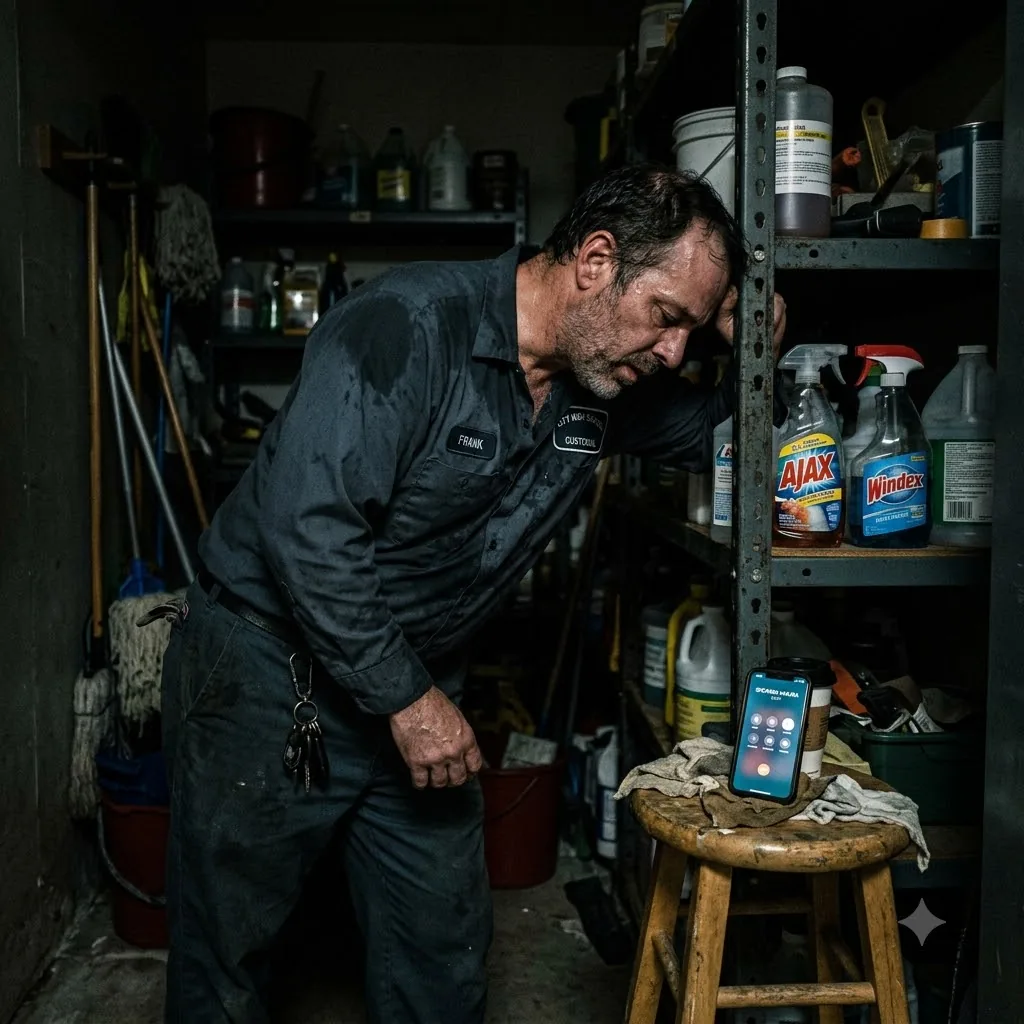
Elias pressed his forehead against the cool, dented metal of a commercial mop bucket, sealing himself inside the pitch-black janitorial closet while the hold music looped endlessly through his phone speaker. A jagged spike of pain drove itself behind his right eye, pulsing in time with his heartbeat and the tinny, degraded saxophone track echoing against his palm. The darkness offered a thin shield against the migraine, but it did nothing to stop the nausea rolling through his stomach or the tremor in his left hand. He had been in this closet for forty minutes, hiding from the overwhelming sensory assault of the high school hallways, waiting for the Department of Veterans Affairs to pick up the line.
The saxophone track cut out with a harsh electronic pop. A voice came through the line, flattened by a cheap headset and completely devoid of human inflection.
“Your authorization request for a functional MRI has been reviewed and closed out.”
Elias gripped the phone tighter, pressing it hard against his ear. “The neurologist specifically stated the standard scan missed the damage from the mortar blast. The blackouts are getting worse. I lose hours at a time.”
“The initial imaging showed no structural anomalies,” the flat, robotic voice replied, the tone entirely stripped of empathy.
“The initial imaging was a basic CT scan from three years ago. I need the functional MRI to show what happens when the headaches start.”
“Administrative policy dictates that subjective symptom reporting does not override standard baseline imaging protocols.” The voice paused, the silence on the line heavy and absolute. “We consider the matter administratively resolved.”
A sharp click echoed through the tiny speaker, immediately followed by the hollow drone of a dial tone.
Elias lowered the phone. The darkness of the closet suddenly felt suffocating, thick with the smell of industrial floor wax, heavy bleach, and his own cold sweat. The walls seemed to press inward, squeezing the air from his lungs. He shoved his phone into his jacket pocket and pushed himself up from the concrete floor. His knees popped in the cramped space. He felt blindly for the heavy brass doorknob, desperately needing fresh air.
He turned the latch and shoved the door outward.
Searing fluorescent light stabbed directly into his dilated retinas. He stumbled forward, throwing a forearm over his eyes as a solid wall of sound hit him with physical force. He had stepped out from behind the folding bleachers, directly into the high school gymnasium. The space was packed to the fire code limit, operating as the overflow room for a school board meeting that had descended into total, unhinged chaos.
Dozens of red-faced parents waved ripped pages of a history textbook in the air. A man in a tightly buttoned polo shirt screamed into a megaphone, his furious words bouncing off the varnished hardwood floor in a distorted, muddy echo. The migraine flared instantly, turning the edges of Elias’s vision a sickly, vibrating yellow.
Posters mounted on thick wooden stakes bobbed dangerously above the crowd. Black marker slashed across neon poster board demanded the removal of the curriculum. The sheer volume of the mob was overwhelming, a chaotic mass of angry bodies pressing toward the folding tables set up at half-court. Elias tried to navigate along the painted cinderblock wall, keeping his head down, but the press of the crowd blocked the exit doors. The heat in the room was unbearable, radiating off the hundreds of screaming adults.
Someone slammed a heavy fist against the retracted metal bleachers. The hollow, metallic boom reverberated through Elias’s skull, rattling his teeth.
He squeezed his eyes shut, trying to ground himself in the present moment. He placed his hand flat against the cold cinderblock wall. The VA had denied the scan. The flat, callous voice on the phone echoed in his memory, blending with the roar of the furious suburban crowd. The man with the megaphone shouted another fiery slogan. The crowd roared back, a unified wave of aggressive sound. Elias gripped the edge of a heavy plastic trash can, his knuckles turning stark white, trying to ride out the visual aura spreading like cracked glass across his field of view. He just needed to reach the double doors leading to the parking lot.
He forced his eyes open, blinking through the pain, and took a staggered step forward.
From the center of the gymnasium, a sharp, rhythmic sound cut entirely through the screaming. It was a heavy, metallic clacking, sharp and brutally loud. Someone at the main table was racking a heavy metal microphone stand against the wooden edge of the scorer’s table to demand order. But to Elias’s fractured senses, the sharp, percussive snap ripped through the stagnant air with the exact, unmistakable acoustic signature of a heavy caliber rifle bolt driving forward into a firing chamber.
Elias pressed his forehead against the cool, dented metal of a commercial mop bucket, sealing himself inside the pitch-black janitorial closet while the hold music looped endlessly through his phone speaker. A jagged spike of pain drove itself behind his right eye, pulsing in time with his heartbeat and the tinny, degraded saxophone track echoing against his palm. The darkness offered a thin shield against the migraine, but it did nothing to stop the nausea rolling through his stomach or the tremor in his left hand. He had been in this closet for forty minutes, hiding from the overwhelming sensory assault of the high school hallways, waiting for the Department of Veterans Affairs to pick up the line.
The saxophone track cut out with a harsh electronic pop. A voice came through the line, flattened by a cheap headset and completely devoid of human inflection.
“Your authorization request for a functional MRI has been reviewed and closed out.”
Elias gripped the phone tighter, pressing it hard against his ear. “The neurologist specifically stated the standard scan missed the damage from the mortar blast. The blackouts are getting worse. I lose hours at a time.”
“The initial imaging showed no structural anomalies,” the flat, robotic voice replied, the tone entirely stripped of empathy.
“The initial imaging was a basic CT scan from three years ago. I need the functional MRI to show what happens when the headaches start.”
“Administrative policy dictates that subjective symptom reporting does not override standard baseline imaging protocols.” The voice paused, the silence on the line heavy and absolute. “We consider the matter administratively resolved.”
A sharp click echoed through the tiny speaker, immediately followed by the hollow drone of a dial tone.
Elias lowered the phone. The darkness of the closet suddenly felt suffocating, thick with the smell of industrial floor wax, heavy bleach, and his own cold sweat. The walls seemed to press inward, squeezing the air from his lungs. He shoved his phone into his jacket pocket and pushed himself up from the concrete floor. His knees popped in the cramped space. He felt blindly for the heavy brass doorknob, desperately needing fresh air.
He turned the latch and shoved the door outward.
Searing fluorescent light stabbed directly into his dilated retinas. He stumbled forward, throwing a forearm over his eyes as a solid wall of sound hit him with physical force. He had stepped out from behind the folding bleachers, directly into the high school gymnasium. The space was packed to the fire code limit, operating as the overflow room for a school board meeting that had descended into total, unhinged chaos.
Dozens of red-faced parents waved ripped pages of a history textbook in the air. A man in a tightly buttoned polo shirt screamed into a megaphone, his furious words bouncing off the varnished hardwood floor in a distorted, muddy echo. The migraine flared instantly, turning the edges of Elias’s vision a sickly, vibrating yellow.
Posters mounted on thick wooden stakes bobbed dangerously above the crowd. Black marker slashed across neon poster board demanded the removal of the curriculum. The sheer volume of the mob was overwhelming, a chaotic mass of angry bodies pressing toward the folding tables set up at half-court. Elias tried to navigate along the painted cinderblock wall, keeping his head down, but the press of the crowd blocked the exit doors. The heat in the room was unbearable, radiating off the hundreds of screaming adults.
Someone slammed a heavy fist against the retracted metal bleachers. The hollow, metallic boom reverberated through Elias’s skull, rattling his teeth.
He squeezed his eyes shut, trying to ground himself in the present moment. He placed his hand flat against the cold cinderblock wall. The VA had denied the scan. The flat, callous voice on the phone echoed in his memory, blending with the roar of the furious suburban crowd. The man with the megaphone shouted another fiery slogan. The crowd roared back, a unified wave of aggressive sound. Elias gripped the edge of a heavy plastic trash can, his knuckles turning stark white, trying to ride out the visual aura spreading like cracked glass across his field of view. He just needed to reach the double doors leading to the parking lot.
He forced his eyes open, blinking through the pain, and took a staggered step forward.
From the center of the gymnasium, a sharp, rhythmic sound cut entirely through the screaming. It was a heavy, metallic clacking, sharp and brutally loud. Someone at the main table was racking a heavy metal microphone stand against the wooden edge of the scorer’s table to demand order. But to Elias’s fractured senses, the sharp, percussive snap ripped through the stagnant air with the exact, unmistakable acoustic signature of a heavy caliber rifle bolt driving forward into a firing chamber.