Story code: ST-000375
Part 1: The Glasses on the Desk
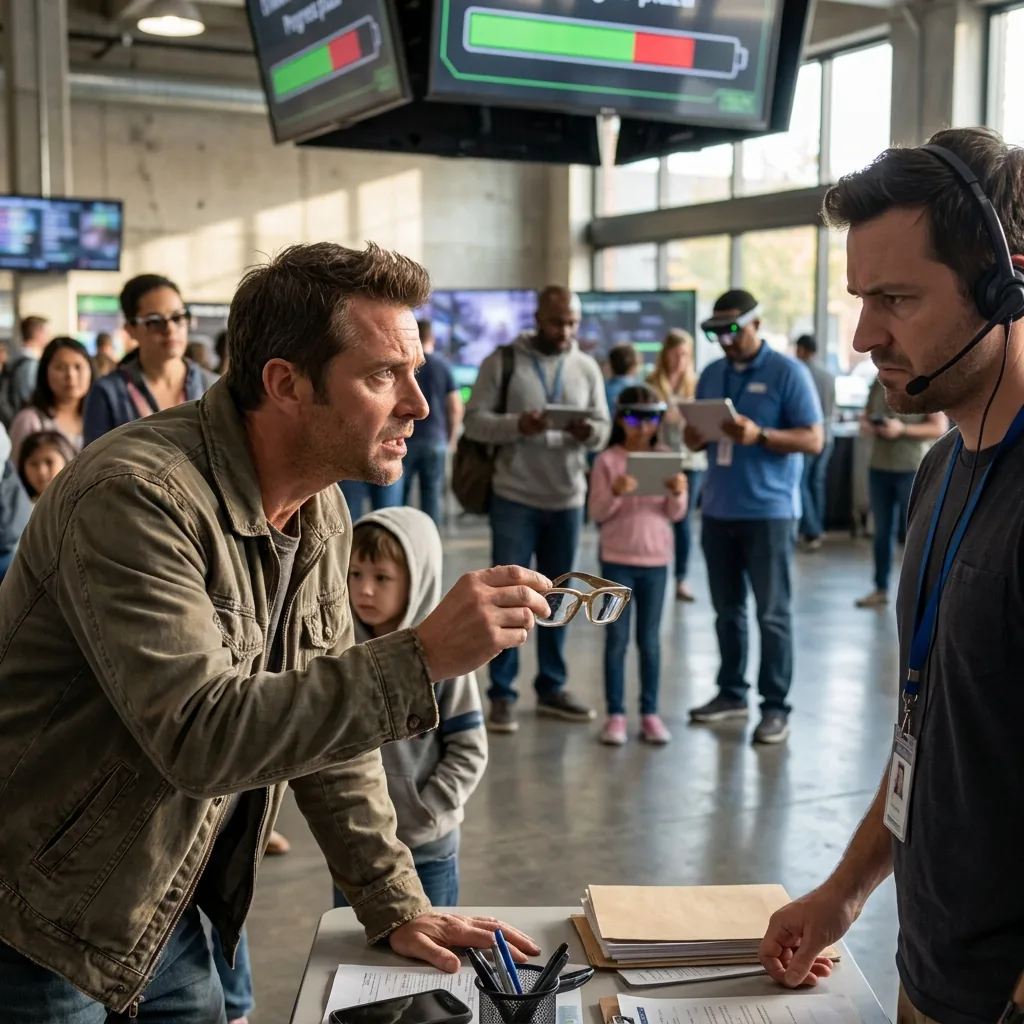
Devon Hale came up to my desk in the AR game plaza with his son’s glasses in one hand and a hard, fast story in the other: his kid needed help right now, the rules needed to bend right now, and I needed to move right now. We were standing in the open micro-location by the loading arch, where families usually wait under the bright filter glow and the game boards keep cycling through their animated scenes. Tonight the floor was full of ordinary activity inside the plaza – kids in headset straps, parents with cases and wristbands, staff walking clipboards to the next check – and Devon was speaking over all of it, holding up the AR glasses like they were the only thing in the room that mattered.
Mara, I need you to put these on the terminal now, he said, loud enough for the next two families to turn their heads. Nia’s route is broken. The overlay is stuck. We have to clear it before she misses the event window.
He set the glasses on my desk and tapped the frame twice, sharp and impatient. The lenses flashed with the same ar_glasses_manufactured_crisis_backpedal_texture we had been warning people about all week: a clean blue ripple, a freeze, then a red prompt asking for a live system accept. I could see the serial band, the child-size straps, and the case still open at his elbow. Nia stood close enough to touch the edge of the case. She kept looking from the glasses to Devon’s mouth to the big wall display where the game avatars kept running in circles.
I told him the rule the same way I had told everyone else: no live change without a check. If the overlay was stuck, I could flag safety. If it needed outside help, I could call it in. But I could not force a bypass from the desk just because the clock was loud.
That was when Devon leaned in and lowered his voice only enough to keep the people behind him from hearing the first part. Then he raised the second part again so everyone could hear it.
It’s my son, he said. He’s locked out, and he’s already upset. If you wait for procedure, you’re making this worse.
Nia’s hand caught the rim of the glasses case. She pulled it a little closer to her side without taking her eyes off the screen. A kid at the charging bench had started looking over. One of our plaza monitors chimed a reminder about live play boundaries, and the sound made Devon flinch toward it before he looked back at me.
I entered the note the way the floor requires: visible emergency claim, immediate compliance demand, AR glasses on desk, parent requesting bypass. Then I reached for the safety line and told him I needed a second set of eyes before I touched the system.
No, he said. Don’t call outside help. Don’t drag this into a report. Just clear the overlay and let us go.
That was the pattern. The visible harm got bigger each time he repeated it. The more he pushed for speed, the more the room had to choose between breaking the rule and proving the rule mattered. I could see Tessa Reed crossing from the far aisle with her badge out and her tablet up, checking the posted procedures before she even reached us. Evan Cross was already near the console wall, hands close to the controller rail, watching the glasses and the terminal with his jaw set and his mouth in a thin line.
Tessa stopped at my side, read the screen, and pointed to the live-test prompt on the panel. If the overlay was truly stuck, she said, then we would run the test path and verify the state in front of everyone. If it was not stuck, the desk would show that too.
Devon snapped his head toward her. That’s not what I asked for.
Tessa did not move. She just put one finger on the console and said, Then we need the exact help you requested. Put the glasses in the test cradle.
I slid the cradle tray forward. Devon’s hand tightened around the frame. Nia stepped in closer, her shoulder brushing his arm, and Evan lifted one palm off the controller as if he was about to stop the move himself.
Then Evan said, too quickly, No, not that sequence. Don’t run that test here.
He reached for the console and cut off the help at the exact moment Tessa had named it. The tray was open, the glasses were in reach, and the live test was one press away, but the designer had just stopped the only fix that would prove the claim. What was he afraid the terminal would show?
Devon Hale came up to my desk in the AR game plaza with his son’s glasses in one hand and a hard, fast story in the other: his kid needed help right now, the rules needed to bend right now, and I needed to move right now. We were standing in the open micro-location by the loading arch, where families usually wait under the bright filter glow and the game boards keep cycling through their animated scenes. Tonight the floor was full of ordinary activity inside the plaza – kids in headset straps, parents with cases and wristbands, staff walking clipboards to the next check – and Devon was speaking over all of it, holding up the AR glasses like they were the only thing in the room that mattered.
Mara, I need you to put these on the terminal now, he said, loud enough for the next two families to turn their heads. Nia’s route is broken. The overlay is stuck. We have to clear it before she misses the event window.
He set the glasses on my desk and tapped the frame twice, sharp and impatient. The lenses flashed with the same ar_glasses_manufactured_crisis_backpedal_texture we had been warning people about all week: a clean blue ripple, a freeze, then a red prompt asking for a live system accept. I could see the serial band, the child-size straps, and the case still open at his elbow. Nia stood close enough to touch the edge of the case. She kept looking from the glasses to Devon’s mouth to the big wall display where the game avatars kept running in circles.
I told him the rule the same way I had told everyone else: no live change without a check. If the overlay was stuck, I could flag safety. If it needed outside help, I could call it in. But I could not force a bypass from the desk just because the clock was loud.
That was when Devon leaned in and lowered his voice only enough to keep the people behind him from hearing the first part. Then he raised the second part again so everyone could hear it.
It’s my son, he said. He’s locked out, and he’s already upset. If you wait for procedure, you’re making this worse.
Nia’s hand caught the rim of the glasses case. She pulled it a little closer to her side without taking her eyes off the screen. A kid at the charging bench had started looking over. One of our plaza monitors chimed a reminder about live play boundaries, and the sound made Devon flinch toward it before he looked back at me.
I entered the note the way the floor requires: visible emergency claim, immediate compliance demand, AR glasses on desk, parent requesting bypass. Then I reached for the safety line and told him I needed a second set of eyes before I touched the system.
No, he said. Don’t call outside help. Don’t drag this into a report. Just clear the overlay and let us go.
That was the pattern. The visible harm got bigger each time he repeated it. The more he pushed for speed, the more the room had to choose between breaking the rule and proving the rule mattered. I could see Tessa Reed crossing from the far aisle with her badge out and her tablet up, checking the posted procedures before she even reached us. Evan Cross was already near the console wall, hands close to the controller rail, watching the glasses and the terminal with his jaw set and his mouth in a thin line.
Tessa stopped at my side, read the screen, and pointed to the live-test prompt on the panel. If the overlay was truly stuck, she said, then we would run the test path and verify the state in front of everyone. If it was not stuck, the desk would show that too.
Devon snapped his head toward her. That’s not what I asked for.
Tessa did not move. She just put one finger on the console and said, Then we need the exact help you requested. Put the glasses in the test cradle.
I slid the cradle tray forward. Devon’s hand tightened around the frame. Nia stepped in closer, her shoulder brushing his arm, and Evan lifted one palm off the controller as if he was about to stop the move himself.
Then Evan said, too quickly, No, not that sequence. Don’t run that test here.
He reached for the console and cut off the help at the exact moment Tessa had named it. The tray was open, the glasses were in reach, and the live test was one press away, but the designer had just stopped the only fix that would prove the claim. What was he afraid the terminal would show?