Story code: ST-000767
Part 1: The Tablet Said I Was Interfering
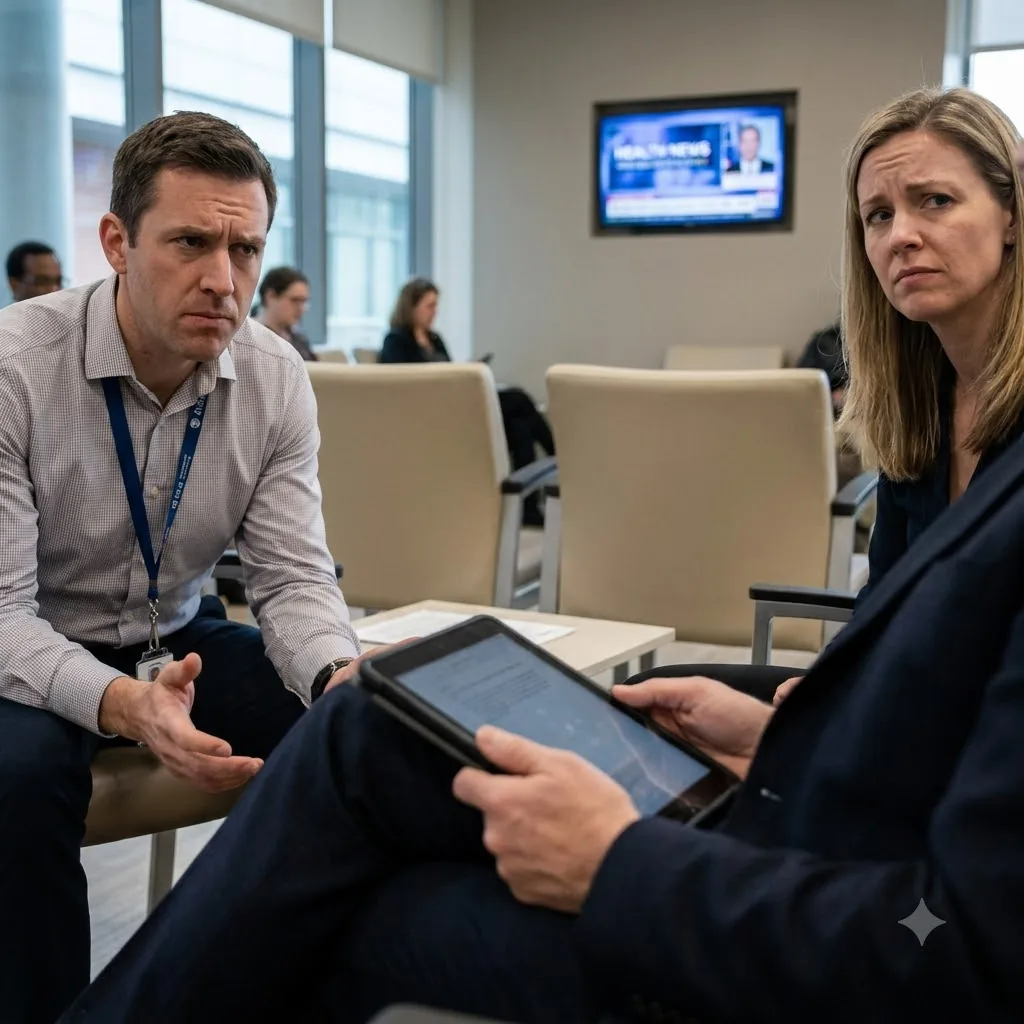
Evan Pryce said I was interfering while I was still holding the implant consent tablet in my lap beside Tessa Vale, right there in the neuro clinic checkout alcove with the beige chairs and the silent health feed scrolling on the wall. I had just helped Tessa keep her hands steady for the signature sequence, I had just tapped the tablet back awake after it dimmed, and Evan was already telling Dr. Nikhil Soren that I was making the whole process about myself.
Tessa was seated between me and the armrest, one hand wrapped around a paper cup that had gone cold. The tablet was on the narrow ledge by my knee, its blue border still lit with the consent screens. A nurse in gray scrubs walked past with a cart of wipes and sensor patches. Nobody raised their voice at first. That made it worse.
Evan stood with his badge clipped flat to his chest and one finger pointed at the tablet like it had personally offended him. “We need the patient to answer without outside pressure,” he said. “If family starts steering every step, the consent isn’t clean.”
I looked at Tessa. She was staring at the screen, not at me, not at him. Her thumb kept rubbing the edge of the cup lid. I had helped her read each line because the font had been too small on the first pass and because the clinic had already rushed her once before. She had asked me to stay. She had asked me to keep the room calm. That was the whole reason I was there.
Dr. Soren came in from the inner hall with a chart under one arm and his glasses halfway down his nose. He did not ask anyone to repeat themselves. He looked at the tablet first, then at Tessa, then at me. “What happened here?”
Evan answered before I could. “Mara keeps touching the device and prompting responses. It slows the workflow. It blurs who is actually consenting.”
I slid the tablet a few inches back toward the center ledge, where the screen still showed Tessa’s name and the implant acknowledgement page. “I only woke it up when it timed out,” I said. “She asked me to read the options twice.”
Tessa looked up at that and gave a small nod. It was not big, but it was plain. The movement was there. The witness nurse saw it too. I watched her eyes flick from Tessa to Evan and back again before she kept walking.
Evan crossed his arms. “She doesn’t need coaching. She needs a clean room.”
He said clean like I had left fingerprints on the procedure. Dr. Soren reached for the tablet and turned it so he could see the consent log. I could see the top line from where I sat. Time stamp. Patient check. Care companion present. Then a note field with a line I could not read from that angle.
Evan leaned in and tapped once on the side of the screen. “We can restart this without the extra input,” he said. “It’s safer.”
Safer for who was not something he said out loud.
Tessa finally spoke. Her voice was flat and thin, the way people sound when they have already answered too many questions. “Mara has been here the whole time.”
Evan did not look at her. He kept his eyes on Dr. Soren. “Presence is not the issue. Influence is.”
That was the moment the whole room shifted. The nurse stopped moving. A man in the waiting area lowered his magazine. Dr. Soren’s hand stayed on the tablet, but he did not open the next screen yet. He looked at the consent line again, and then at the little support icon beside it that showed a caregiver had been added to the workflow.
I had not added myself. Evan had done that when Tessa started shaking and he told me to help keep her steady. I remembered the tap because he had asked me to hold the tablet while he adjusted her wrist sensor, and the screen had flashed the support prompt before going dark.
Now he was acting like I had forced my way into the process.
Dr. Soren asked, “Who entered the support note?”
Evan’s jaw tightened, just once. He reached for the tablet again, but Dr. Soren held it in place.
I said, “You did.”
Nobody spoke for a second. Then Evan gave a quick, sharp breath through his nose and said, “That is not the same thing as consent.”
Dr. Soren finally swiped the screen. I saw a second line appear under the note field before he angled it away. His face changed only a little, but his eyes stayed on the tablet longer than they had before. “This needs a review,” he said.
Evan’s voice stayed smooth, but his fingers had started tapping against his sleeve. “A review of what exactly?”
Dr. Soren did not answer him. He was reading something on the tablet that was not there when Evan had been talking. I could see the top of the display reflected in the glossy wall panel, but not the words.
Whatever was on that screen made Dr. Soren stop looking at me and start looking at Evan.
And that was the first time I knew the tablet had more on it than the part Evan wanted everyone to see.
Evan Pryce said I was interfering while I was still holding the implant consent tablet in my lap beside Tessa Vale, right there in the neuro clinic checkout alcove with the beige chairs and the silent health feed scrolling on the wall. I had just helped Tessa keep her hands steady for the signature sequence, I had just tapped the tablet back awake after it dimmed, and Evan was already telling Dr. Nikhil Soren that I was making the whole process about myself.
Tessa was seated between me and the armrest, one hand wrapped around a paper cup that had gone cold. The tablet was on the narrow ledge by my knee, its blue border still lit with the consent screens. A nurse in gray scrubs walked past with a cart of wipes and sensor patches. Nobody raised their voice at first. That made it worse.
Evan stood with his badge clipped flat to his chest and one finger pointed at the tablet like it had personally offended him. “We need the patient to answer without outside pressure,” he said. “If family starts steering every step, the consent isn’t clean.”
I looked at Tessa. She was staring at the screen, not at me, not at him. Her thumb kept rubbing the edge of the cup lid. I had helped her read each line because the font had been too small on the first pass and because the clinic had already rushed her once before. She had asked me to stay. She had asked me to keep the room calm. That was the whole reason I was there.
Dr. Soren came in from the inner hall with a chart under one arm and his glasses halfway down his nose. He did not ask anyone to repeat themselves. He looked at the tablet first, then at Tessa, then at me. “What happened here?”
Evan answered before I could. “Mara keeps touching the device and prompting responses. It slows the workflow. It blurs who is actually consenting.”
I slid the tablet a few inches back toward the center ledge, where the screen still showed Tessa’s name and the implant acknowledgement page. “I only woke it up when it timed out,” I said. “She asked me to read the options twice.”
Tessa looked up at that and gave a small nod. It was not big, but it was plain. The movement was there. The witness nurse saw it too. I watched her eyes flick from Tessa to Evan and back again before she kept walking.
Evan crossed his arms. “She doesn’t need coaching. She needs a clean room.”
He said clean like I had left fingerprints on the procedure. Dr. Soren reached for the tablet and turned it so he could see the consent log. I could see the top line from where I sat. Time stamp. Patient check. Care companion present. Then a note field with a line I could not read from that angle.
Evan leaned in and tapped once on the side of the screen. “We can restart this without the extra input,” he said. “It’s safer.”
Safer for who was not something he said out loud.
Tessa finally spoke. Her voice was flat and thin, the way people sound when they have already answered too many questions. “Mara has been here the whole time.”
Evan did not look at her. He kept his eyes on Dr. Soren. “Presence is not the issue. Influence is.”
That was the moment the whole room shifted. The nurse stopped moving. A man in the waiting area lowered his magazine. Dr. Soren’s hand stayed on the tablet, but he did not open the next screen yet. He looked at the consent line again, and then at the little support icon beside it that showed a caregiver had been added to the workflow.
I had not added myself. Evan had done that when Tessa started shaking and he told me to help keep her steady. I remembered the tap because he had asked me to hold the tablet while he adjusted her wrist sensor, and the screen had flashed the support prompt before going dark.
Now he was acting like I had forced my way into the process.
Dr. Soren asked, “Who entered the support note?”
Evan’s jaw tightened, just once. He reached for the tablet again, but Dr. Soren held it in place.
I said, “You did.”
Nobody spoke for a second. Then Evan gave a quick, sharp breath through his nose and said, “That is not the same thing as consent.”
Dr. Soren finally swiped the screen. I saw a second line appear under the note field before he angled it away. His face changed only a little, but his eyes stayed on the tablet longer than they had before. “This needs a review,” he said.
Evan’s voice stayed smooth, but his fingers had started tapping against his sleeve. “A review of what exactly?”
Dr. Soren did not answer him. He was reading something on the tablet that was not there when Evan had been talking. I could see the top of the display reflected in the glossy wall panel, but not the words.
Whatever was on that screen made Dr. Soren stop looking at me and start looking at Evan.
And that was the first time I knew the tablet had more on it than the part Evan wanted everyone to see.