Story code: ST-000992
Part 1: The Smile He Wanted Us to Wear
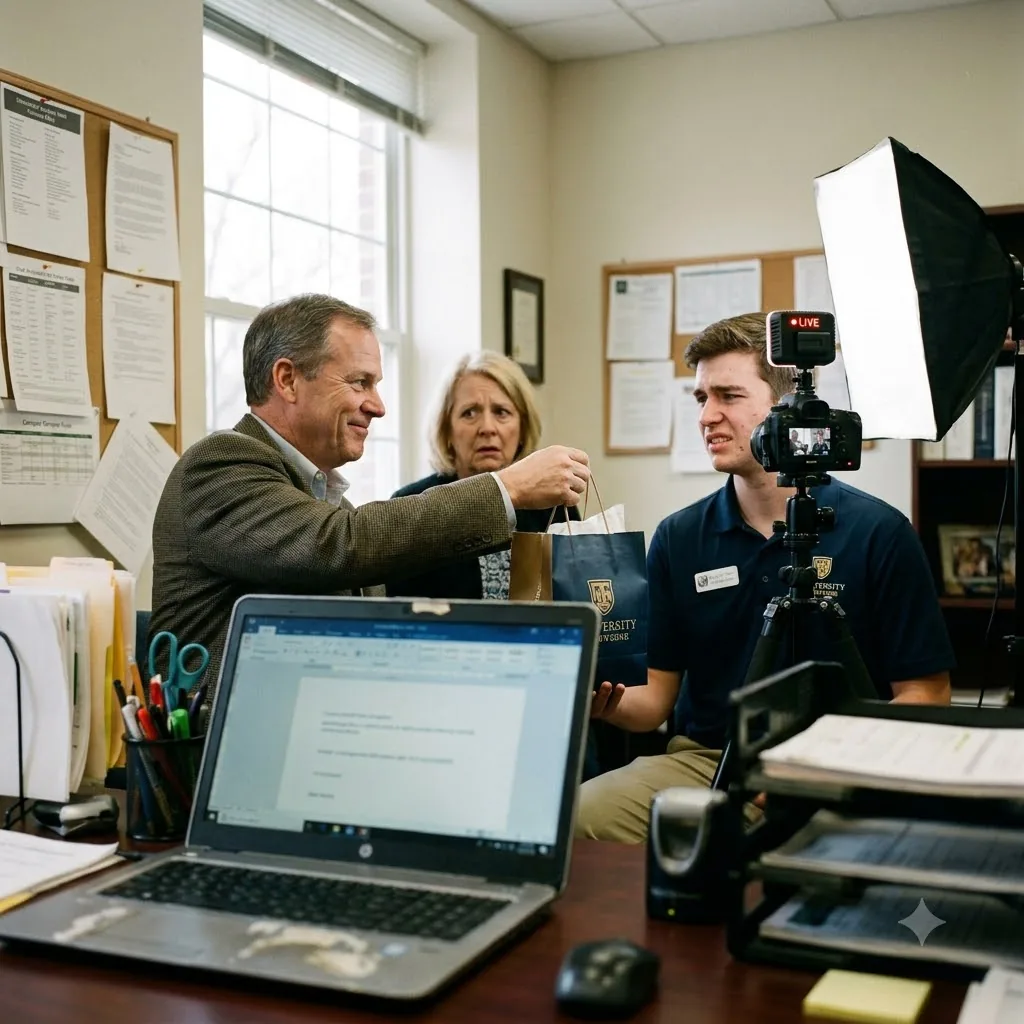
The donor dad handed a student tour guide a gift bag in our campus tour office, smiled for the fundraiser stream, and told him to “make sure people hear how hard Sloane worked on that essay” like it was just another cue card. Ten seconds later, in the glass side hall by the printer, I heard the same man drop his voice and tell the guide to lie if anyone asked who actually shaped it. His daughter was standing three feet away beside a marked printout of her admission essay, posed like part of the decoration.
I was at the front desk checking in alumni and high school families while our regular afternoon tours tried to move around donor signage and a ring light. The brochure counter was buried under welcome folders, name tags, and the tablet streaming the fundraiser to people who were not in the room. Every few minutes someone from advancement would lean into our office, point at the camera angle, and back out again like we were a stage instead of the place where students usually came to ask where the next tour started.
Graham Whitfield moved through all of it like he owned the hallway. He had one hand on a stack of gift bags with the university crest and one hand free for shoulder pats. He gave one to Evan Brooks, our youngest guide on shift, and said in a voice meant to carry, “You all do such incredible work. We just believe in lifting up deserving students.” The camera on the tablet was pointed right at him, and he made sure Sloane stepped into frame before he finished the sentence.
Sloane had a cream folder tucked against her side and a few loose pages clipped on top. I saw the title page because she turned when a guest asked where to put a coat. Her own name was at the top, double-spaced under a bold essay prompt. The top page had pencil marks all over it, not just a little proofread line here or there, but thick circles and arrows in the margins. Graham kept touching the back of that folder whenever he introduced her.
“This is the essay that made everybody cry,” he told a pair of donors waiting for the ceremony to start in the next room. “Pure Sloane. Pure heart.”
Sloane gave a small smile because he was looking at her. Then he shifted her half a step closer to the donor banner so the pages showed.
That was the first thing that bothered me. Not because parents bragging was rare in admissions spaces. It was because he kept using the essay like a prop, and he kept using her body to hold it at the right height.
Evan was trying to sort route sheets at the brochure counter while all this happened. He is one of those students who always says “absolutely” before he says anything else. He nodded through Graham’s whole speech, but every time Graham brought up the essay, Evan’s eyes flicked toward me and then toward Marcy’s office door.
Marcy Chen was running two problems at once, which meant she was wearing her headset and answering questions in fragments. “No, move the check-in table out of the fire lane. Yes, five more chairs. No, not in front of my office.” She saw Graham block the hallway twice with a camera-friendly conversation and said, very flat, “We need the side hall clear for tours.”
Graham smiled at her too, but it had less warmth in it than the one he gave the donors. “Of course. We’re almost done capturing this little moment.”
A few minutes later, he asked Evan to carry one of the gift bags to the side hall because there were extra lapel pins inside. I was at the printer feeding cardstock name tags when they stepped into the glass-walled passage by the supply cabinet. The door never latched right, so it stayed open a few inches.
Graham’s public voice disappeared.
“Listen carefully,” he said. “If families ask on tour, you say she wrote every word herself and the essay only needed light review. Keep it clean. No weird joking about editors. No mention of coaches. You understand me?”
There was a pause long enough for the printer to spit out two pages.
Then Evan said, “I don’t usually talk about an applicant’s materials on tour.”
Graham answered right away. “Today you do. It’s helpful for the campaign. People like a merit story.”
I stayed bent over the printer tray because if I moved, they would hear me. Through the gap in the door I could see Sloane at the end of the hall, still holding the essay pages against her dress while a woman from advancement adjusted the donor ribbon on her shoulder. She looked toward the glass when her father said, sharper this time, “Just repeat what I said.”
When they came back into the office, Graham had the broad fundraiser smile on again. He thanked Evan loudly for “everything these students do,” then reached over and straightened the top page of Sloane’s essay so the marked margins faced inward instead of out.
Evan took the route sheets from the counter with both hands. He did not say “absolutely” that time.
Then one of the livestream volunteers asked if our guides could mention Sloane’s essay story during the donor family walkthrough, and Graham answered before any of us could.
“They already know exactly how to tell it,” he said.
He said that while I was the only other person in the room who had heard what he actually meant.
The donor dad handed a student tour guide a gift bag in our campus tour office, smiled for the fundraiser stream, and told him to “make sure people hear how hard Sloane worked on that essay” like it was just another cue card. Ten seconds later, in the glass side hall by the printer, I heard the same man drop his voice and tell the guide to lie if anyone asked who actually shaped it. His daughter was standing three feet away beside a marked printout of her admission essay, posed like part of the decoration.
I was at the front desk checking in alumni and high school families while our regular afternoon tours tried to move around donor signage and a ring light. The brochure counter was buried under welcome folders, name tags, and the tablet streaming the fundraiser to people who were not in the room. Every few minutes someone from advancement would lean into our office, point at the camera angle, and back out again like we were a stage instead of the place where students usually came to ask where the next tour started.
Graham Whitfield moved through all of it like he owned the hallway. He had one hand on a stack of gift bags with the university crest and one hand free for shoulder pats. He gave one to Evan Brooks, our youngest guide on shift, and said in a voice meant to carry, “You all do such incredible work. We just believe in lifting up deserving students.” The camera on the tablet was pointed right at him, and he made sure Sloane stepped into frame before he finished the sentence.
Sloane had a cream folder tucked against her side and a few loose pages clipped on top. I saw the title page because she turned when a guest asked where to put a coat. Her own name was at the top, double-spaced under a bold essay prompt. The top page had pencil marks all over it, not just a little proofread line here or there, but thick circles and arrows in the margins. Graham kept touching the back of that folder whenever he introduced her.
“This is the essay that made everybody cry,” he told a pair of donors waiting for the ceremony to start in the next room. “Pure Sloane. Pure heart.”
Sloane gave a small smile because he was looking at her. Then he shifted her half a step closer to the donor banner so the pages showed.
That was the first thing that bothered me. Not because parents bragging was rare in admissions spaces. It was because he kept using the essay like a prop, and he kept using her body to hold it at the right height.
Evan was trying to sort route sheets at the brochure counter while all this happened. He is one of those students who always says “absolutely” before he says anything else. He nodded through Graham’s whole speech, but every time Graham brought up the essay, Evan’s eyes flicked toward me and then toward Marcy’s office door.
Marcy Chen was running two problems at once, which meant she was wearing her headset and answering questions in fragments. “No, move the check-in table out of the fire lane. Yes, five more chairs. No, not in front of my office.” She saw Graham block the hallway twice with a camera-friendly conversation and said, very flat, “We need the side hall clear for tours.”
Graham smiled at her too, but it had less warmth in it than the one he gave the donors. “Of course. We’re almost done capturing this little moment.”
A few minutes later, he asked Evan to carry one of the gift bags to the side hall because there were extra lapel pins inside. I was at the printer feeding cardstock name tags when they stepped into the glass-walled passage by the supply cabinet. The door never latched right, so it stayed open a few inches.
Graham’s public voice disappeared.
“Listen carefully,” he said. “If families ask on tour, you say she wrote every word herself and the essay only needed light review. Keep it clean. No weird joking about editors. No mention of coaches. You understand me?”
There was a pause long enough for the printer to spit out two pages.
Then Evan said, “I don’t usually talk about an applicant’s materials on tour.”
Graham answered right away. “Today you do. It’s helpful for the campaign. People like a merit story.”
I stayed bent over the printer tray because if I moved, they would hear me. Through the gap in the door I could see Sloane at the end of the hall, still holding the essay pages against her dress while a woman from advancement adjusted the donor ribbon on her shoulder. She looked toward the glass when her father said, sharper this time, “Just repeat what I said.”
When they came back into the office, Graham had the broad fundraiser smile on again. He thanked Evan loudly for “everything these students do,” then reached over and straightened the top page of Sloane’s essay so the marked margins faced inward instead of out.
Evan took the route sheets from the counter with both hands. He did not say “absolutely” that time.
Then one of the livestream volunteers asked if our guides could mention Sloane’s essay story during the donor family walkthrough, and Graham answered before any of us could.
“They already know exactly how to tell it,” he said.
He said that while I was the only other person in the room who had heard what he actually meant.