Story code: ST-000580
Part 1: He Called It Stewardship
Deacon Paul Hensley set the offering basket on the church office table, looked at me like he was about to pray over me, and said, “When somebody carries you through a hard patch, Rachel, you don’t forget it.” I had only stopped by to help count the afternoon offering, and in the middle of envelopes, bulletin stacks, and a ringing office phone, the church treasurer calmly informed me I owed the church for a favor I never asked him for. He said it softly, like generosity itself had handed him the right to name my debt.
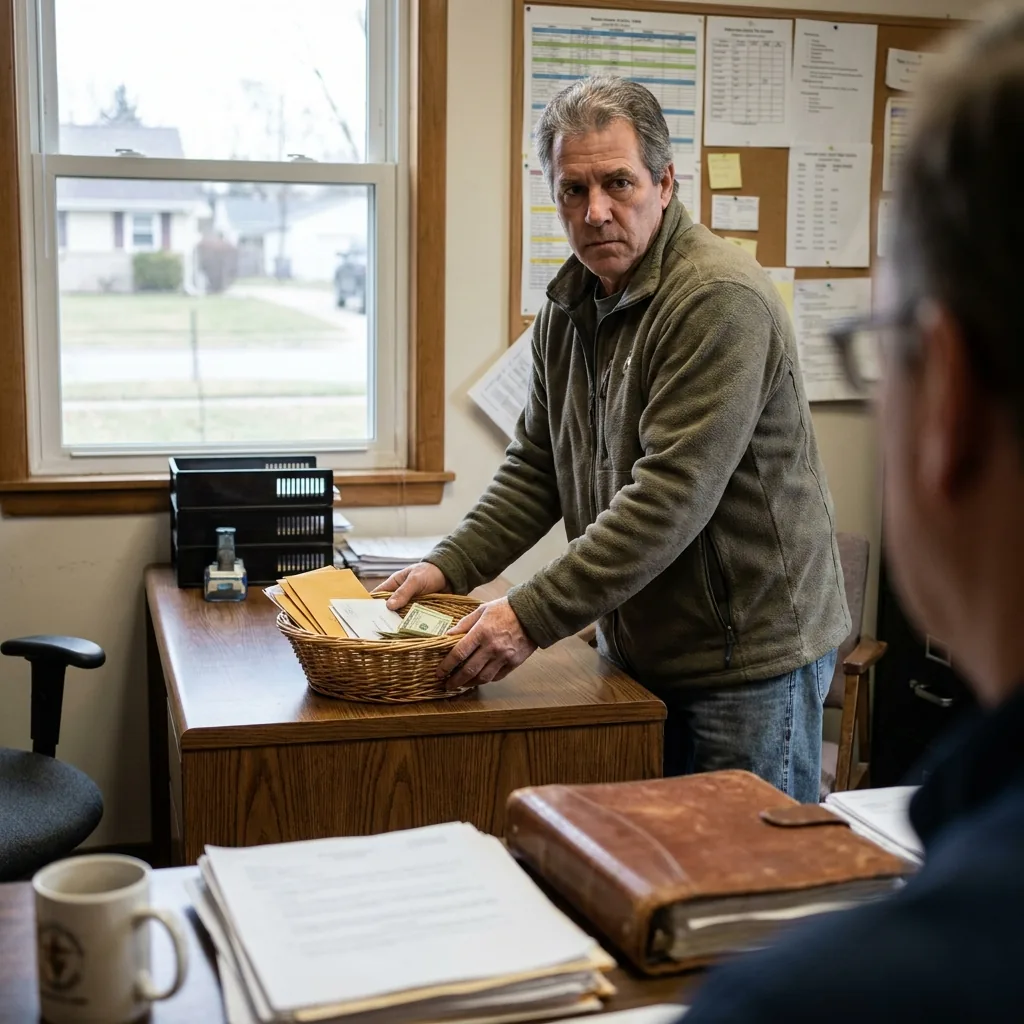
I was still standing near the side of the desk when he said it. Marlene Ortiz was at the copy machine in the next room feeding paper into a tray, close enough that I kept my voice even. The office looked like it always did on a weekday afternoon: bulletin drafts clipped together, pens in a coffee mug, a half-open box of giving envelopes, and the woven offering basket right in the middle of the worktable where Paul liked to sort cash.
“I came to help count,” I said.
“And I appreciate that.” He gave me the same patient nod he used in the hallway after service. “But appreciation runs both ways. We all have to do our part when we’ve been blessed by this church.”
That was the first turn. Not a request. Not even a straight demand. He started with church words, the kind that sound harmless until you hear where they’re pointed.
He slid the basket closer and lifted a stack of envelopes out of it. “You remember when we covered that electric bill situation for your mother.” He did not ask it like a question. “Nobody made noise about it. Nobody embarrassed your family. We handled it quietly. That’s what the church does.”
I looked at him. “I never asked you to pay anything for us.”
“No, but you accepted help.” He said that like he was balancing a line in a ledger. “And help creates responsibility.”
Marlene walked through the doorway carrying a fresh ream of paper and a bottle of correction fluid. Paul paused just long enough to smile at her and ask if the youth flyers were ready. His tone was smooth, unhurried. She said she’d bring them by in a minute and kept moving.
As soon as she passed, he lowered his voice again. “I’m not talking about numbers on paper, Rachel. I’m talking about faithfulness. The church stepped in. Now the church needs faithful hands.”
I had heard him talk like that from the front of a room before, when volunteers were late or a project needed money. In the office, with the basket between us, it sounded different. More precise.
“Faithful hands for what?” I asked.
He tapped the envelopes. “Extra count nights. Saturday sorting. Taking the loose cash deposits over the next few weeks. And where there are shortfalls in ministry operations, people who have received grace don’t stand back with their arms folded.”
There it was. He had taken an old situation involving my mother, wrapped it in church language, and moved it directly onto me. Not a thank-you. Not volunteer help. A bill with no paper attached.
“You should have asked me if I agreed to any of that,” I said.
“Agreement isn’t the issue.” He kept stacking envelopes into neat rows. “Character is. If somebody shields your family from strain, and later asks you to stand in the gap, that shouldn’t be a struggle.”
The words landed colder than if he had raised his voice. He was careful not to make it sound like extortion. He made it sound like my conscience was behind on payments.
I pulled out the chair across from him but did not sit. “You keep saying ‘your family’ like this was done for me. My mother told me the church office needed the utility issue handled fast because the account couldn’t sit in her name for another week. She said you needed somebody local to let the notice get routed properly until the bookkeeping caught up. That isn’t the same thing as you rescuing us.”
His hands stopped for a second on the basket rim.
Then he smiled again, smaller this time. “That is an ungrateful way to describe kindness.”
“It’s an accurate way to describe what happened,” I said.
He shook his head and reached into the basket for the loose bills. “Accuracy matters, yes. Which is why I remember who stood by this church and who needed this church to stand by them.”
The office phone rang twice and stopped. Somewhere down the hall a cabinet door slammed. Paul began counting bills under his breath, then looked back up at me before finishing the stack.
“Let’s not make this ugly,” he said. “You can start tonight by staying until we’re finished and taking the deposit bag after. Then we’ll talk about what you still owe in time.”
He said still owe like this had already been agreed, priced, and entered under my name.
I stared at the offering basket, at the envelopes from people who thought they were giving freely, and at his hands resting on either side of it like the basket proved he had moral authority over the room. Then one detail from that old electric bill mess hit me hard enough that I stopped answering him.
If the church had really carried my family, why had Paul needed my mother’s name and my phone number attached to that account at all?
Deacon Paul Hensley set the offering basket on the church office table, looked at me like he was about to pray over me, and said, “When somebody carries you through a hard patch, Rachel, you don’t forget it.” I had only stopped by to help count the afternoon offering, and in the middle of envelopes, bulletin stacks, and a ringing office phone, the church treasurer calmly informed me I owed the church for a favor I never asked him for. He said it softly, like generosity itself had handed him the right to name my debt.
I was still standing near the side of the desk when he said it. Marlene Ortiz was at the copy machine in the next room feeding paper into a tray, close enough that I kept my voice even. The office looked like it always did on a weekday afternoon: bulletin drafts clipped together, pens in a coffee mug, a half-open box of giving envelopes, and the woven offering basket right in the middle of the worktable where Paul liked to sort cash.
“I came to help count,” I said.
“And I appreciate that.” He gave me the same patient nod he used in the hallway after service. “But appreciation runs both ways. We all have to do our part when we’ve been blessed by this church.”
That was the first turn. Not a request. Not even a straight demand. He started with church words, the kind that sound harmless until you hear where they’re pointed.
He slid the basket closer and lifted a stack of envelopes out of it. “You remember when we covered that electric bill situation for your mother.” He did not ask it like a question. “Nobody made noise about it. Nobody embarrassed your family. We handled it quietly. That’s what the church does.”
I looked at him. “I never asked you to pay anything for us.”
“No, but you accepted help.” He said that like he was balancing a line in a ledger. “And help creates responsibility.”
Marlene walked through the doorway carrying a fresh ream of paper and a bottle of correction fluid. Paul paused just long enough to smile at her and ask if the youth flyers were ready. His tone was smooth, unhurried. She said she’d bring them by in a minute and kept moving.
As soon as she passed, he lowered his voice again. “I’m not talking about numbers on paper, Rachel. I’m talking about faithfulness. The church stepped in. Now the church needs faithful hands.”
I had heard him talk like that from the front of a room before, when volunteers were late or a project needed money. In the office, with the basket between us, it sounded different. More precise.
“Faithful hands for what?” I asked.
He tapped the envelopes. “Extra count nights. Saturday sorting. Taking the loose cash deposits over the next few weeks. And where there are shortfalls in ministry operations, people who have received grace don’t stand back with their arms folded.”
There it was. He had taken an old situation involving my mother, wrapped it in church language, and moved it directly onto me. Not a thank-you. Not volunteer help. A bill with no paper attached.
“You should have asked me if I agreed to any of that,” I said.
“Agreement isn’t the issue.” He kept stacking envelopes into neat rows. “Character is. If somebody shields your family from strain, and later asks you to stand in the gap, that shouldn’t be a struggle.”
The words landed colder than if he had raised his voice. He was careful not to make it sound like extortion. He made it sound like my conscience was behind on payments.
I pulled out the chair across from him but did not sit. “You keep saying ‘your family’ like this was done for me. My mother told me the church office needed the utility issue handled fast because the account couldn’t sit in her name for another week. She said you needed somebody local to let the notice get routed properly until the bookkeeping caught up. That isn’t the same thing as you rescuing us.”
His hands stopped for a second on the basket rim.
Then he smiled again, smaller this time. “That is an ungrateful way to describe kindness.”
“It’s an accurate way to describe what happened,” I said.
He shook his head and reached into the basket for the loose bills. “Accuracy matters, yes. Which is why I remember who stood by this church and who needed this church to stand by them.”
The office phone rang twice and stopped. Somewhere down the hall a cabinet door slammed. Paul began counting bills under his breath, then looked back up at me before finishing the stack.
“Let’s not make this ugly,” he said. “You can start tonight by staying until we’re finished and taking the deposit bag after. Then we’ll talk about what you still owe in time.”
He said still owe like this had already been agreed, priced, and entered under my name.
I stared at the offering basket, at the envelopes from people who thought they were giving freely, and at his hands resting on either side of it like the basket proved he had moral authority over the room. Then one detail from that old electric bill mess hit me hard enough that I stopped answering him.
If the church had really carried my family, why had Paul needed my mother’s name and my phone number attached to that account at all?