Story code: ST-000765
Part 1: The Banner on the Steps
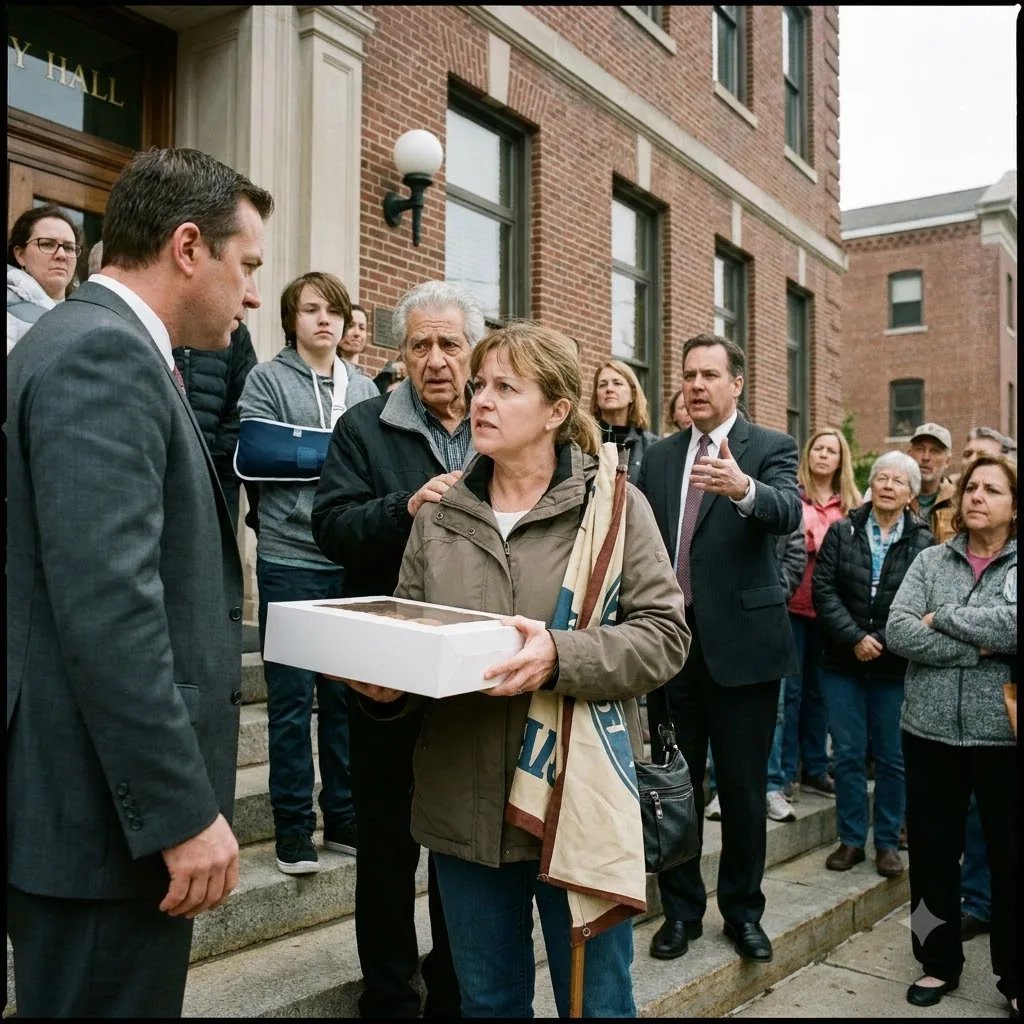
June Mercer stepped onto the city council steps with my family’s cake box in one hand and a folded protest banner tucked under her arm, right in the middle of our celebration space, and I saw the whole thing go wrong before anyone else did. We were in the public ceremony area on the steps, the volunteer kids were still carrying paper plates from the adjacent family gathering space, and that banner had no business showing up beside our name. It was the kind of wrong detail that makes a room go quiet before anybody even knows why.
I was standing closest, so I saw June slide the banner lower when she noticed me looking. The fabric brushed the stone and caught on the edge of the box. A strip of green and white flashed out anyway, printed with the kind of message you only bring to a protest. Not to a family picture. Not to a council steps ceremony where Tom Mercer was shaking hands with people from the neighborhood and asking who wanted coffee.
“June,” I said, low enough that only she could hear me, “what is that?”
She kept her smile fixed for the people around us and shifted the box higher against her hip. “It’s nothing. We’re fine.”
That answer was wrong before the words finished leaving her mouth. I watched her fingers tighten around the cardboard edge. I watched her glance toward the street, then back to the steps, like she was checking where the next pair of eyes would land. The banner was not nothing. The banner was the sort of thing that turns a family afternoon into a public problem in one second flat.
Tom was halfway through telling the council staffer that we were just there for a small family recognition when the staffer stopped looking at him and looked past him at June. He was holding a clipboard, one of those ordinary city boards with names and timing marked in neat black boxes. He did not raise his voice. He just paused, one hand still on the list, and said, “Ma’am, is that item part of the ceremony setup?”
June moved faster than I expected. She turned the banner inward against her side and gave a quick laugh that did not fit the moment. “No, it’s for later. I brought it for a friend.”
For later. That was the first lie I heard clearly. It was also the first one that cost us something. A woman near the bottom step had already lifted her phone. One of the kids from our family table stopped mid-bite and stared at the folded edge of the fabric. Tom’s mouth tightened. He looked from the banner to June to me, waiting for somebody to make sense of it.
I asked her again, sharper this time, “What friend?”
June adjusted the box and said, “Just let me handle it.”
That was when I realized I had seen her do this before, just not in this light. The same quick hands. The same sideways glance. The same careful way she tried to keep one part of herself hidden while the rest of her stood in plain view. I had not had proof before. I had not had a name for it. But standing there on the city council steps, with the protest banner half-visible under her arm and my family watching her like she had stepped out of a different life, I knew there was another version of June living somewhere I had not been allowed to see.
The council staffer checked the clipboard again and said, “If this is for a demonstration, it cannot stay here during the ceremony.”
June nodded too fast. “Of course. I’m moving it.”
She took one step toward the side stairs, but the banner snagged loose and opened just enough for me to read the top line. Not all of it. Just enough to make my stomach drop and tell me this was not some harmless decoration she had borrowed from a friend. This was deliberate. This was hers.
Tom saw the same thing I did. He did not speak. He just stared at the lettering, then at June’s face, then back at me, like he was trying to figure out which of us had known first.
I reached for the banner edge before she could fold it back, and June pulled away so hard the cake box tilted in her hands. Frosting smudged the cardboard. Somebody in the crowd made a small sound and then went quiet.
June looked straight at me for the first time since she climbed the steps, and I said the only thing that mattered.
“Who already knew about this?”
June Mercer stepped onto the city council steps with my family’s cake box in one hand and a folded protest banner tucked under her arm, right in the middle of our celebration space, and I saw the whole thing go wrong before anyone else did. We were in the public ceremony area on the steps, the volunteer kids were still carrying paper plates from the adjacent family gathering space, and that banner had no business showing up beside our name. It was the kind of wrong detail that makes a room go quiet before anybody even knows why.
I was standing closest, so I saw June slide the banner lower when she noticed me looking. The fabric brushed the stone and caught on the edge of the box. A strip of green and white flashed out anyway, printed with the kind of message you only bring to a protest. Not to a family picture. Not to a council steps ceremony where Tom Mercer was shaking hands with people from the neighborhood and asking who wanted coffee.
“June,” I said, low enough that only she could hear me, “what is that?”
She kept her smile fixed for the people around us and shifted the box higher against her hip. “It’s nothing. We’re fine.”
That answer was wrong before the words finished leaving her mouth. I watched her fingers tighten around the cardboard edge. I watched her glance toward the street, then back to the steps, like she was checking where the next pair of eyes would land. The banner was not nothing. The banner was the sort of thing that turns a family afternoon into a public problem in one second flat.
Tom was halfway through telling the council staffer that we were just there for a small family recognition when the staffer stopped looking at him and looked past him at June. He was holding a clipboard, one of those ordinary city boards with names and timing marked in neat black boxes. He did not raise his voice. He just paused, one hand still on the list, and said, “Ma’am, is that item part of the ceremony setup?”
June moved faster than I expected. She turned the banner inward against her side and gave a quick laugh that did not fit the moment. “No, it’s for later. I brought it for a friend.”
For later. That was the first lie I heard clearly. It was also the first one that cost us something. A woman near the bottom step had already lifted her phone. One of the kids from our family table stopped mid-bite and stared at the folded edge of the fabric. Tom’s mouth tightened. He looked from the banner to June to me, waiting for somebody to make sense of it.
I asked her again, sharper this time, “What friend?”
June adjusted the box and said, “Just let me handle it.”
That was when I realized I had seen her do this before, just not in this light. The same quick hands. The same sideways glance. The same careful way she tried to keep one part of herself hidden while the rest of her stood in plain view. I had not had proof before. I had not had a name for it. But standing there on the city council steps, with the protest banner half-visible under her arm and my family watching her like she had stepped out of a different life, I knew there was another version of June living somewhere I had not been allowed to see.
The council staffer checked the clipboard again and said, “If this is for a demonstration, it cannot stay here during the ceremony.”
June nodded too fast. “Of course. I’m moving it.”
She took one step toward the side stairs, but the banner snagged loose and opened just enough for me to read the top line. Not all of it. Just enough to make my stomach drop and tell me this was not some harmless decoration she had borrowed from a friend. This was deliberate. This was hers.
Tom saw the same thing I did. He did not speak. He just stared at the lettering, then at June’s face, then back at me, like he was trying to figure out which of us had known first.
I reached for the banner edge before she could fold it back, and June pulled away so hard the cake box tilted in her hands. Frosting smudged the cardboard. Somebody in the crowd made a small sound and then went quiet.
June looked straight at me for the first time since she climbed the steps, and I said the only thing that mattered.
“Who already knew about this?”