Story code: ST-000302
Part 1: He Walked In Like My Door Was His
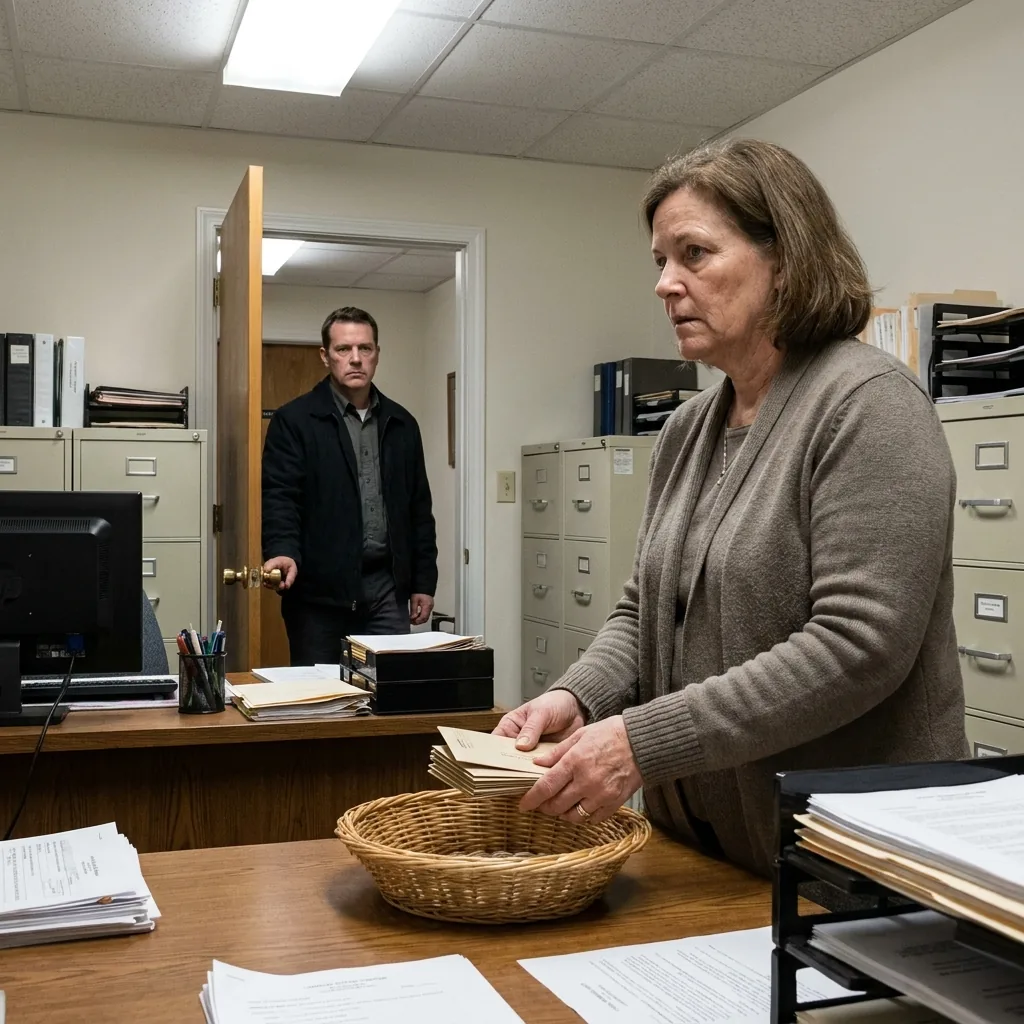
Paul Danner came through my office door again while I was standing over the offering basket with the envelope stack in both hands, and this time he did not knock, did not pause, did not even pretend he had the wrong room. He crossed my private doorway in the church front office like it belonged to him, brushed past my chair, and reached toward my desk drawer while telling me, smooth as Sunday announcements, that he was “just helping keep things moving.” The unfair part was not only that he was our treasurer. It was that when I told him to stop entering my office without permission, he smiled like I had made a joke in the middle of ministry. I work in the front office, the side room with the half-door window that looks into the hallway and the wall calendar beside the supply cabinet. My routine stays the same most weekdays. I sort mail, line up forms, keep the pens in one cup, and set the offering basket on the count table until Linda Shaw is ready to start the deposit routine. I keep my own office door half-closed when I am inside because people in churches have a way of acting like privacy is rudeness unless you make it look temporary. That afternoon I was locking up loose cash envelopes in my desk before the count. Paul appeared in the doorway without warning. “Need the Sunday tally sheet,” he said. “You can ask from the hall,” I said. He had one hand on the inside edge of my door already. “Rachel, we are on the same team. I am not a stranger.” “You still need to knock.” He gave me that bright church smile and stepped fully into the room anyway. His sleeve brushed the back of my chair. He leaned near enough to my desk that I moved the offering basket farther behind me. “I said I just need the tally sheet,” he said. “And I said stop coming in here like this.” He looked past me, not at me, and put two fingers on the desk drawer pull like he already knew which one held what. I put my hand over it first. For a second we were both standing there with our hands near the same drawer and the offering basket sitting on the corner of the count table like a witness. Then Linda called from the hallway, “Paul, can you check the copier code?” He lifted his hands, easy as anything. “See? Everybody needs everything at once.” He walked out, leaving my office door wider open than he found it. That was not the first time. The first time had been small enough that I could still tell myself maybe I had missed a knock. I came back from the supply cabinet and found him inside my office looking down at the papers near the basket. He said he had been looking for Linda. Another day I came in from the hall and found my chair angled away from my desk when I always push it in. Then an envelope stack that I had squared against the left corner sat nearer the phone on the right side. Once the desk drawer was not latched all the way. Each thing was slight. Each thing could be explained away if I wanted an easy afternoon. But it kept happening around the same routine: count day, basket day, cash envelopes on my desk, my door half-closed. I started testing the room without announcing it. Nothing dramatic. I placed the offering basket handle facing the file cabinet instead of the hall. I lined the top three envelopes with their flap corners even. I turned my stapler sideways against the calendar side of the desk. When I stepped out, I made a point of noticing the lock click and the way the door sat in the frame. That Friday, after lunch, Linda asked me to bring toner from the supply cabinet. I was gone maybe two minutes. When I came back, Paul was in the hall outside my office, one hand in his pocket, the other holding a folded bulletin draft. My door was three inches more open than I had left it. He looked at me and said, “Linda around?” “Not in my office,” I said. He gave a short laugh and moved aside. Inside, the stapler was straight again. The basket handle pointed toward the hall. The top envelope had shifted enough that one flap corner no longer matched the others. I carried the toner to Linda’s desk and said, “Has Paul been using my office?” She kept typing while she answered. “Using it how?” “Coming in when I’m not there.” “He probably needed something for the count.” “Then he can ask me.” She stopped typing, looked up, and lowered her voice like she was calming a child in church. “Rachel, he has handled church finances for twelve years. If he needed a form, I am sure it was nothing.” “Nothing keeps moving things in my room.” Linda pressed her lips together and reached for the office key ring beside her planner. “Well, if you’re worried about access, the only people with regular room keys are me, facilities, and the pastor’s emergency set.” She said it casually and set the keys down again. But I had already seen the blue plastic tag hanging from the ring marked OFFICE 3. That is my office. And the person who checked those room keys in and out most often was my brother Evan, because he worked facilities, carried work orders, and spent half his day opening doors for everybody else in that building. I went back to my room and looked at the offering basket on the table, then at my door, then at the drawer Paul kept reaching for. If Paul had not been guessing his way inside, then somebody close enough to me to know the building was part of the path, and I did not know.
Paul Danner came through my office door again while I was standing over the offering basket with the envelope stack in both hands, and this time he did not knock, did not pause, did not even pretend he had the wrong room. He crossed my private doorway in the church front office like it belonged to him, brushed past my chair, and reached toward my desk drawer while telling me, smooth as Sunday announcements, that he was “just helping keep things moving.” The unfair part was not only that he was our treasurer. It was that when I told him to stop entering my office without permission, he smiled like I had made a joke in the middle of ministry. I work in the front office, the side room with the half-door window that looks into the hallway and the wall calendar beside the supply cabinet. My routine stays the same most weekdays. I sort mail, line up forms, keep the pens in one cup, and set the offering basket on the count table until Linda Shaw is ready to start the deposit routine. I keep my own office door half-closed when I am inside because people in churches have a way of acting like privacy is rudeness unless you make it look temporary. That afternoon I was locking up loose cash envelopes in my desk before the count. Paul appeared in the doorway without warning. “Need the Sunday tally sheet,” he said. “You can ask from the hall,” I said. He had one hand on the inside edge of my door already. “Rachel, we are on the same team. I am not a stranger.” “You still need to knock.” He gave me that bright church smile and stepped fully into the room anyway. His sleeve brushed the back of my chair. He leaned near enough to my desk that I moved the offering basket farther behind me. “I said I just need the tally sheet,” he said. “And I said stop coming in here like this.” He looked past me, not at me, and put two fingers on the desk drawer pull like he already knew which one held what. I put my hand over it first. For a second we were both standing there with our hands near the same drawer and the offering basket sitting on the corner of the count table like a witness. Then Linda called from the hallway, “Paul, can you check the copier code?” He lifted his hands, easy as anything. “See? Everybody needs everything at once.” He walked out, leaving my office door wider open than he found it. That was not the first time. The first time had been small enough that I could still tell myself maybe I had missed a knock. I came back from the supply cabinet and found him inside my office looking down at the papers near the basket. He said he had been looking for Linda. Another day I came in from the hall and found my chair angled away from my desk when I always push it in. Then an envelope stack that I had squared against the left corner sat nearer the phone on the right side. Once the desk drawer was not latched all the way. Each thing was slight. Each thing could be explained away if I wanted an easy afternoon. But it kept happening around the same routine: count day, basket day, cash envelopes on my desk, my door half-closed. I started testing the room without announcing it. Nothing dramatic. I placed the offering basket handle facing the file cabinet instead of the hall. I lined the top three envelopes with their flap corners even. I turned my stapler sideways against the calendar side of the desk. When I stepped out, I made a point of noticing the lock click and the way the door sat in the frame. That Friday, after lunch, Linda asked me to bring toner from the supply cabinet. I was gone maybe two minutes. When I came back, Paul was in the hall outside my office, one hand in his pocket, the other holding a folded bulletin draft. My door was three inches more open than I had left it. He looked at me and said, “Linda around?” “Not in my office,” I said. He gave a short laugh and moved aside. Inside, the stapler was straight again. The basket handle pointed toward the hall. The top envelope had shifted enough that one flap corner no longer matched the others. I carried the toner to Linda’s desk and said, “Has Paul been using my office?” She kept typing while she answered. “Using it how?” “Coming in when I’m not there.” “He probably needed something for the count.” “Then he can ask me.” She stopped typing, looked up, and lowered her voice like she was calming a child in church. “Rachel, he has handled church finances for twelve years. If he needed a form, I am sure it was nothing.” “Nothing keeps moving things in my room.” Linda pressed her lips together and reached for the office key ring beside her planner. “Well, if you’re worried about access, the only people with regular room keys are me, facilities, and the pastor’s emergency set.” She said it casually and set the keys down again. But I had already seen the blue plastic tag hanging from the ring marked OFFICE 3. That is my office. And the person who checked those room keys in and out most often was my brother Evan, because he worked facilities, carried work orders, and spent half his day opening doors for everybody else in that building. I went back to my room and looked at the offering basket on the table, then at my door, then at the drawer Paul kept reaching for. If Paul had not been guessing his way inside, then somebody close enough to me to know the building was part of the path, and I did not know.