Story code: ST-000570
Part 1: Linda Put Tasha on a Screen Before Anyone Asked
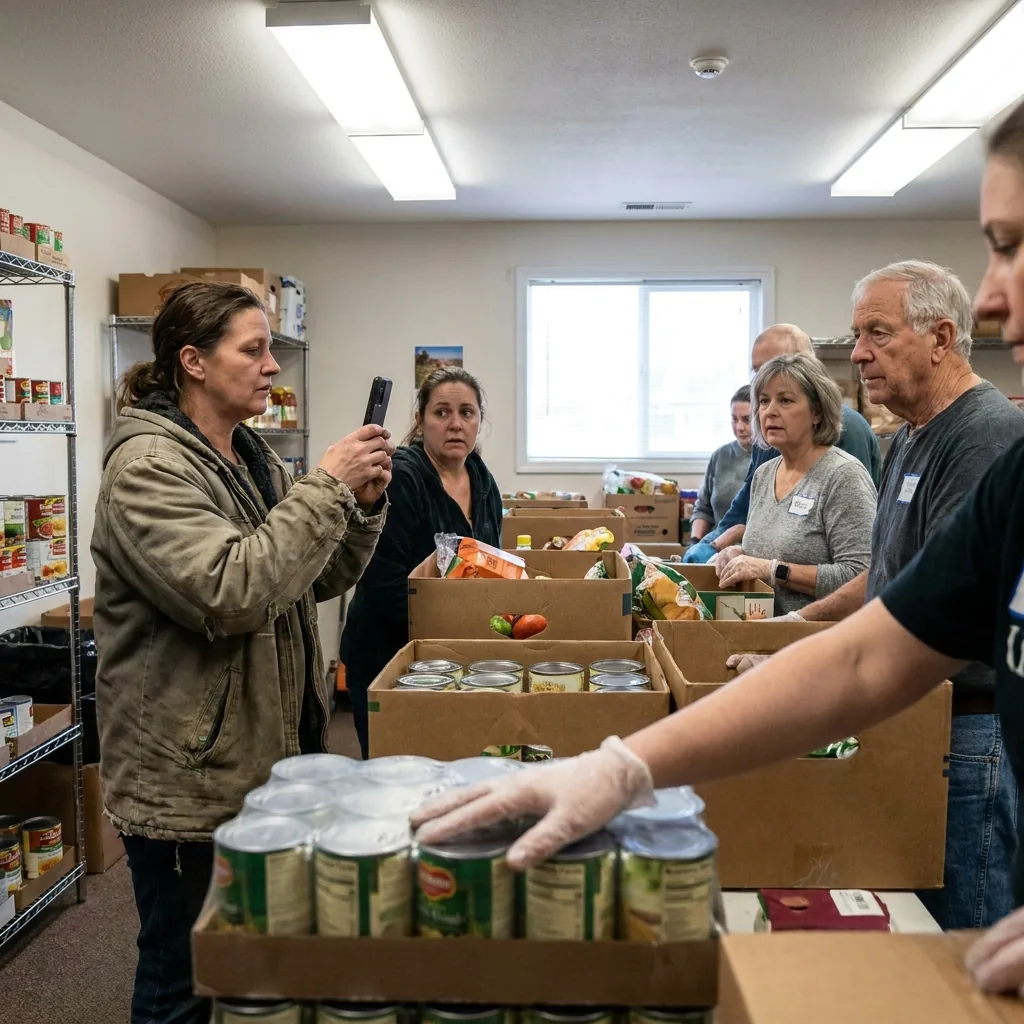
Linda Kearns was standing by the donation totes with her phone lifted chest-high when she said, “People need to see what happened,” and by the time I set down a canned food flat, half our pantry floor was watching Tasha Benton’s worst minute like it was shift entertainment. We were supposed to be sorting pasta and baby formula at the fold-out tables, not passing around a private clip from beside the tote stack, but Linda threw it into the room anyway and called it transparency. The part nobody had yet was what the full video actually showed. Our pantry says the word dignity so often it might as well be printed on the tape guns. That morning, dignity looked like open cardboard boxes, folding chairs shoved against the wall, and DeShawn jogging canned goods from the back doorway to the shelf aisle near check-in. I was at the sorting tables separating dented cans from usable ones when I heard the first sharp little burst of laughter, the kind people try to hide by coughing right after. I looked up and saw Linda angled toward Evelyn Soto with her phone out. Linda didn’t lower her voice. She wanted the room to hear her. “This is exactly why we have standards,” she said. Evelyn didn’t answer right away. She only looked at the screen, then over toward the donation tote area. That was where Tasha was standing. She had both hands on the rim of a blue tote like she was about to lift it. Then she stopped. She didn’t turn dramatic about it. She just stopped moving, like somebody had said her name from across a parking lot and she was trying to place the voice. DeShawn came past me with a box cutter in one hand and said, “What is everybody looking at?” Linda held the phone slightly higher so he could see. “A problem,” she said. He leaned in for maybe two seconds, then straightened. “Why are you showing that around?” Linda gave him that polished little smile she uses when she corrects people in front of other volunteers. “Because when someone uses this pantry as cover for personal drama, we don’t keep it secret.” That sentence moved faster than the clip. By the time it crossed the room, it changed shape into gossip. Somebody near check-in said Tasha had been meeting somebody behind the totes. Somebody near the canned food shelves said there had been “something going on” for weeks. Nobody was saying they knew. They were saying it the way people say grace in a place where they assume the room agrees. I walked around my table and said, “Linda, did Tasha say you could post that?” Linda didn’t even look at me at first. She tapped her screen and let the video restart. “Mara, if I waited for permission every time I had to protect this pantry, we’d never get ahead of anything.” “Protect it from what?” I asked. She finally looked up. “From being lied to in our own building.” That got enough heads turning that the whole floor felt tilted. We still had clients moving through the aisle. We still had a volunteer clipboard on the check-in table. We still had tote lids, tape, and canned peaches sitting out like a normal shift. But the room had stopped being a pantry and turned into an audience. Tasha crossed the space from the tote stack toward Linda in three quick steps. Her voice came out low and tight enough that people had to lean to catch it. “Take that down.” Linda’s answer came louder. “If you didn’t want attention, you should’ve thought of that before carrying on back there.” Tasha’s hands opened and closed once at her sides. “You recorded me?” “I recorded what was happening on pantry property,” Linda said. “There’s a difference.” There wasn’t much difference in the way people were using it. Phones had already come out. Not many, just enough. Enough for people to squint, replay, whisper, and hand the screen to the next person with that hungry little half-turn of the body that means you have something everyone else wants to see. I didn’t ask to see it from Linda. I got my first full look when one of the newer volunteers held her phone too far from her face beside the shelf aisle. The clip was short and cropped tight near the donation totes. Tasha was partly blocked by stacked bags and a folding chair. She was bent in toward someone or something just out of frame, and Linda’s voice from behind the camera said, “There it is,” like she had caught a confession on video. That was enough for the room to decide what it meant. Evelyn came around the end of the table and stood near me. Her voice stayed measured. “This should not be on the floor like this.” Linda heard her. “We don’t hide conduct issues because they’re uncomfortable.” Nobody missed the word conduct. It dressed the whole thing up and made it sound official. Tasha looked from face to face, not saying much now. A client at the far end of the aisle slowed down with a box of cereal in her hands, then kept moving when DeShawn waved her through. A minute later his own phone buzzed. He pulled it out, looked down, and the bluntness went out of his face so fast I noticed it before he said a word. “Hold up,” he said. Linda snapped, “What?” He didn’t answer her. He looked at the screen again, thumb moving once to widen it. Then he looked toward the tote area, back to Tasha, and finally at me. “Mara,” he said, lower this time, “there’s more of it.” Linda’s shoulders tightened. “More of what?” DeShawn kept staring at his phone. “The part before your post starts.” The pantry got quiet in that abrupt, ugly way a room does when people realize they may have been enjoying the wrong version of a story. And.
Linda Kearns was standing by the donation totes with her phone lifted chest-high when she said, “People need to see what happened,” and by the time I set down a canned food flat, half our pantry floor was watching Tasha Benton’s worst minute like it was shift entertainment. We were supposed to be sorting pasta and baby formula at the fold-out tables, not passing around a private clip from beside the tote stack, but Linda threw it into the room anyway and called it transparency. The part nobody had yet was what the full video actually showed. Our pantry says the word dignity so often it might as well be printed on the tape guns. That morning, dignity looked like open cardboard boxes, folding chairs shoved against the wall, and DeShawn jogging canned goods from the back doorway to the shelf aisle near check-in. I was at the sorting tables separating dented cans from usable ones when I heard the first sharp little burst of laughter, the kind people try to hide by coughing right after. I looked up and saw Linda angled toward Evelyn Soto with her phone out. Linda didn’t lower her voice. She wanted the room to hear her. “This is exactly why we have standards,” she said. Evelyn didn’t answer right away. She only looked at the screen, then over toward the donation tote area. That was where Tasha was standing. She had both hands on the rim of a blue tote like she was about to lift it. Then she stopped. She didn’t turn dramatic about it. She just stopped moving, like somebody had said her name from across a parking lot and she was trying to place the voice. DeShawn came past me with a box cutter in one hand and said, “What is everybody looking at?” Linda held the phone slightly higher so he could see. “A problem,” she said. He leaned in for maybe two seconds, then straightened. “Why are you showing that around?” Linda gave him that polished little smile she uses when she corrects people in front of other volunteers. “Because when someone uses this pantry as cover for personal drama, we don’t keep it secret.” That sentence moved faster than the clip. By the time it crossed the room, it changed shape into gossip. Somebody near check-in said Tasha had been meeting somebody behind the totes. Somebody near the canned food shelves said there had been “something going on” for weeks. Nobody was saying they knew. They were saying it the way people say grace in a place where they assume the room agrees. I walked around my table and said, “Linda, did Tasha say you could post that?” Linda didn’t even look at me at first. She tapped her screen and let the video restart. “Mara, if I waited for permission every time I had to protect this pantry, we’d never get ahead of anything.” “Protect it from what?” I asked. She finally looked up. “From being lied to in our own building.” That got enough heads turning that the whole floor felt tilted. We still had clients moving through the aisle. We still had a volunteer clipboard on the check-in table. We still had tote lids, tape, and canned peaches sitting out like a normal shift. But the room had stopped being a pantry and turned into an audience. Tasha crossed the space from the tote stack toward Linda in three quick steps. Her voice came out low and tight enough that people had to lean to catch it. “Take that down.” Linda’s answer came louder. “If you didn’t want attention, you should’ve thought of that before carrying on back there.” Tasha’s hands opened and closed once at her sides. “You recorded me?” “I recorded what was happening on pantry property,” Linda said. “There’s a difference.” There wasn’t much difference in the way people were using it. Phones had already come out. Not many, just enough. Enough for people to squint, replay, whisper, and hand the screen to the next person with that hungry little half-turn of the body that means you have something everyone else wants to see. I didn’t ask to see it from Linda. I got my first full look when one of the newer volunteers held her phone too far from her face beside the shelf aisle. The clip was short and cropped tight near the donation totes. Tasha was partly blocked by stacked bags and a folding chair. She was bent in toward someone or something just out of frame, and Linda’s voice from behind the camera said, “There it is,” like she had caught a confession on video. That was enough for the room to decide what it meant. Evelyn came around the end of the table and stood near me. Her voice stayed measured. “This should not be on the floor like this.” Linda heard her. “We don’t hide conduct issues because they’re uncomfortable.” Nobody missed the word conduct. It dressed the whole thing up and made it sound official. Tasha looked from face to face, not saying much now. A client at the far end of the aisle slowed down with a box of cereal in her hands, then kept moving when DeShawn waved her through. A minute later his own phone buzzed. He pulled it out, looked down, and the bluntness went out of his face so fast I noticed it before he said a word. “Hold up,” he said. Linda snapped, “What?” He didn’t answer her. He looked at the screen again, thumb moving once to widen it. Then he looked toward the tote area, back to Tasha, and finally at me. “Mara,” he said, lower this time, “there’s more of it.” Linda’s shoulders tightened. “More of what?” DeShawn kept staring at his phone. “The part before your post starts.” The pantry got quiet in that abrupt, ugly way a room does when people realize they may have been enjoying the wrong version of a story. And.