Story code: ST-001026
Part 1: The Red Light
Marcus wrenched the breaker bar hard to the left, his knuckles scraping the jagged edge of the rusted oil pan. The bolt refused to yield, fused by years of road salt and neglect. He adjusted his grip, ignoring the dull ache in his forearms as a high-pitched, synthetic chirp echoed off the concrete floor, sharp enough to make him freeze. For a split second, he thought the hydraulic lift was failing. He held his breath, waiting for the groan of collapsing metal or the violent hiss of a ruptured pressure line. The heavy steel belly of the Ford remained perfectly still above him.
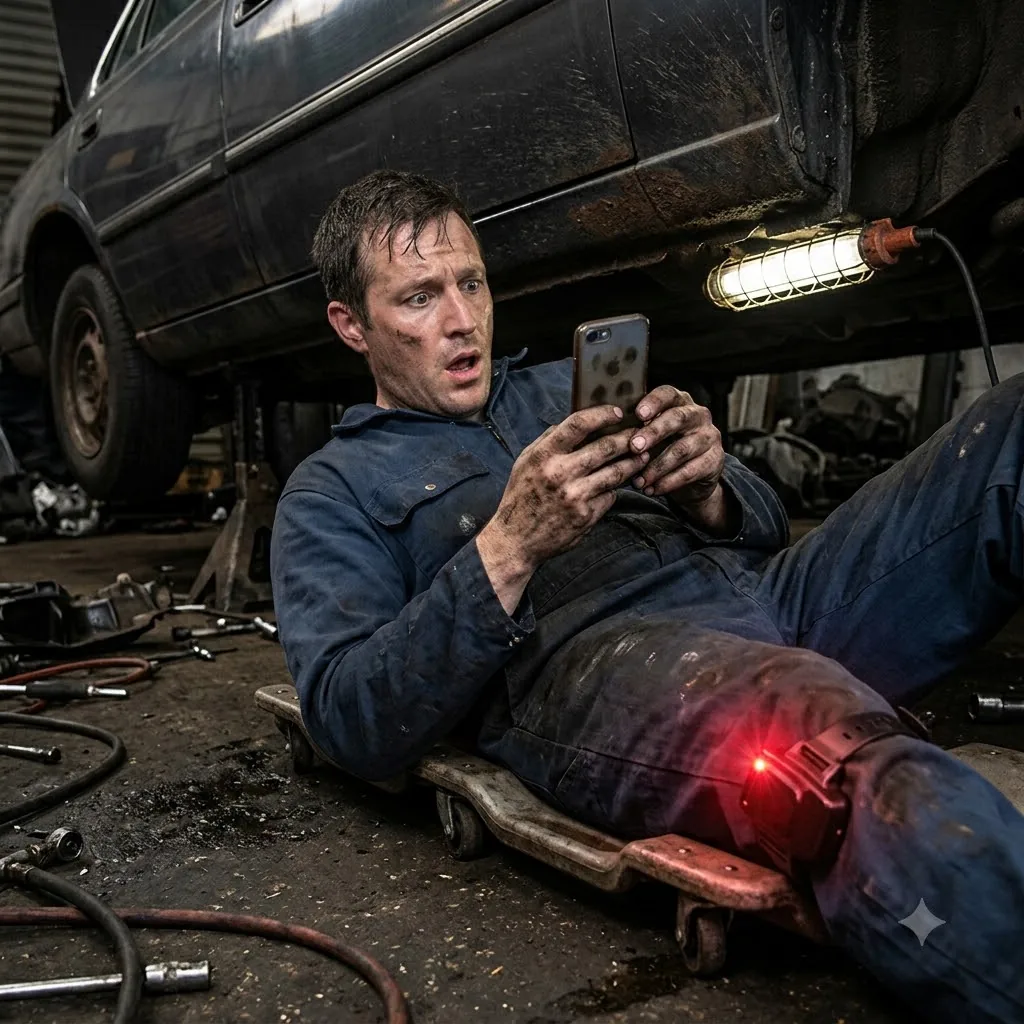
The sound came again, a double-chirp, vibrating not through the chassis of the vehicle, but against his right calf. The drop of transmission fluid hitting his safety glasses suddenly did not matter at all. Marcus scrambled backward, his boots kicking uselessly at the slick concrete until the plastic wheels of the creeper caught traction. He shot out from under the undercarriage so fast his shoulder slammed into the front bumper. He scrambled into a crouch, shoving his greasy hands down his pant leg and hauling the heavy, oil-stained denim up past his work boot.
The bulky black plastic box strapped to his ankle was vibrating with an angry, mechanical rhythm. A tiny red LED light flashed in rapid, blinding bursts against the dark plastic casing. The shop around him was a chaotic symphony of pneumatic drills, air compressors, and dropped ratchets, all of it masking the small electronic death-rattle attached to his leg. He pressed his palm over the device to muffle the sound. His boss was in the front office, loudly threatening a parts vendor over a late delivery. His boss was a man who hated liability and fired mechanics for taking extra minutes on their lunch break.
Marcus shoved the denim back down, hiding the blinking light from view. The battery was fully charged. The unit was not low on power. A low-battery warning flashed a slow, steady amber light. This rapid, aggressive red flash meant something else entirely. It was a compliance violation. It meant the GPS unit had triggered an automatic flag, sending a signal through a cellular network to a server room miles away. It meant a warrant was already queuing up in a county dispatcher’s automated system.
He wiped his hands on a shop rag, leaving thick black streaks across the red cotton, but his hands continued to shake. His chest felt tight, the stale air of the garage suddenly too thick to pull into his lungs. He had not missed curfew. He had not crossed the county line or entered an exclusion zone. The only other trigger was the financial compliance module. He dropped the rag onto his toolbox and pulled his cracked cell phone from his pocket. The screen was heavily smeared with engine grease. He navigated his contact list purely by muscle memory, selecting the number for the monitoring agency, a private contractor housed in a windowless strip mall three towns over.
The line rang twice before an automated voice demanded his nine-digit PIN. He punched the numbers in with a shaking thumb, leaving a dark smudge over the keypad. A synthesized woman informed him his account was in arrears. He pressed zero repeatedly, ignoring the automated prompts, desperate for a human operator. The robotic voice droned on, listing the daily convenience fees, the out-of-network processing fees, the weekly monitoring charges. It was a relentless cascade of arbitrary numbers designed to swallow his minimum-wage paycheck before he even cashed it.
A live operator finally clicked over. A bored-sounding man named Todd demanded his social security number before Marcus could even introduce himself. Marcus rattled off the digits, retreating into the cold, damp cinderblock walls of the wash bay to avoid his boss’s line of sight. Todd typed loudly on a mechanical keyboard, the heavy clack-clack sound echoing in Marcus’s ear. Todd informed him the red light meant his grace period had completely expired. The daily user fee had bounced out of his prepaid debit account at midnight due to insufficient funds. The system had automatically triggered a non-compliance alert at the exact start of business hours.
Marcus explained in a low, tight whisper that the direct deposit from the garage would not hit his account until Friday morning. Todd stated the system did not care about Friday. The system required a manual override fee, a late penalty, and the past-due balance, all processed through their authorized payment portal within the next sixty minutes. If the balance remained unpaid by two o’clock, the red light would stop flashing and turn solid. A solid light meant the private contractor would forward the violation directly to the local sheriff’s department.
Marcus stared down at his steel-toed boots. He calculated the hours he had worked this week, multiplying his meager hourly rate by the physical toll of wrenching on rusted cars. The math settled like a physical weight on his chest. The sum Todd demanded was physically impossible to earn in the next fifty-five minutes. It was impossible to earn even if he worked straight through the night. Todd told him he could borrow it, put it on a high-interest credit card, or call a wealthy family member. Todd recited these options like they were the easiest things in the world.
Marcus hung up the phone without another word. The red light pulsed through the fabric of his jeans, casting a faint crimson glow against the wet concrete of the bay. He looked out at the shop floor, where his boss was now shouting his name, holding a clipboard like a weapon. He had fifty-four minutes left. A heavy hand slammed onto his shoulder from behind.
Marcus wrenched the breaker bar hard to the left, his knuckles scraping the jagged edge of the rusted oil pan. The bolt refused to yield, fused by years of road salt and neglect. He adjusted his grip, ignoring the dull ache in his forearms as a high-pitched, synthetic chirp echoed off the concrete floor, sharp enough to make him freeze. For a split second, he thought the hydraulic lift was failing. He held his breath, waiting for the groan of collapsing metal or the violent hiss of a ruptured pressure line. The heavy steel belly of the Ford remained perfectly still above him.
The sound came again, a double-chirp, vibrating not through the chassis of the vehicle, but against his right calf. The drop of transmission fluid hitting his safety glasses suddenly did not matter at all. Marcus scrambled backward, his boots kicking uselessly at the slick concrete until the plastic wheels of the creeper caught traction. He shot out from under the undercarriage so fast his shoulder slammed into the front bumper. He scrambled into a crouch, shoving his greasy hands down his pant leg and hauling the heavy, oil-stained denim up past his work boot.
The bulky black plastic box strapped to his ankle was vibrating with an angry, mechanical rhythm. A tiny red LED light flashed in rapid, blinding bursts against the dark plastic casing. The shop around him was a chaotic symphony of pneumatic drills, air compressors, and dropped ratchets, all of it masking the small electronic death-rattle attached to his leg. He pressed his palm over the device to muffle the sound. His boss was in the front office, loudly threatening a parts vendor over a late delivery. His boss was a man who hated liability and fired mechanics for taking extra minutes on their lunch break.
Marcus shoved the denim back down, hiding the blinking light from view. The battery was fully charged. The unit was not low on power. A low-battery warning flashed a slow, steady amber light. This rapid, aggressive red flash meant something else entirely. It was a compliance violation. It meant the GPS unit had triggered an automatic flag, sending a signal through a cellular network to a server room miles away. It meant a warrant was already queuing up in a county dispatcher’s automated system.
He wiped his hands on a shop rag, leaving thick black streaks across the red cotton, but his hands continued to shake. His chest felt tight, the stale air of the garage suddenly too thick to pull into his lungs. He had not missed curfew. He had not crossed the county line or entered an exclusion zone. The only other trigger was the financial compliance module. He dropped the rag onto his toolbox and pulled his cracked cell phone from his pocket. The screen was heavily smeared with engine grease. He navigated his contact list purely by muscle memory, selecting the number for the monitoring agency, a private contractor housed in a windowless strip mall three towns over.
The line rang twice before an automated voice demanded his nine-digit PIN. He punched the numbers in with a shaking thumb, leaving a dark smudge over the keypad. A synthesized woman informed him his account was in arrears. He pressed zero repeatedly, ignoring the automated prompts, desperate for a human operator. The robotic voice droned on, listing the daily convenience fees, the out-of-network processing fees, the weekly monitoring charges. It was a relentless cascade of arbitrary numbers designed to swallow his minimum-wage paycheck before he even cashed it.
A live operator finally clicked over. A bored-sounding man named Todd demanded his social security number before Marcus could even introduce himself. Marcus rattled off the digits, retreating into the cold, damp cinderblock walls of the wash bay to avoid his boss’s line of sight. Todd typed loudly on a mechanical keyboard, the heavy clack-clack sound echoing in Marcus’s ear. Todd informed him the red light meant his grace period had completely expired. The daily user fee had bounced out of his prepaid debit account at midnight due to insufficient funds. The system had automatically triggered a non-compliance alert at the exact start of business hours.
Marcus explained in a low, tight whisper that the direct deposit from the garage would not hit his account until Friday morning. Todd stated the system did not care about Friday. The system required a manual override fee, a late penalty, and the past-due balance, all processed through their authorized payment portal within the next sixty minutes. If the balance remained unpaid by two o’clock, the red light would stop flashing and turn solid. A solid light meant the private contractor would forward the violation directly to the local sheriff’s department.
Marcus stared down at his steel-toed boots. He calculated the hours he had worked this week, multiplying his meager hourly rate by the physical toll of wrenching on rusted cars. The math settled like a physical weight on his chest. The sum Todd demanded was physically impossible to earn in the next fifty-five minutes. It was impossible to earn even if he worked straight through the night. Todd told him he could borrow it, put it on a high-interest credit card, or call a wealthy family member. Todd recited these options like they were the easiest things in the world.
Marcus hung up the phone without another word. The red light pulsed through the fabric of his jeans, casting a faint crimson glow against the wet concrete of the bay. He looked out at the shop floor, where his boss was now shouting his name, holding a clipboard like a weapon. He had fifty-four minutes left. A heavy hand slammed onto his shoulder from behind.