Story code: ST-001026
Part 4: The Honest Cage
Gary let out a sharp, choked gasp, his pale face draining of what little color it had. The cheap plastic shell of the computer mouse groaned under the crushing pressure of Marcus’s hand. For three seconds, the only sound in the sterile lobby was the ragged, whistling pull of Marcus’s own breathing and the frantic flutter of Gary’s pulse against his grease-stained palm.
Marcus looked through the bulletproof acrylic. Gary was trembling, his wide eyes fixed on the massive, scarred mechanic pinning him to the desk. Gary was not the system. Gary was just a kid making minimum wage to stare at a screen, trapped in his own small, air-conditioned box. Hurting him would not change the hardcoded software. It would not add thirty-five dollars to the transaction tray.
The fight drained out of Marcus, leaving behind a hollow, heavy exhaustion. He uncurled his fingers and slowly pulled his arm back through the semicircular gap in the glass.
Gary scrambled backward instantly, his rolling desk chair slamming into a metal filing cabinet. He cradled his wrist against his chest, his eyes darting toward the red emergency button mounted under the counter.
“I’m hitting the alarm,” Gary stammered, his voice cracking. “I’m calling the cops, man. You can’t just attack people.”
“I know,” Marcus said. His voice was flat, devoid of the panic that had consumed him for the last fifty-nine minutes. “Hit the button.”
Gary slapped his open palm against the underside of the desk.
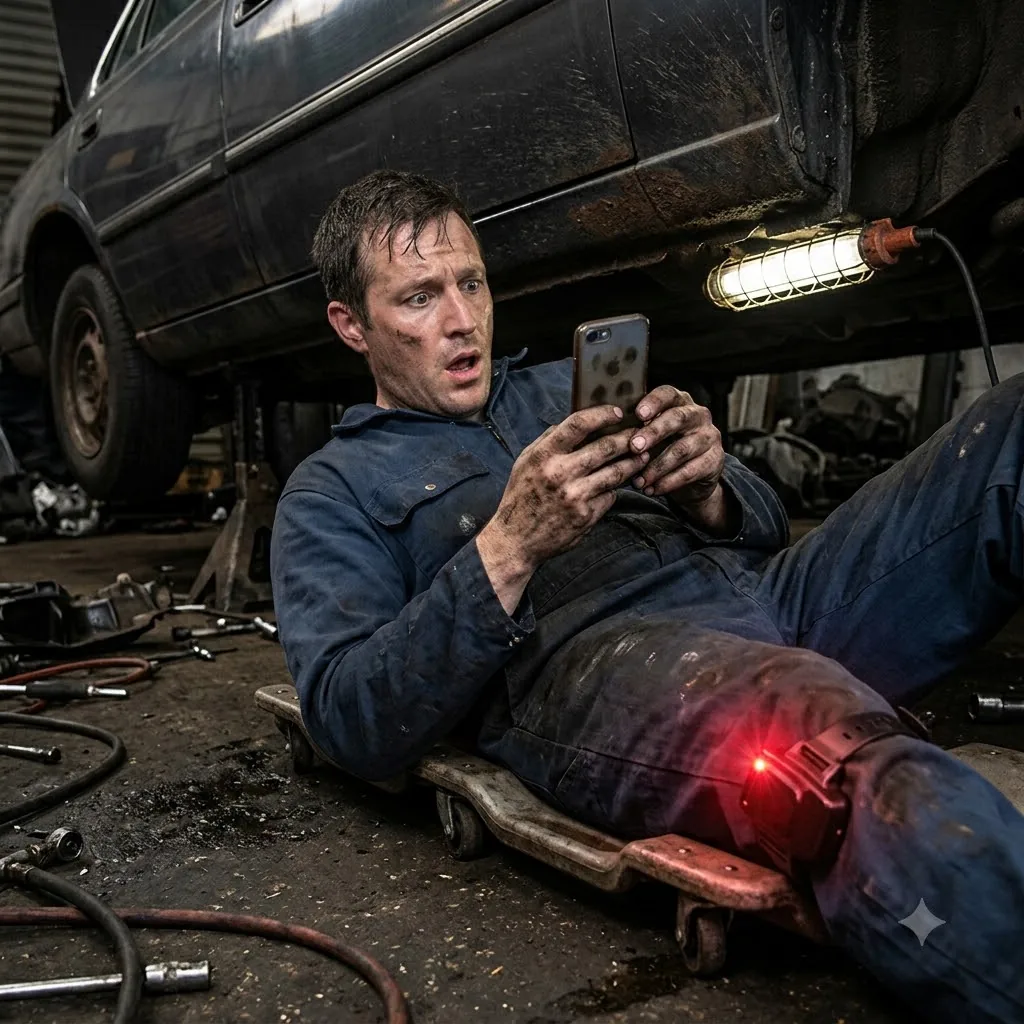
Against Marcus’s right calf, the heavy black plastic box let out a single, piercing, continuous tone. It lasted for exactly three seconds. Then, the frantic, strobe-like vibrating stopped. Marcus reached down and hauled the heavy denim of his work pants up to his knee. The rapid, blinding bursts of the LED had ceased. In their place was a steady, unblinking, solid crimson glare.
The hour was up. The automated system had won. Miles away, a server had already logged the compliance failure, generated the warrant, and pinged the local sheriff’s dispatch.
Marcus let the pant leg drop. He turned away from the security glass and walked toward a row of cheap plastic waiting chairs bolted to the far wall. The intense smell of stale floor wax and cherry air freshener filled his lungs. He sat down heavily in the center chair, the rigid plastic bowing slightly under his weight.
He reached into his front pocket and pulled out the crumpled wad of twenty-dollar bills. Two hundred and eighty dollars of Elias’s grocery money, traded for a master set of metric impact sockets and a pneumatic gun that had taken Marcus a year to afford. He added his own twenty-four dollars to the pile. He smoothed the bills out against his thigh, flattening the creased paper with his thick, calloused thumbs. Then, he set the money on the empty chair beside him.
He dug into his other pocket, pulling out a handful of spare change, a crushed pack of peppermint gum, and the useless prepaid debit card that the bank had frozen over an automated overdraft. He placed them all neatly next to the cash. He emptied his pockets completely, divesting himself of the pathetic inventory of his life on the outside.
He leaned his head back against the painted drywall and closed his eyes.
He expected to feel terror. He expected the crushing weight of failure to suffocate him. He had lost his job. He had lost his tools. He was going back to a state penitentiary. But as the low hum of the fluorescent lights washed over him, Marcus realized he was not terrified at all.
He felt a deep, profound, and bitter relief.
For the past three months, he had not been free. He had been a hostage, rented out to an auto shop, forced to bleed his wages into a digital portal that charged him for the privilege of being monitored. He had lived every single day in a state of baseline panic, calculating daily user fees, out-of-network processing charges, and manual override penalties. The outside world was just a larger, more elaborate prison, meticulously engineered to siphon his labor into a corporate bank account. It was an extortion racket disguised as rehabilitation.
A physical cell was brutal, but it was honest. A steel door did not charge him a convenience fee when it locked. A concrete floor did not demand thirty-five dollars to process his compliance. In a cell, he would not have to grovel to a man like Mr. Vance for an advance on wages he had already bled for, and he would not have to bankrupt his coworkers just to survive until Friday.
In the distance, barely audible over the rush of highway traffic outside, the rising wail of police sirens cut through the midday heat.
Marcus opened his eyes. The solid red light from his ankle monitor cast a faint, bloody glow against the polished linoleum floor. He watched the light, his breathing slow and steady, waiting for the heavy glass door to open and finally welcome him back to a cage that didn’t pretend to be anything else.