Story code: ST-000149
Part 1: Protocol Deviation
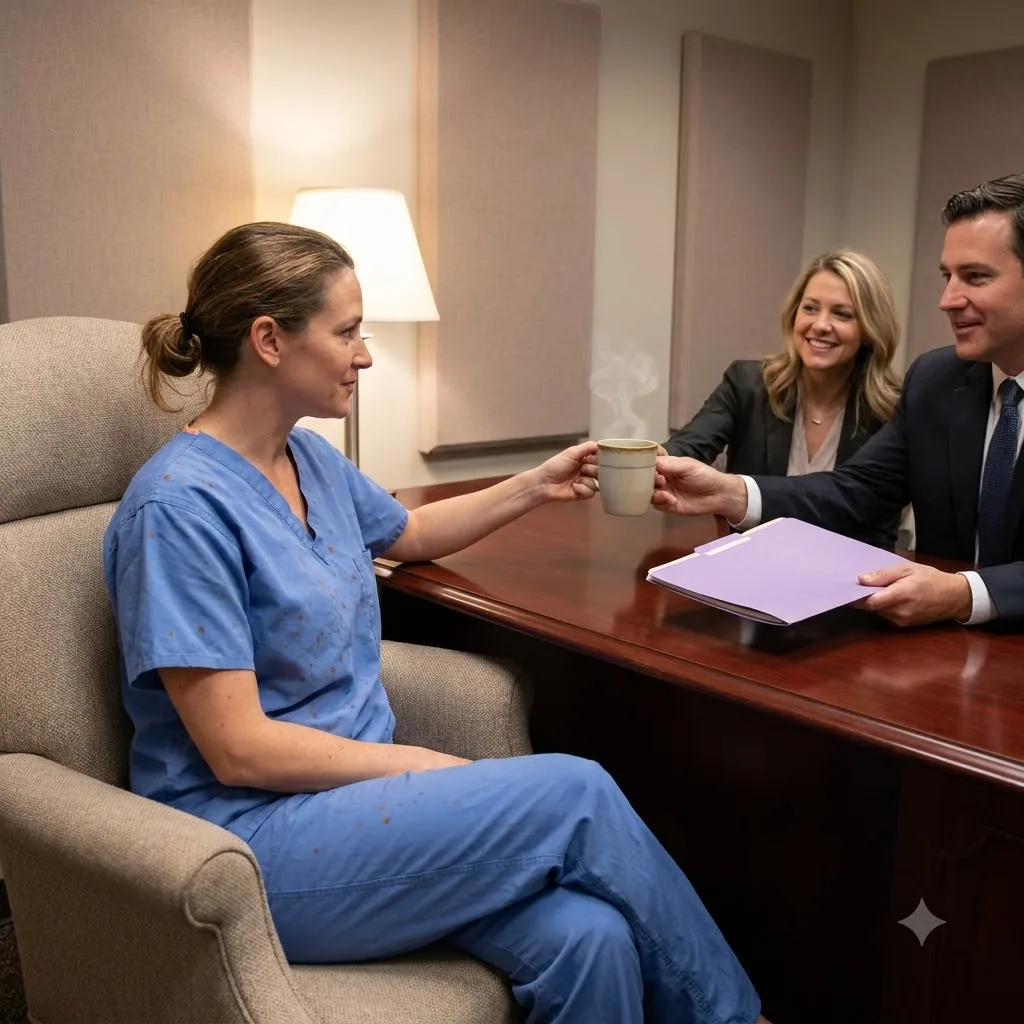
The acoustic paneling of the Provider Success Suite swallowed the relentless hum of the hospital, trapping Sarah in a suffocating, essential-oil-scented silence. She sat rigidly in the plush ergonomic chair, her scrubs still stiff with drying betadine from Bay Four, while Marcus Thorne steepled his manicured fingers across the frosted glass desk.
He wore a tailored navy suit that looked absurdly out of place three floors above the chaotic trauma deck. Beside him, HR Director Linda Reyes offered Sarah a rehearsed, aggressively sympathetic smile.
“We are simply looking at the holistic picture of your wellness,” Linda said, her voice dropping to a theatrical, soothing whisper. “The emergency department is a high-stress environment, and compassion fatigue is a very real, very insidious condition.”
Sarah stared at the rust-colored flecks of antiseptic and blood on her left cuff. Just forty minutes ago, her hands had been submerged in a desperate attempt to stop a massive hemorrhage. She had acted to save a life, bypassing a twenty-minute mandatory surgical consult delay because the patient’s blood pressure was dropping to fatal levels. Now, that frantic fight for survival was being sanitized into corporate buzzwords.
“It was a critical intervention,” Sarah said, keeping her voice entirely flat. “The patient was crashing.”
Marcus leaned forward, the leather of his chair emitting a soft, expensive sigh. He did not look at her betadine-stained scrubs. He looked at the bridge of her nose, a classic intimidation tactic.
“What we have here, Dr. Evans, is a documented protocol deviation,” Marcus said, his tone dripping with weaponized patience. “A significant one. You bypassed the tiered authorization matrix. You utilized resources that had not been cleared by the shift administrator. We understand that your emotional investment in the patient led to a clouded assessment.”
He was building a narrative. They were not reprimanding her for making a mistake. They were building a legal wall, painting her as an unstable, emotionally compromised liability.
“There was no time for the matrix,” Sarah stated.
Linda placed a hand over her heart, leaning in with a look of extreme, artificial pity. “This is exactly what we mean, Sarah. That defensive posture. The inability to step back and trust the systems we have built to protect you. We see this all the time when a provider reaches the absolute limit of their stress tolerance.”
They were trying to quietly terminate her. Worse, they were trying to get her to agree that she was a danger to herself and the hospital. Sarah felt the cold dread pooling in her stomach. The hospital’s legal counsel did not sit in on standard disciplinary meetings. Marcus Thorne only descended from the executive suite when the hospital needed to deflect massive liability, or when law enforcement was involved.
A sharp rap on the frosted glass door broke the silence. A security guard stood on the other side, his silhouette distorted by the privacy tint. He did not enter. He simply stood there, a silent sentinel ensuring Sarah remained exactly where she was.
Marcus adjusted his gold cufflinks. He noted her glance toward the door and smiled, a thin, bloodless expression.
“The hospital has a duty of care, both to our patients and to the community at large,” Marcus continued smoothly. “When a deviation involves potential civil or, frankly, statutory violations, we must take swift action to insulate the institution. We have already initiated a preliminary dialogue with the local authorities regarding the timeline of events in Bay Four.”
Sarah stopped breathing. They had called the police. They were going to frame her emergency intervention as a criminal act of medical negligence to save the hospital from a massive malpractice suit regarding their broken triage system. The administrative delay would be scrubbed from the record, leaving Sarah alone holding the blame.
“You need a moment to step away,” Linda murmured, sliding a heavy, textured lavender folder across the desk. “A moment to breathe, to heal, and to allow the internal review board to handle the upcoming inquiries without your presence complicating the narrative.”
Sarah looked down at the folder. The embossed silver lettering read ‘Mandatory Decompression Leave.’ It was a confession, packaged as a wellness initiative. If she signed it, she would be admitting to mental instability and protocol violation. She would be handing them the exact documentation they needed to hand her over to the police, fully separated from the hospital’s legal protection.
The silence in the room grew heavy, pressing against her eardrums. Marcus tapped a heavy silver pen against the corner of the desk, pointing the nib toward the signature line at the bottom of the visible document. His aggressively gentle demeanor vanished, replaced by the cold, calculating stare of a corporate executioner.
“We need your signature, Dr. Evans,” Marcus instructed, his voice dropping an octave. “It is the only way we can ensure this transition happens quietly.”
Sarah kept her hands firmly in her lap, refusing to touch the silver pen. The betadine on her scrubs felt like a brand, a mark of the truth they were desperately trying to bury.
“I will not sign a confession of fatigue for doing my job,” Sarah told them.
Marcus sighed, a deeply disappointed sound, and pushed the lavender folder another inch toward her. He opened his mouth to deliver the final threat.
Before he could speak, the agonizing, high-pitched scream of Sarah’s trauma pager shattered the soundproof quiet of the Provider Success Suite, vibrating violently against her hip just as Marcus slid the mandatory leave document entirely across the desk.
The acoustic paneling of the Provider Success Suite swallowed the relentless hum of the hospital, trapping Sarah in a suffocating, essential-oil-scented silence. She sat rigidly in the plush ergonomic chair, her scrubs still stiff with drying betadine from Bay Four, while Marcus Thorne steepled his manicured fingers across the frosted glass desk.
He wore a tailored navy suit that looked absurdly out of place three floors above the chaotic trauma deck. Beside him, HR Director Linda Reyes offered Sarah a rehearsed, aggressively sympathetic smile.
“We are simply looking at the holistic picture of your wellness,” Linda said, her voice dropping to a theatrical, soothing whisper. “The emergency department is a high-stress environment, and compassion fatigue is a very real, very insidious condition.”
Sarah stared at the rust-colored flecks of antiseptic and blood on her left cuff. Just forty minutes ago, her hands had been submerged in a desperate attempt to stop a massive hemorrhage. She had acted to save a life, bypassing a twenty-minute mandatory surgical consult delay because the patient’s blood pressure was dropping to fatal levels. Now, that frantic fight for survival was being sanitized into corporate buzzwords.
“It was a critical intervention,” Sarah said, keeping her voice entirely flat. “The patient was crashing.”
Marcus leaned forward, the leather of his chair emitting a soft, expensive sigh. He did not look at her betadine-stained scrubs. He looked at the bridge of her nose, a classic intimidation tactic.
“What we have here, Dr. Evans, is a documented protocol deviation,” Marcus said, his tone dripping with weaponized patience. “A significant one. You bypassed the tiered authorization matrix. You utilized resources that had not been cleared by the shift administrator. We understand that your emotional investment in the patient led to a clouded assessment.”
He was building a narrative. They were not reprimanding her for making a mistake. They were building a legal wall, painting her as an unstable, emotionally compromised liability.
“There was no time for the matrix,” Sarah stated.
Linda placed a hand over her heart, leaning in with a look of extreme, artificial pity. “This is exactly what we mean, Sarah. That defensive posture. The inability to step back and trust the systems we have built to protect you. We see this all the time when a provider reaches the absolute limit of their stress tolerance.”
They were trying to quietly terminate her. Worse, they were trying to get her to agree that she was a danger to herself and the hospital. Sarah felt the cold dread pooling in her stomach. The hospital’s legal counsel did not sit in on standard disciplinary meetings. Marcus Thorne only descended from the executive suite when the hospital needed to deflect massive liability, or when law enforcement was involved.
A sharp rap on the frosted glass door broke the silence. A security guard stood on the other side, his silhouette distorted by the privacy tint. He did not enter. He simply stood there, a silent sentinel ensuring Sarah remained exactly where she was.
Marcus adjusted his gold cufflinks. He noted her glance toward the door and smiled, a thin, bloodless expression.
“The hospital has a duty of care, both to our patients and to the community at large,” Marcus continued smoothly. “When a deviation involves potential civil or, frankly, statutory violations, we must take swift action to insulate the institution. We have already initiated a preliminary dialogue with the local authorities regarding the timeline of events in Bay Four.”
Sarah stopped breathing. They had called the police. They were going to frame her emergency intervention as a criminal act of medical negligence to save the hospital from a massive malpractice suit regarding their broken triage system. The administrative delay would be scrubbed from the record, leaving Sarah alone holding the blame.
“You need a moment to step away,” Linda murmured, sliding a heavy, textured lavender folder across the desk. “A moment to breathe, to heal, and to allow the internal review board to handle the upcoming inquiries without your presence complicating the narrative.”
Sarah looked down at the folder. The embossed silver lettering read ‘Mandatory Decompression Leave.’ It was a confession, packaged as a wellness initiative. If she signed it, she would be admitting to mental instability and protocol violation. She would be handing them the exact documentation they needed to hand her over to the police, fully separated from the hospital’s legal protection.
The silence in the room grew heavy, pressing against her eardrums. Marcus tapped a heavy silver pen against the corner of the desk, pointing the nib toward the signature line at the bottom of the visible document. His aggressively gentle demeanor vanished, replaced by the cold, calculating stare of a corporate executioner.
“We need your signature, Dr. Evans,” Marcus instructed, his voice dropping an octave. “It is the only way we can ensure this transition happens quietly.”
Sarah kept her hands firmly in her lap, refusing to touch the silver pen. The betadine on her scrubs felt like a brand, a mark of the truth they were desperately trying to bury.
“I will not sign a confession of fatigue for doing my job,” Sarah told them.
Marcus sighed, a deeply disappointed sound, and pushed the lavender folder another inch toward her. He opened his mouth to deliver the final threat.
Before he could speak, the agonizing, high-pitched scream of Sarah’s trauma pager shattered the soundproof quiet of the Provider Success Suite, vibrating violently against her hip just as Marcus slid the mandatory leave document entirely across the desk.