Story code: ST-000303
Part 1: The Wrong Word in the Packet Line
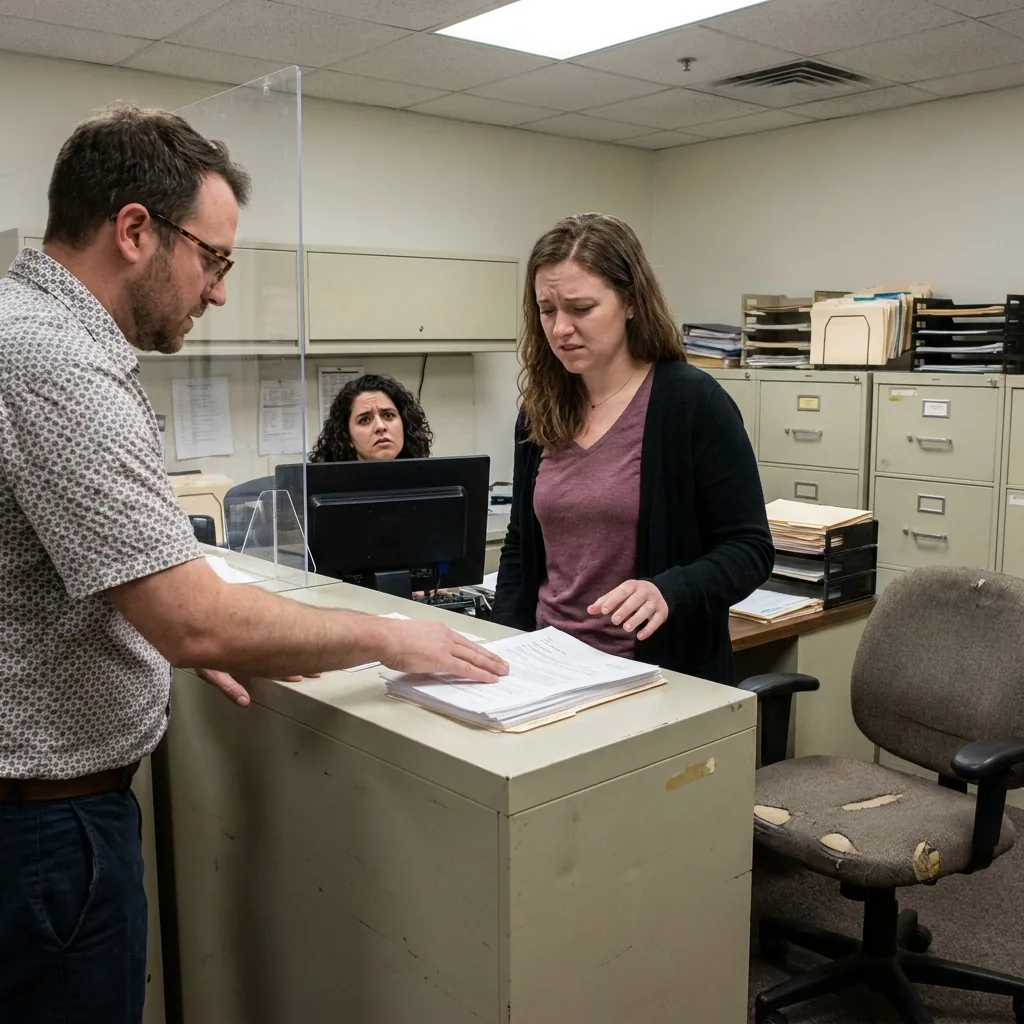
In the middle of the college aid office intake window, Evan Pike kept pushing a recommendation packet toward Talia Reed and repeating the same prepared line like it had been printed on the form itself. The office was still doing ordinary work around them-keyboards tapping, a printer rattling, folders sliding across the counter-but his voice kept pinning the blame on Talia with borrowed words, and Mara Delgado stopped with a packet in her hands when the line landed a second time. It was the kind of pressure that does not need yelling; it just needs everyone to hear the same sentence long enough to start treating it like fact.
Mara stood where the intake stack met the public side of the counter and watched Evan speak, then look down at a clipboard or phone before he spoke again. Talia stayed beside the packet, fingers on the edge of the folder, not opening it. Mrs. Reed stood on the visitor side with her bag tucked under one arm, asking for the file to be checked again and again, but Evan kept returning to the same line. He said the packet was incomplete because of what “she” had done. He said the note had already been passed along. He said the recommendation needed to move through the office as submitted.
Mara did not move the file yet. She wrote the sentence down instead, word for word, on the corner of a yellow pad kept for intake issues. The phrase came out smooth the first two times, with the same flat cadence, the same timing, the same small pause in the middle. Then it hit the counter a third time with one wrong word in it. Not louder. Not more dramatic. Just wrong.
Evan said, “We just need to keep the recommendation packet in routine routing until the advisor clears it,” and then he said it again, only the second time he used “review” where he had used “routing” before. The change was small enough that someone standing farther back might miss it. Mara did not miss it. Mrs. Reed did not miss it either, because she stopped repeating the explanation she had been trying to give and looked straight at the packet.
Talia had not spoken much. When she did, Evan answered over her. When Mrs. Reed asked what exact part was missing, he gave the same sentence again and kept one hand on the clipboard like it was an anchor. The packet itself stayed closed. Its tab caught the light from the desk lamp. A sticker with an application number sat on the front. The page order looked untouched, but the blame kept moving around the room as if it had a stamp of its own.
Mara asked for the wording again, slow and exact, and Evan repeated it without changing his posture. He could repeat the line, but he could not explain why that line was the one being used. He glanced down before each answer. He did not point to any instruction sheet. He did not name the person who had told him to say it. He only pushed the packet back toward Talia and said the same thing one more time, now with the wrong word still hanging in the middle of it.
Mrs. Reed heard that wrong word too. She pointed at the packet number, then at the intake log, and said the dates did not match what he was claiming. Evan answered with the same cadence again, but this time the sentence sounded assembled, not owned. Mara kept her pen on the page and watched his eyes go to the clipboard again.
The room had not gone quiet yet, but the pressure had changed shape. The blame was still there, still aimed at Talia, still wrapped in the language of procedure. Only now the line had slipped once, and the slip did not belong to the file. It belonged to the person speaking it. Mara looked at the packet, then at Evan, and asked the next question out loud: if the wording was fixed, why had he changed one word twice in a row?
In the middle of the college aid office intake window, Evan Pike kept pushing a recommendation packet toward Talia Reed and repeating the same prepared line like it had been printed on the form itself. The office was still doing ordinary work around them-keyboards tapping, a printer rattling, folders sliding across the counter-but his voice kept pinning the blame on Talia with borrowed words, and Mara Delgado stopped with a packet in her hands when the line landed a second time. It was the kind of pressure that does not need yelling; it just needs everyone to hear the same sentence long enough to start treating it like fact.
Mara stood where the intake stack met the public side of the counter and watched Evan speak, then look down at a clipboard or phone before he spoke again. Talia stayed beside the packet, fingers on the edge of the folder, not opening it. Mrs. Reed stood on the visitor side with her bag tucked under one arm, asking for the file to be checked again and again, but Evan kept returning to the same line. He said the packet was incomplete because of what “she” had done. He said the note had already been passed along. He said the recommendation needed to move through the office as submitted.
Mara did not move the file yet. She wrote the sentence down instead, word for word, on the corner of a yellow pad kept for intake issues. The phrase came out smooth the first two times, with the same flat cadence, the same timing, the same small pause in the middle. Then it hit the counter a third time with one wrong word in it. Not louder. Not more dramatic. Just wrong.
Evan said, “We just need to keep the recommendation packet in routine routing until the advisor clears it,” and then he said it again, only the second time he used “review” where he had used “routing” before. The change was small enough that someone standing farther back might miss it. Mara did not miss it. Mrs. Reed did not miss it either, because she stopped repeating the explanation she had been trying to give and looked straight at the packet.
Talia had not spoken much. When she did, Evan answered over her. When Mrs. Reed asked what exact part was missing, he gave the same sentence again and kept one hand on the clipboard like it was an anchor. The packet itself stayed closed. Its tab caught the light from the desk lamp. A sticker with an application number sat on the front. The page order looked untouched, but the blame kept moving around the room as if it had a stamp of its own.
Mara asked for the wording again, slow and exact, and Evan repeated it without changing his posture. He could repeat the line, but he could not explain why that line was the one being used. He glanced down before each answer. He did not point to any instruction sheet. He did not name the person who had told him to say it. He only pushed the packet back toward Talia and said the same thing one more time, now with the wrong word still hanging in the middle of it.
Mrs. Reed heard that wrong word too. She pointed at the packet number, then at the intake log, and said the dates did not match what he was claiming. Evan answered with the same cadence again, but this time the sentence sounded assembled, not owned. Mara kept her pen on the page and watched his eyes go to the clipboard again.
The room had not gone quiet yet, but the pressure had changed shape. The blame was still there, still aimed at Talia, still wrapped in the language of procedure. Only now the line had slipped once, and the slip did not belong to the file. It belonged to the person speaking it. Mara looked at the packet, then at Evan, and asked the next question out loud: if the wording was fixed, why had he changed one word twice in a row?