Story code: ST-000372
Part 1: The Bracelet on the Camera Table
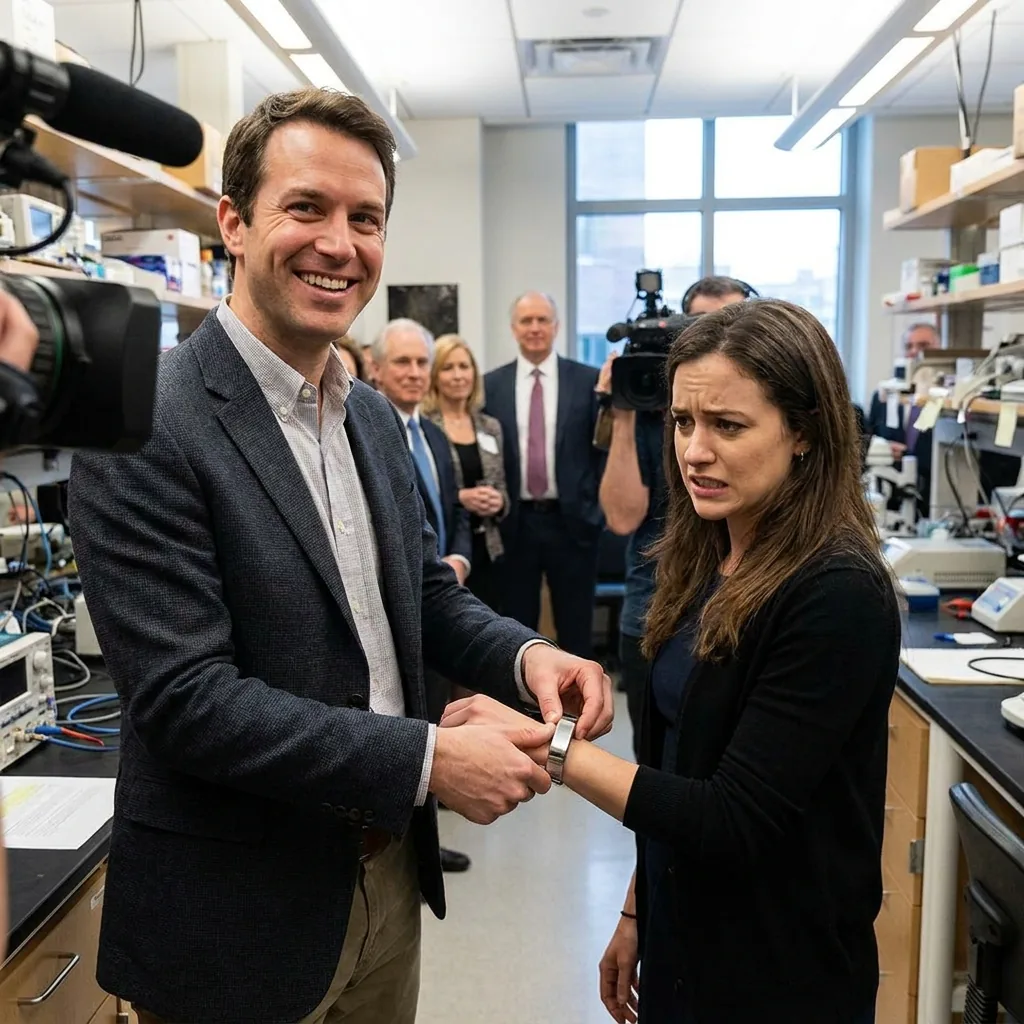
Evan Hart slid the sensor bracelet onto Maya Hart’s wrist in the middle of the university lab fundraiser, right under the donor cameras, and used his thumb to keep her hand still while he smiled for the livestream. The bracelet was the proof object, the room was the quantum entanglement family university lab public performance mask crack micro-location, and the harm was plain: Maya was being handled like part of the exhibit while Noah Reyes stood at the bench with a tray of cables, watching the whole thing like he had been told to stay quiet. Behind them, the lab’s demo monitor kept scrolling clean graphs, while the bracelet on Maya’s wrist flashed a second set of numbers that did not match the polished script Evan was speaking into the microphone.
“Just hold your arm steady,” Evan said, still smiling at the cameras. “We want the donors to see the full response curve.”
Dr. Lena Hart stood near the display banner, one hand on the clicker, the other guiding the stream camera operator a few feet to the left so the background stayed neat. She did not look at the bracelet for long. She looked at the screen, the lens, then back to the people with donor badges. Every motion kept the presentation moving. Every correction was made without naming the thing that was off.
Maya did what the room asked for first. She kept her shoulders square. She held her arm out. She let the bracelet sit in view while a staffer adjusted the expo light to make the silver band catch the camera glare. A student in a lab coat took a photo from the side and stepped back when Evan reached for the next speaking cue.
Noah stayed at the edge of the worktable, one hand on a bundle of sensor leads. He looked from the bracelet to the monitor and back to the clipboard by the relay box. When the bracelet screen blinked yellow, he lifted his eyes to Evan, then dropped them again. He did not speak.
The event was built around staged kindness. Evan touched Maya’s elbow once, lightly, and said, “Thanks for helping us keep this simple.” The words sounded warm enough for the livestream. The pressure underneath them was visible in the way he kept her arm in place while the camera stayed trained on her wrist.
The bracelet was supposed to show stable engagement data during the live demonstration. That was the whole point of the donor pitch: a wearable sensor, a neat proof of the lab’s work, a human story that could be explained in ten seconds. But the numbers on the side screen kept jumping in a pattern that did not match Evan’s voice. When he said “steady,” the graph dipped. When he said “consistent,” the bracelet pulsed and the line split into a sharp spike.
Dr. Lena noticed enough to move faster. She stepped closer to the table, tapped the edge of the display with one nail, and said without looking at anyone in particular, “Keep the feed on the main screen.” Her voice was calm. The instruction was not.
Maya asked, “Why is the readout doing that?”
Evan answered before anyone else could. “Background noise from the room.” He turned the microphone slightly toward the donors instead of toward Maya. “The bracelet is fine. We’re just seeing the usual event interference.”
There was no usual event interference in the data window. The bracelet continued to mark sharp, timed changes. Maya saw one jump line up with the exact moment Evan reached for her arm again. Another came when Dr. Lena leaned in and told the technician to “keep the public screen clean.” Noah’s head lifted at that. He had heard the same instruction. His hand tightened around the cable bundle, then went still.
A visitor with a press badge asked, “Is the bracelet supposed to do that?”
Dr. Lena answered with a quick smile that did not reach the monitor. “It’s calibrating in real time.”
But the bracelet was not calibrating. It was recording. On the side display, the private feed that nobody had meant to leave open showed a second channel under the public graph. That channel kept changing whenever Evan changed his tone, and once, when Maya tried to lower her wrist, it logged a clean drop as if the room itself had shifted against the script.
Then, just as the stream camera zoomed tighter on Maya’s hand, Noah heard something from the half-open lab corridor behind the display wall: Evan’s voice, lower now, clipped and off-mic, saying, “If she asks, tell her to keep the bracelet off for the next pass.”
Noah looked up from the bench. The instruction was not meant for him. He had heard it anyway.
Evan Hart slid the sensor bracelet onto Maya Hart’s wrist in the middle of the university lab fundraiser, right under the donor cameras, and used his thumb to keep her hand still while he smiled for the livestream. The bracelet was the proof object, the room was the quantum entanglement family university lab public performance mask crack micro-location, and the harm was plain: Maya was being handled like part of the exhibit while Noah Reyes stood at the bench with a tray of cables, watching the whole thing like he had been told to stay quiet. Behind them, the lab’s demo monitor kept scrolling clean graphs, while the bracelet on Maya’s wrist flashed a second set of numbers that did not match the polished script Evan was speaking into the microphone.
“Just hold your arm steady,” Evan said, still smiling at the cameras. “We want the donors to see the full response curve.”
Dr. Lena Hart stood near the display banner, one hand on the clicker, the other guiding the stream camera operator a few feet to the left so the background stayed neat. She did not look at the bracelet for long. She looked at the screen, the lens, then back to the people with donor badges. Every motion kept the presentation moving. Every correction was made without naming the thing that was off.
Maya did what the room asked for first. She kept her shoulders square. She held her arm out. She let the bracelet sit in view while a staffer adjusted the expo light to make the silver band catch the camera glare. A student in a lab coat took a photo from the side and stepped back when Evan reached for the next speaking cue.
Noah stayed at the edge of the worktable, one hand on a bundle of sensor leads. He looked from the bracelet to the monitor and back to the clipboard by the relay box. When the bracelet screen blinked yellow, he lifted his eyes to Evan, then dropped them again. He did not speak.
The event was built around staged kindness. Evan touched Maya’s elbow once, lightly, and said, “Thanks for helping us keep this simple.” The words sounded warm enough for the livestream. The pressure underneath them was visible in the way he kept her arm in place while the camera stayed trained on her wrist.
The bracelet was supposed to show stable engagement data during the live demonstration. That was the whole point of the donor pitch: a wearable sensor, a neat proof of the lab’s work, a human story that could be explained in ten seconds. But the numbers on the side screen kept jumping in a pattern that did not match Evan’s voice. When he said “steady,” the graph dipped. When he said “consistent,” the bracelet pulsed and the line split into a sharp spike.
Dr. Lena noticed enough to move faster. She stepped closer to the table, tapped the edge of the display with one nail, and said without looking at anyone in particular, “Keep the feed on the main screen.” Her voice was calm. The instruction was not.
Maya asked, “Why is the readout doing that?”
Evan answered before anyone else could. “Background noise from the room.” He turned the microphone slightly toward the donors instead of toward Maya. “The bracelet is fine. We’re just seeing the usual event interference.”
There was no usual event interference in the data window. The bracelet continued to mark sharp, timed changes. Maya saw one jump line up with the exact moment Evan reached for her arm again. Another came when Dr. Lena leaned in and told the technician to “keep the public screen clean.” Noah’s head lifted at that. He had heard the same instruction. His hand tightened around the cable bundle, then went still.
A visitor with a press badge asked, “Is the bracelet supposed to do that?”
Dr. Lena answered with a quick smile that did not reach the monitor. “It’s calibrating in real time.”
But the bracelet was not calibrating. It was recording. On the side display, the private feed that nobody had meant to leave open showed a second channel under the public graph. That channel kept changing whenever Evan changed his tone, and once, when Maya tried to lower her wrist, it logged a clean drop as if the room itself had shifted against the script.
Then, just as the stream camera zoomed tighter on Maya’s hand, Noah heard something from the half-open lab corridor behind the display wall: Evan’s voice, lower now, clipped and off-mic, saying, “If she asks, tell her to keep the bracelet off for the next pass.”
Noah looked up from the bench. The instruction was not meant for him. He had heard it anyway.