Story code: ST-001345
Part 1: The Weight Above
I wiped the industrial paper towel across the wall right next to my desk, watching the yellowish condensation smear against the cheap paint. At two thousand four hundred dollars a month, I expected to spend my evenings finishing freelance design mockups in peace, not battling the toxic moisture slowly rotting my apartment from the inside out. I dropped the ruined, damp towel into a plastic bucket by my feet and turned my attention back to my glowing laptop screen. The building was quiet except for the low hum of the radiator. Then, the tearing sound started.
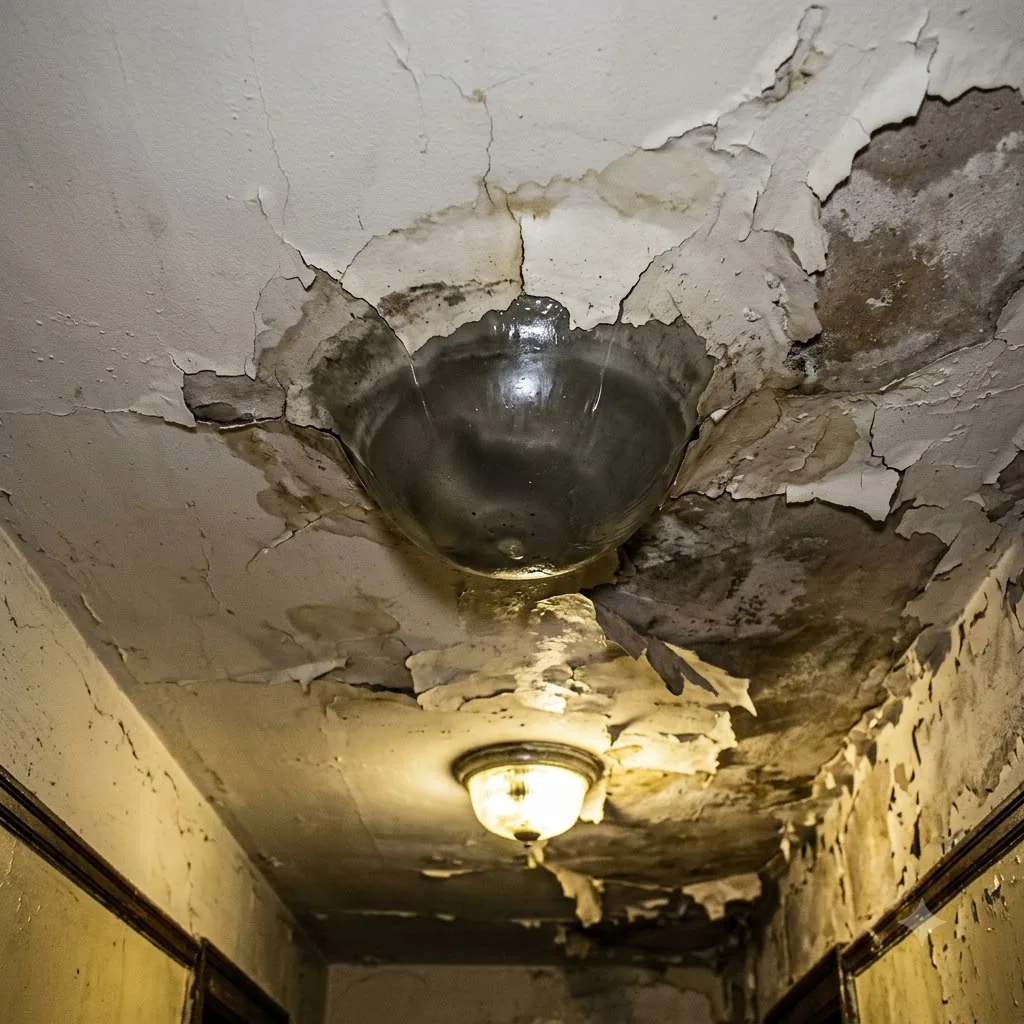
It was wet and heavy, like thick canvas ripping slowly under immense, unbearable weight. The sound echoed directly from the narrow hallway outside my bedroom door. I pushed my chair back, leaving my desk, and stepped out into the corridor. Above my head, the ceiling was bowing severely. A massive blister had formed in the drywall, sagging down at least six inches into my living space. Dark, spidery black veins of mold and sediment spread outward from the center of the bulge, tracing the hidden water lines. It looked bruised and swollen, groaning softly as more weight settled onto the fragile, waterlogged gypsum board.
I pulled out my phone and dialed Richard. My landlord rarely answered maintenance requests, but the sheer, terrifying size of the blister meant the upstairs plumbing was actively hemorrhaging into my unit. He picked up on the fifth ring. I could hear a television blaring a sports broadcast in the background. I told him about the aggressive sag, the black veins, the tearing sound. He groaned, letting out a long, exaggerated sigh of deep inconvenience. He told me to put a wide bucket underneath it, poke a tiny hole with a broom handle to drain the pooling water, and wait for his maintenance guy on Thursday. Today was Monday. I told him the ceiling was going to come down if we waited. He hung up the phone.
I stared at the black screen for a long moment. A loud, sharp crack echoed right above me, followed immediately by a shower of white dust that coated the hardwood floor. The sagging mass dropped another agonizing inch. The drywall tape at the seams was peeling and curling back, exposing the soggy brown paper underneath. I ran to the bathroom, grabbed the wide plastic tub I used for laundry, and slid it directly beneath the dead center of the bulge. Richard had told me to relieve the pressure. If the whole ceiling came down, he would absolutely find a way to blame me for not mitigating the damage, just like he blamed me for the broken radiator valve back in November. I marched into the kitchen, grabbed my heavy-duty metal mop handle, and unscrewed the sponge attachment.
I positioned myself carefully, just outside the immediate splash zone. I raised the metal pole like a spear. The black-veined surface of the blister looked soft, almost spongy under the harsh hallway light. I pressed the tip of the pole into the center of the dark spot. It did not give easily. I pushed harder, bracing my feet securely against the floorboards. The metal punched through the wet drywall with a sickening, thick crunch. I stepped back quickly, expecting a torrent of dirty brown water to cascade into the laundry tub. Instead, a single, thick drop of black, foul-smelling sludge fell into the plastic bin.
Then, the entire hallway ceiling groaned in surrender.
The tearing sound returned, magnified tenfold. The small hole I had just made spider-webbed instantly into massive fissures reaching all the way to the side walls. I scrambled backward toward the living room just as the support joists gave up their hold. The drywall ruptured completely. It did not rain water. The ceiling collapsed in a violent explosion of dust, splintered wood, and soggy pink insulation. A massive, solid object plummeted through the jagged opening. It slammed into the floor with a terrifying, heavy thud that rattled the framed posters on my walls and shook the floorboards under my feet.
Thick white dust billowed through the narrow corridor, choking my lungs and blinding me for a long, panicked moment. I waved my hands frantically, coughing as the cloud finally began to settle onto the floor. The laundry tub was crushed flat under the weight of the debris. Sitting right in the center of the wreckage was a thick, black contractor trash bag.
It was sealed tight with thick strips of silver duct tape wrapped around it multiple times in a frantic crisscross pattern. It was roughly the size of a large suitcase, but shaped irregularly, bulging at very odd angles. It smelled strongly of harsh chemical cleaner and something deeply sweet and rotting underneath. It was definitely not a pipe. It was not leftover construction debris. Someone had intentionally wedged this heavy, taped-up mass into the dark cavity between my ceiling and the floor above.
I stepped closer, my shoes crunching loudly on the ruined drywall. The duct tape was old, the edges peeling slightly and caked with the same black, powdery mold that had seeped through the ceiling paint. The violent impact with the floor had caused one of the tape seams to split open near the top. A dark, viscous stain was slowly spreading outward from the split onto the pile of shattered gypsum. I crouched down next to the heavy bag. The smell was overpowering now, forcing me to pull the collar of my shirt over my nose. I reached out and hooked my index finger under the edge of the split duct tape to peel it back.
I wiped the industrial paper towel across the wall right next to my desk, watching the yellowish condensation smear against the cheap paint. At two thousand four hundred dollars a month, I expected to spend my evenings finishing freelance design mockups in peace, not battling the toxic moisture slowly rotting my apartment from the inside out. I dropped the ruined, damp towel into a plastic bucket by my feet and turned my attention back to my glowing laptop screen. The building was quiet except for the low hum of the radiator. Then, the tearing sound started.
It was wet and heavy, like thick canvas ripping slowly under immense, unbearable weight. The sound echoed directly from the narrow hallway outside my bedroom door. I pushed my chair back, leaving my desk, and stepped out into the corridor. Above my head, the ceiling was bowing severely. A massive blister had formed in the drywall, sagging down at least six inches into my living space. Dark, spidery black veins of mold and sediment spread outward from the center of the bulge, tracing the hidden water lines. It looked bruised and swollen, groaning softly as more weight settled onto the fragile, waterlogged gypsum board.
I pulled out my phone and dialed Richard. My landlord rarely answered maintenance requests, but the sheer, terrifying size of the blister meant the upstairs plumbing was actively hemorrhaging into my unit. He picked up on the fifth ring. I could hear a television blaring a sports broadcast in the background. I told him about the aggressive sag, the black veins, the tearing sound. He groaned, letting out a long, exaggerated sigh of deep inconvenience. He told me to put a wide bucket underneath it, poke a tiny hole with a broom handle to drain the pooling water, and wait for his maintenance guy on Thursday. Today was Monday. I told him the ceiling was going to come down if we waited. He hung up the phone.
I stared at the black screen for a long moment. A loud, sharp crack echoed right above me, followed immediately by a shower of white dust that coated the hardwood floor. The sagging mass dropped another agonizing inch. The drywall tape at the seams was peeling and curling back, exposing the soggy brown paper underneath. I ran to the bathroom, grabbed the wide plastic tub I used for laundry, and slid it directly beneath the dead center of the bulge. Richard had told me to relieve the pressure. If the whole ceiling came down, he would absolutely find a way to blame me for not mitigating the damage, just like he blamed me for the broken radiator valve back in November. I marched into the kitchen, grabbed my heavy-duty metal mop handle, and unscrewed the sponge attachment.
I positioned myself carefully, just outside the immediate splash zone. I raised the metal pole like a spear. The black-veined surface of the blister looked soft, almost spongy under the harsh hallway light. I pressed the tip of the pole into the center of the dark spot. It did not give easily. I pushed harder, bracing my feet securely against the floorboards. The metal punched through the wet drywall with a sickening, thick crunch. I stepped back quickly, expecting a torrent of dirty brown water to cascade into the laundry tub. Instead, a single, thick drop of black, foul-smelling sludge fell into the plastic bin.
Then, the entire hallway ceiling groaned in surrender.
The tearing sound returned, magnified tenfold. The small hole I had just made spider-webbed instantly into massive fissures reaching all the way to the side walls. I scrambled backward toward the living room just as the support joists gave up their hold. The drywall ruptured completely. It did not rain water. The ceiling collapsed in a violent explosion of dust, splintered wood, and soggy pink insulation. A massive, solid object plummeted through the jagged opening. It slammed into the floor with a terrifying, heavy thud that rattled the framed posters on my walls and shook the floorboards under my feet.
Thick white dust billowed through the narrow corridor, choking my lungs and blinding me for a long, panicked moment. I waved my hands frantically, coughing as the cloud finally began to settle onto the floor. The laundry tub was crushed flat under the weight of the debris. Sitting right in the center of the wreckage was a thick, black contractor trash bag.
It was sealed tight with thick strips of silver duct tape wrapped around it multiple times in a frantic crisscross pattern. It was roughly the size of a large suitcase, but shaped irregularly, bulging at very odd angles. It smelled strongly of harsh chemical cleaner and something deeply sweet and rotting underneath. It was definitely not a pipe. It was not leftover construction debris. Someone had intentionally wedged this heavy, taped-up mass into the dark cavity between my ceiling and the floor above.
I stepped closer, my shoes crunching loudly on the ruined drywall. The duct tape was old, the edges peeling slightly and caked with the same black, powdery mold that had seeped through the ceiling paint. The violent impact with the floor had caused one of the tape seams to split open near the top. A dark, viscous stain was slowly spreading outward from the split onto the pile of shattered gypsum. I crouched down next to the heavy bag. The smell was overpowering now, forcing me to pull the collar of my shirt over my nose. I reached out and hooked my index finger under the edge of the split duct tape to peel it back.