Story code: ST-000699
Part 4: Freedom Cost Her Something Too
Rosa turned the clipboard toward herself and wrote while Dana stood with her tote hanging from one shoulder.
“I need it clear,” Dana said. “He’s the available donor contact. He stays reachable for that. For bedside updates, use both of our numbers if the unit needs to, but not for donor screening through me.”
Rosa checked the line she had just written. “Understood.”
Nothing about it sounded emotional. That was what made it final.
Evan opened his mouth, then shut it again. The white hospital band sat on his wrist where the green bracelet had been. The green one was still lying on the counter, curved around itself like a small discarded seal.
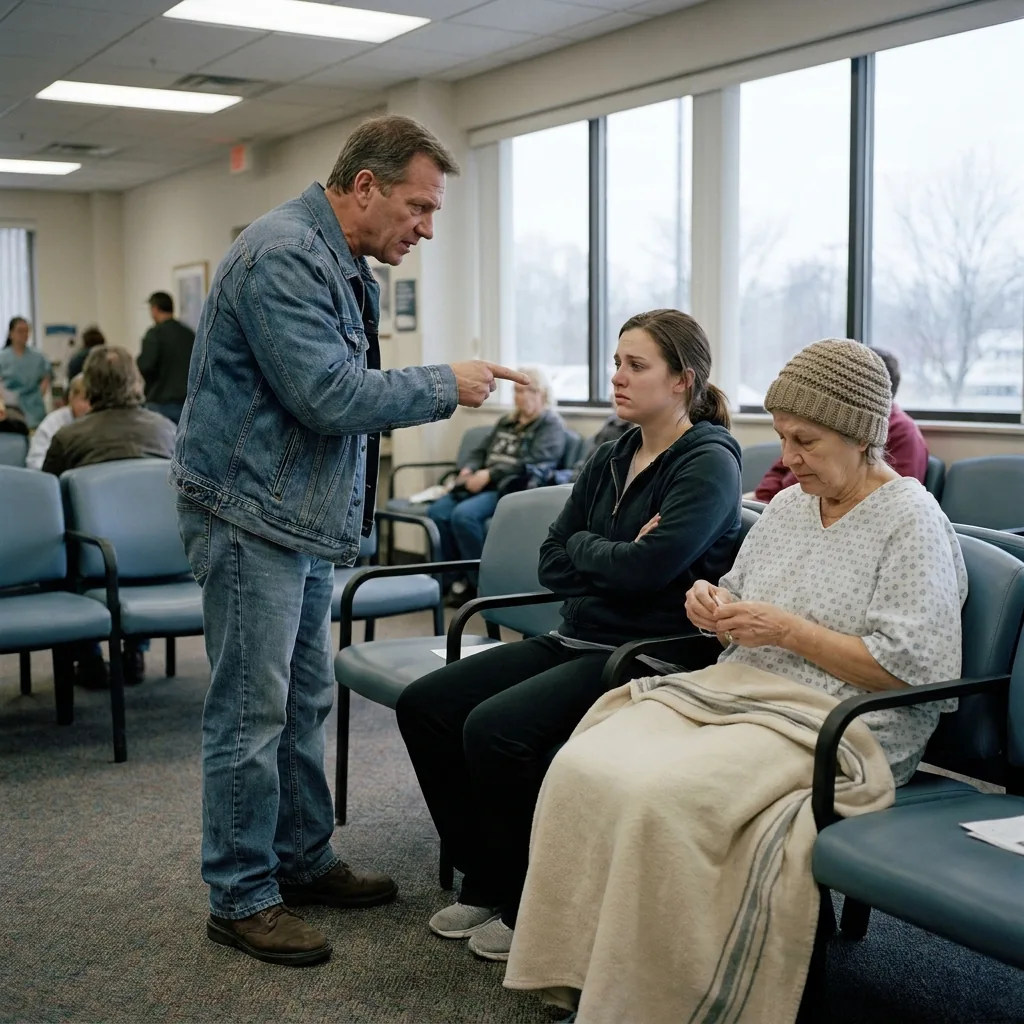
One of the older relatives stood halfway, then sat back down. Nobody stepped in to rescue him. Nobody rushed to Dana either. The waiting room stayed exactly what it had been all day: blue chairs, vending machine hum, hallway doors that mattered more than any family speech. The difference was that Evan had already answered yes, already shown his ID, already held out his arm for the band. The rule he had kept repeating had reached him and stopped there.
Rosa lifted the green bracelet with two fingers and set it beside his wallet. “Take your belongings with you when you move away from the desk,” she said.
It was not a reprimand in a dramatic voice. It was routine. It sounded almost worse that way.
Dana bent, opened her tote, and pulled out a wrinkled envelope with a hotel logo in one corner. Then came a parking ticket, a second parking ticket, and a printed garage receipt long enough to fold in half twice. Mara watched her lay them on the counter and square the edges with her thumb.
“I’m checking out of the motel this afternoon,” Dana said. “I already paid through tomorrow because I was told to stay close for testing and updates. If I’m not the donor contact and he’s taking over staying available, I’m going home tonight.”
She said it to Rosa, not to Evan.
“That’s your decision,” Rosa said.
“It is.” Dana slid the motel envelope back into her bag but kept the garage receipt in her hand. “I lose the room charge either way. And I still have to pay to get my car out because the daily rate rolled over at noon.”
Those details sat in the air with more weight than any speech about sacrifice had carried. They were plain enough for everybody to understand. The overstuffed tote, the pharmacy rubber band around the receipts, the extra night she would not use, the garage meter still running while people debated her character.
Evan spoke at last. “Dana-”
She turned toward him then, finally. “You said there were no exceptions.”
He looked at the counter instead of her face. At the white band on his wrist. At the green bracelet beside it. His hand moved once toward the bracelet and stopped short of touching it.
Rosa’s phone rang at the desk. She answered in a low voice, listened, then covered the receiver and said to Evan, “The coordinator can take you now for preliminary intake. Hallway doors, second left.”
No one reacted. That was the devastation of it. No crowd. No victory noise. Just the next instruction in the process he had demanded for someone else.
Evan picked up his wallet. He did not pick up the green bracelet until Rosa glanced at it once more. Then he took that too and curled it into his palm. When he turned toward the hallway, the white hospital band stayed visible below his sleeve.
He paused near Dana as if expecting one more exchange. She adjusted the tote on her shoulder and stepped back enough to clear the aisle. That was all.
He went through the hallway doors alone.
After they closed, Mrs. Holloway let out a breath she had been holding for so long it almost sounded like a cough. The older relative by the window stared into his coffee. Nobody offered Dana a speech about being right.
Rosa finished the phone note and looked up. “If you are leaving the floor, make sure the unit has your number current.”
Dana nodded. “It is.”
She gathered the last of the receipts, feeding them into the tote with the folded handout and the motel envelope. For a moment her hand rested on the bag’s strap, knuckles pale from the weight. Then she reached to the counter, took the parking receipt she had left out, and tucked it into her back pocket for the garage gate.
Mara watched her walk to the row of chairs, pick up the cardigan the family had thrown over the armrest, and fold it once. She set it on the seat instead of carrying it away. Then she looked toward the transplant floor doors when the latch clicked, the same way she had all morning. When no one came through, she turned and headed for the elevator end of the waiting area.
The tote dragged her shoulder lower on one side. She did not look back at the desk.
Behind her, the waiting room resumed its ordinary noises in pieces: paper cup lids, television captions, the squeak of a shoe on tile. The moral trial was over, but the costs remained visible in the things she carried and the room she had paid for and would not use.
By the time the elevator doors opened, Dana had one hand in her pocket around the garage ticket, and her other hand stayed off her wrist.