Story code: ST-001089
Part 1: The Disputed Threshold
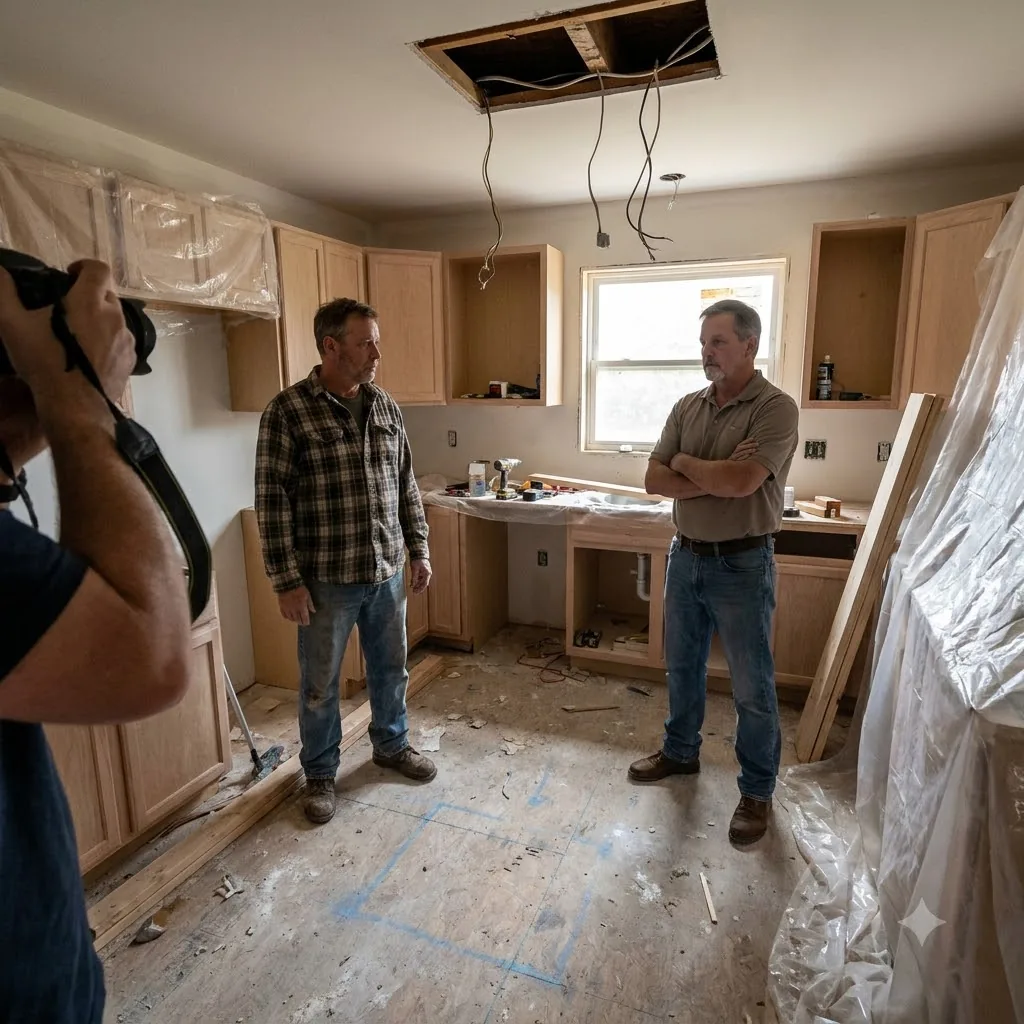
I reconstructed the sequence of the Miller family reunion from the scuffed subfloor chalk lines and the exposed wiring runs in the unfinished kitchen. Right there in the open framing, Todd Miller stood on a temporary plywood platform and told his younger brother, Mark, that he had no legal right to set foot in the room, let alone direct the renovation. Todd’s words stripped Mark of his status as the homeowner in front of twelve gathered relatives holding paper plates of potato salad and burgers. The family reunion, meant to celebrate the house’s progress, instantly chilled. Aunt Sarah set her plate down on an exposed studs ledger, the plastic fork clattering against the wood. Mark stood near the center of the room, his boots planted on the dusty plywood floor, his hands shoved deep into his pockets. Todd leaned over a temporary workbench, his general contractor license number printed bold on the clipboard he tapped against his thigh. He told the gathered family that Mark had failed to secure the primary municipal building permits, rendering the entire project an illegal liability. According to Todd, Mark was merely a financial contributor with zero say in the structural execution. Mark did not raise his voice. He pointed toward the southern load-bearing wall, asking Todd why the framing didn’t match the architectural blueprint on the table. Todd stepped down from the platform, blocking Mark’s view of the studs. He told Mark to leave the site immediately, claiming that as the licensed contractor, he had sole legal possession of the work zone. The family members shifted their weight, exchanging glances but remaining silent, effectively isolating Mark in his own home. Uncle Jim adjusted his glasses and looked at the floor, while Aunt Sarah whispered something to Mark’s cousin. Todd’s aggressive posture and professional status carried a weight that Mark’s quiet assertions could not match. The family’s silence was a tacit endorsement of the contractor’s authority. Mark stayed where he was, his gaze fixed on the junction box near the doorway, where a single blue wire hung loose. The tension remained unresolved as Todd demanded the family step outside to the patio, leaving the disputed kitchen empty. I noted the physical layout of the room: the caution tape Todd had strung across the doorway, the half-empty soda cans left on the window sills, and the layer of drywall dust that recorded every footprint. Mark’s footprints ended abruptly at the threshold, showing he had complied with the order to step back, but his gaze had remained locked on the junction box. The physical boundaries of the dispute were clearly marked, but the legal truth was still buried beneath the drywall. What did the locked proof hidden in that wall reveal about Todd’s claims?
I reconstructed the sequence of the Miller family reunion from the scuffed subfloor chalk lines and the exposed wiring runs in the unfinished kitchen. Right there in the open framing, Todd Miller stood on a temporary plywood platform and told his younger brother, Mark, that he had no legal right to set foot in the room, let alone direct the renovation. Todd’s words stripped Mark of his status as the homeowner in front of twelve gathered relatives holding paper plates of potato salad and burgers. The family reunion, meant to celebrate the house’s progress, instantly chilled. Aunt Sarah set her plate down on an exposed studs ledger, the plastic fork clattering against the wood. Mark stood near the center of the room, his boots planted on the dusty plywood floor, his hands shoved deep into his pockets. Todd leaned over a temporary workbench, his general contractor license number printed bold on the clipboard he tapped against his thigh. He told the gathered family that Mark had failed to secure the primary municipal building permits, rendering the entire project an illegal liability. According to Todd, Mark was merely a financial contributor with zero say in the structural execution. Mark did not raise his voice. He pointed toward the southern load-bearing wall, asking Todd why the framing didn’t match the architectural blueprint on the table. Todd stepped down from the platform, blocking Mark’s view of the studs. He told Mark to leave the site immediately, claiming that as the licensed contractor, he had sole legal possession of the work zone. The family members shifted their weight, exchanging glances but remaining silent, effectively isolating Mark in his own home. Uncle Jim adjusted his glasses and looked at the floor, while Aunt Sarah whispered something to Mark’s cousin. Todd’s aggressive posture and professional status carried a weight that Mark’s quiet assertions could not match. The family’s silence was a tacit endorsement of the contractor’s authority. Mark stayed where he was, his gaze fixed on the junction box near the doorway, where a single blue wire hung loose. The tension remained unresolved as Todd demanded the family step outside to the patio, leaving the disputed kitchen empty. I noted the physical layout of the room: the caution tape Todd had strung across the doorway, the half-empty soda cans left on the window sills, and the layer of drywall dust that recorded every footprint. Mark’s footprints ended abruptly at the threshold, showing he had complied with the order to step back, but his gaze had remained locked on the junction box. The physical boundaries of the dispute were clearly marked, but the legal truth was still buried beneath the drywall. What did the locked proof hidden in that wall reveal about Todd’s claims?