Story code: ST-001286
Part 2: The Registry Stamp
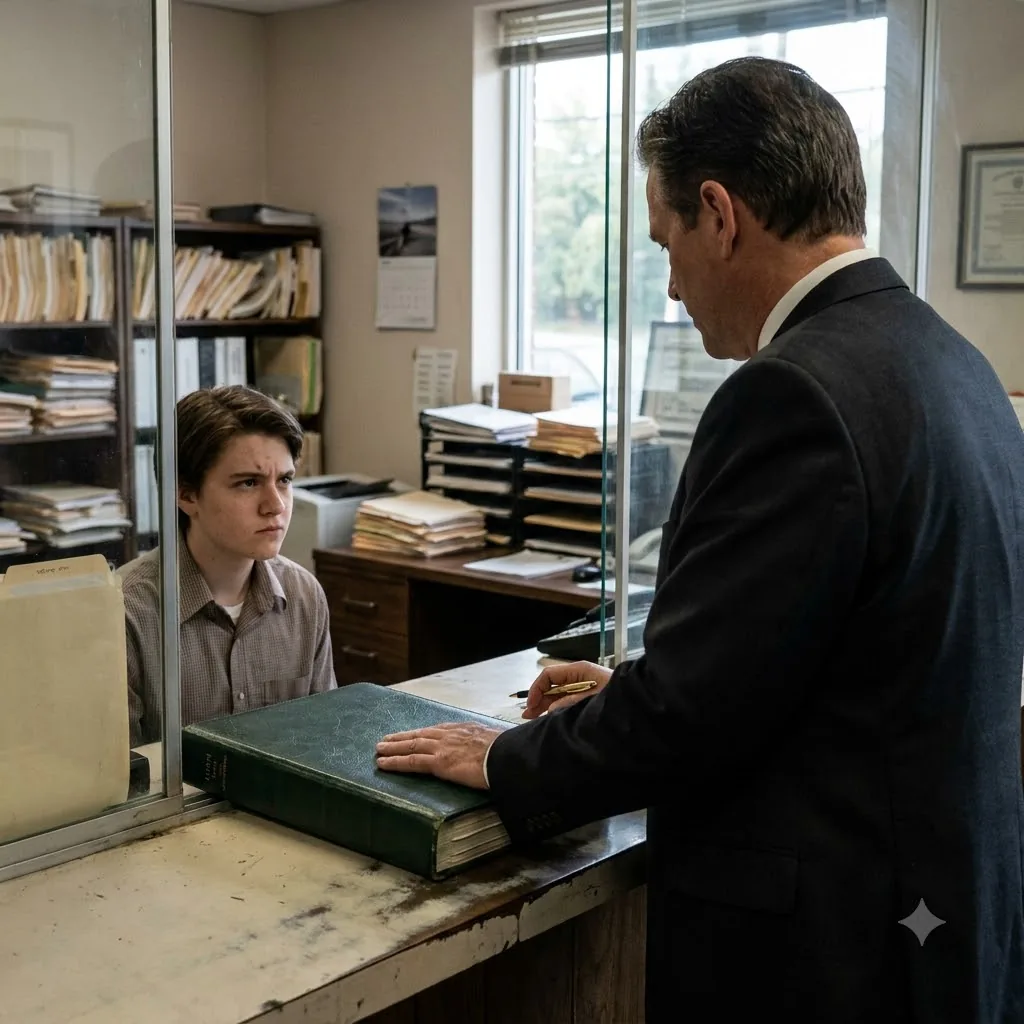
Arthur Vance did not take his eyes off the green ledger. He cleared his throat again, a dry, raspy sound in the quiet tax office. “A minor typographical discrepancy in the ledger sequence is common during manual entry updates,” he said, his voice dropping to a defensive murmur. “We can submit an administrative correction form post-filing. Stamp the receipt, Claire. Let’s not make an issue out of a standard clerical variance.”
“It isn’t a clerical variance, Mr. Vance,” I said. I pointed to the hand-inked line on the thick parchment page. “The entry for the five-million-dollar property transfer is dated October 12th. However, the automated transaction sequence code written right next to the signature is ST-9988-1016.”
Behind him, Richard Sterling took two slow steps toward the counter, his eyes fixed on the ledger. He did not speak, but his breathing had become shallow and fast, and he crumpled the handkerchief in his right fist.
I zoomed in on the county registry database on my monitor, clicking through the transaction logs. “The ‘1016’ suffix is a system-generated date stamp. The county database only issues that prefix for transactions processed on October 16th. A transaction dated October 12th cannot physically contain a sequence code that the county system didn’t even generate until four days later.”
Vance shifted his weight, his fingers tightening around his gold pen until his knuckles turned pale. “The county registry office frequently runs on delayed servers during high-volume weeks. The code was likely pre-allocated or backlogged. It’s a system latency issue, nothing more.”
“The county registry does not pre-allocate sequence codes, nor do they backlog automated date-stamps,” I said, maintaining a level, unhurried tone. “The system generates them in strict real-time order. The transaction sequence numbers issued on October 12th all carry the ‘1012’ prefix. This code didn’t exist until October 16th-two days after Thomas Sterling passed away.”
The silence in the office was broken only by the quiet hum of the fluorescent lights and the distant sound of another clerk stapling papers in the back room. Vance’s forced smile had vanished. He stared at the ledger, his gaze lingering on the wet-looking blue ink of the signature. He reached out to pull the book back toward his side of the counter, but I kept my hand firmly on the corner of the green leather cover.
Richard Sterling wiped his forehead again, his eyes darting from Vance to the screen behind my desk. The physical proof lay directly on the page, contradicting the public story of a pre-death transfer. The timeline of the estate’s tax exemption had completely broken under a single, basic question, leaving the accountant standing in silence at the counter.
Vance cleared his throat once more, his eyes shifting toward the office exit before returning to my face. “I suggest you call your manager over before you make a formal determination on this document,” he said, his voice dropping an octave as he tapped the gold pen once against the wood grain of the counter. “We can resolve this administrative confusion in the back office.” I reached for the telephone receiver, keeping my eyes fixed on the fresh blue ink of the signature, waiting to see if Vance would pull the ledger away before the call connected.