Story code: ST-001066
Part 1: The Batch Label
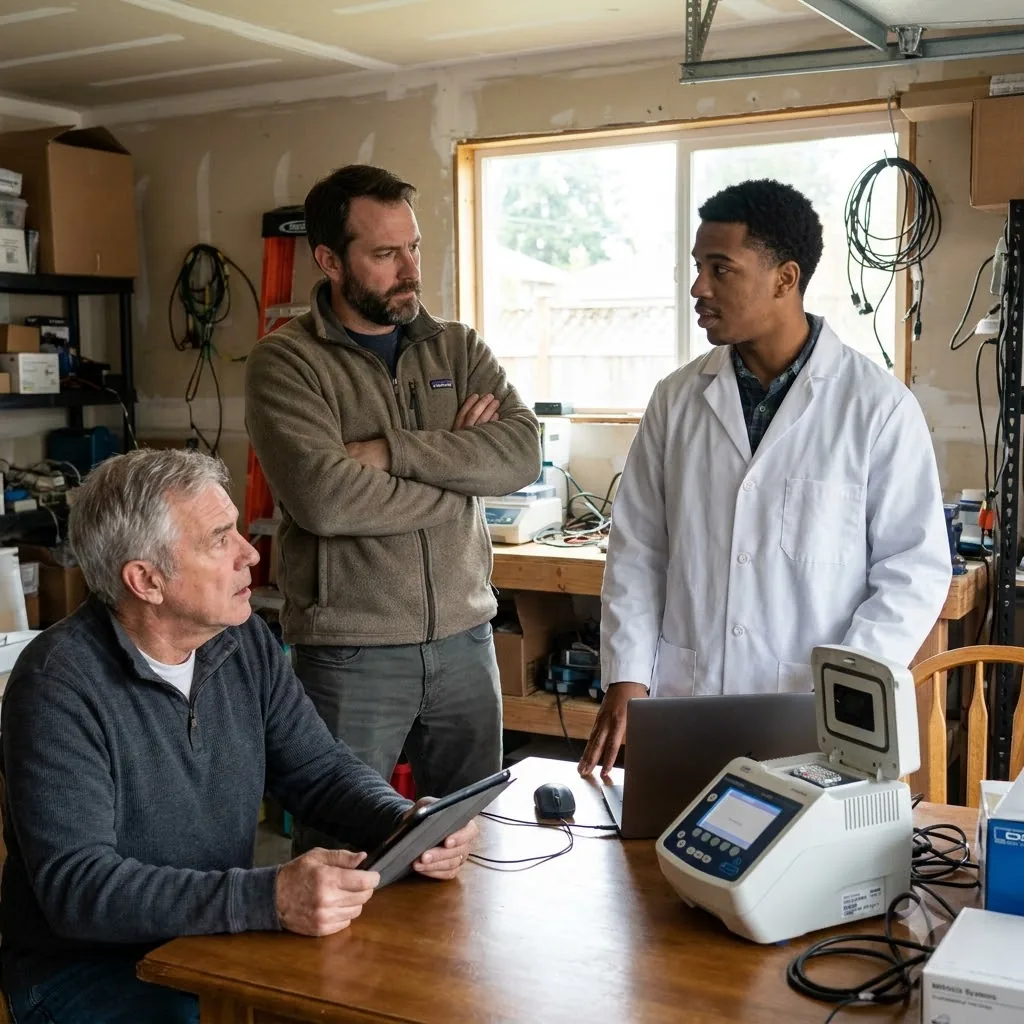
When my cousin Marcus Vance claimed he successfully sequenced a custom therapeutic vector for our family’s genetic disease in our suburban Seattle garage lab, Dr. Clara Vance immediately invoked internal compliance protocol to lock down my audit, threatening to terminate my investigator contract if I questioned the official digital ledger. Marcus stood by the humming Sequencing Machine Model S-4, carefully wiping down a frosted glass shelf on the office counter while the automated pipettes clicked in the background. The pressure to sign off on the sequence data was mounting, but the official sequence entry simply could not be true.
As the family board’s appointed auditor, my instructions were to verify the physical custody of all biological assets before the weekend investment vote. The Vance family had poured millions into this private, unapproved residential laboratory, bypassing standard regulatory pathways through a web of private liability agreements.
“The data is already locked in the Cryptographic Log Ledger,” Clara said, leaning against the doorframe of the garage lab. She tapped a printed spreadsheet on the counter. “Marcus uploaded the verified sequence on Tuesday morning at 10:14 AM. The validation is complete. We need your signature on the compliance form to release the next phase of funding.”
Marcus nodded, though he did not look up from the calibration vials he was sorting. “We’ve spent eighteen months on this vector, Julian. The sequence matches the therapeutic target. The digital signature is immutable.”
“The protocol requires me to reconcile the digital ledger with the physical samples in the cryo-storage unit,” I said.
Marcus’s hand paused over a tray of microcentrifuge tubes. “The digital timestamp is cryptographically bound to the synthesis run. Checking the physical tubes is redundant. You’re just delaying the board’s decision.”
“I am executing the audit parameters,” I replied.
Clara gestured toward the glass-fronted freezer in the corner. “Keep it brief, Julian. We have a hard deadline with the family board.”
I opened the freezer door, letting out a small cloud of condensed vapor. The racks inside were meticulously organized. I scanned the barcodes until I located Vial V-709, the specific container registered for the breakthrough vector. The vial was cool, its glass surface showing a light frost.
When I brought the vial to the office counter under the magnifying lamp, I examined the thermal transfer label. The printed label bore a distinct manufacturer’s batch prefix: PR-THU-082.
“The digital ledger is designed to prevent backward editing,” I remarked, placing the vial in a small plastic holder on the counter. “Every entry is locked with a hash from the previous block. If this vial was sealed on Tuesday, it should have a label printed no later than Monday’s batch, PR-MON-080.”
Marcus finally turned to face me. “We had a label jam on Tuesday. We had to reprint the label on Thursday and apply it retrospectively. The biological sample itself was synthesized on Tuesday, just as the ledger states.”
“The compliance rules dictate that any secondary physical modification, including relabeling, must be registered as a new event in the Cryptographic Log Ledger,” I noted. “There is no secondary event logged for Vial V-709. The digital record shows only a single, seamless entry on Tuesday morning.”
Clara crossed her arms. “A minor labeling delay doesn’t invalidate the sequencing data, Julian. The code is what matters, not the sticker.”
“A label printed on Thursday cannot exist on a vial that was permanently sealed in cryo-storage on Tuesday afternoon,” I said, pointing to the intact tamper-evident seal bridging the vial cap. The blue security adhesive was unbroken, showing no signs of peeling or re-application. The physical label prefix on Vial V-709 was only manufactured on Thursday, yet the ledger claimed the vector was sequenced and sealed in that vial on Tuesday.
When my cousin Marcus Vance claimed he successfully sequenced a custom therapeutic vector for our family’s genetic disease in our suburban Seattle garage lab, Dr. Clara Vance immediately invoked internal compliance protocol to lock down my audit, threatening to terminate my investigator contract if I questioned the official digital ledger. Marcus stood by the humming Sequencing Machine Model S-4, carefully wiping down a frosted glass shelf on the office counter while the automated pipettes clicked in the background. The pressure to sign off on the sequence data was mounting, but the official sequence entry simply could not be true.
As the family board’s appointed auditor, my instructions were to verify the physical custody of all biological assets before the weekend investment vote. The Vance family had poured millions into this private, unapproved residential laboratory, bypassing standard regulatory pathways through a web of private liability agreements.
“The data is already locked in the Cryptographic Log Ledger,” Clara said, leaning against the doorframe of the garage lab. She tapped a printed spreadsheet on the counter. “Marcus uploaded the verified sequence on Tuesday morning at 10:14 AM. The validation is complete. We need your signature on the compliance form to release the next phase of funding.”
Marcus nodded, though he did not look up from the calibration vials he was sorting. “We’ve spent eighteen months on this vector, Julian. The sequence matches the therapeutic target. The digital signature is immutable.”
“The protocol requires me to reconcile the digital ledger with the physical samples in the cryo-storage unit,” I said.
Marcus’s hand paused over a tray of microcentrifuge tubes. “The digital timestamp is cryptographically bound to the synthesis run. Checking the physical tubes is redundant. You’re just delaying the board’s decision.”
“I am executing the audit parameters,” I replied.
Clara gestured toward the glass-fronted freezer in the corner. “Keep it brief, Julian. We have a hard deadline with the family board.”
I opened the freezer door, letting out a small cloud of condensed vapor. The racks inside were meticulously organized. I scanned the barcodes until I located Vial V-709, the specific container registered for the breakthrough vector. The vial was cool, its glass surface showing a light frost.
When I brought the vial to the office counter under the magnifying lamp, I examined the thermal transfer label. The printed label bore a distinct manufacturer’s batch prefix: PR-THU-082.
“The digital ledger is designed to prevent backward editing,” I remarked, placing the vial in a small plastic holder on the counter. “Every entry is locked with a hash from the previous block. If this vial was sealed on Tuesday, it should have a label printed no later than Monday’s batch, PR-MON-080.”
Marcus finally turned to face me. “We had a label jam on Tuesday. We had to reprint the label on Thursday and apply it retrospectively. The biological sample itself was synthesized on Tuesday, just as the ledger states.”
“The compliance rules dictate that any secondary physical modification, including relabeling, must be registered as a new event in the Cryptographic Log Ledger,” I noted. “There is no secondary event logged for Vial V-709. The digital record shows only a single, seamless entry on Tuesday morning.”
Clara crossed her arms. “A minor labeling delay doesn’t invalidate the sequencing data, Julian. The code is what matters, not the sticker.”
“A label printed on Thursday cannot exist on a vial that was permanently sealed in cryo-storage on Tuesday afternoon,” I said, pointing to the intact tamper-evident seal bridging the vial cap. The blue security adhesive was unbroken, showing no signs of peeling or re-application. The physical label prefix on Vial V-709 was only manufactured on Thursday, yet the ledger claimed the vector was sequenced and sealed in that vial on Tuesday.