Story code: ST-001209
Part 1: The Exclusion
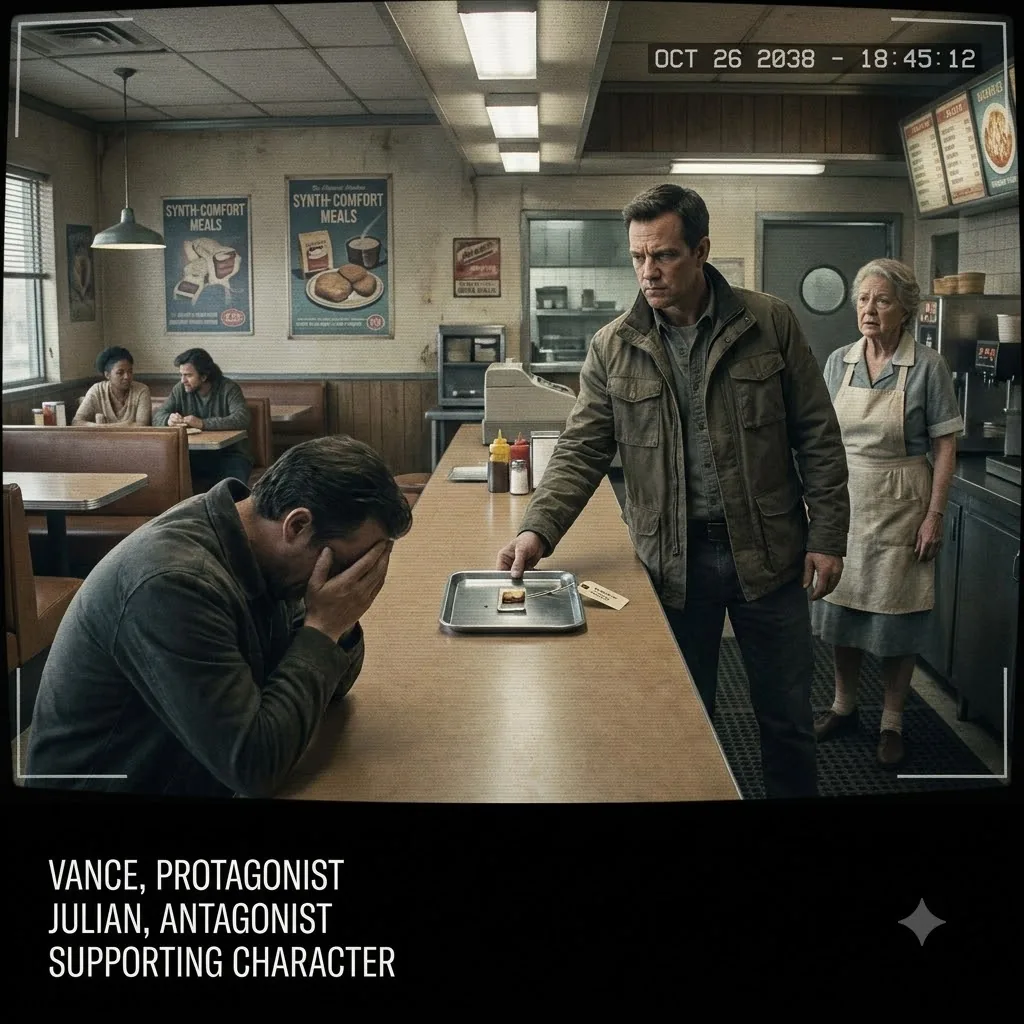
The security video from the main banquet room of Miller’s Synthetic Diner captures the exact moment Vance Miller stripped his cousin, Julian Miller, of his place in the family legacy. It was the annual reunion-a gathering that double-functions as the corporate board meeting for their cell-cultured comfort food franchise. As the bioreactors hummed behind the kitchen doors, Vance stood at the head of the long table, wearing a tailored tech-startup blazer, and projected a slide titled ‘Consolidated Lineage Holdings.’ Julian stood near the back, wearing his faded dining staff uniform, holding a tray of synthetic meat sliders. Vance did not look at him when he announced that Julian’s branch of the family had been formally cleared from the cap sheet, leaving Julian with zero shares and no legal belonging to the brand their grandfather built.
The room remained quiet except for the low hum of the kitchen equipment. Aunt Clara sat at the register counter, her eyes fixed on the heavy leather-bound Miller Dynasty Franchise Ledger. She did not correct Vance, but her fingers tapped a steady, nervous rhythm on the desk. Vance’s speech was fluent, filled with venture capital jargon about ‘streamlining cell-line intellectual property’ and ‘eliminating legacy liabilities.’ He presented a sleek new synthetic product line-a lab-grown culture designed to replace the grandfather’s original recipes entirely.
“The market has evolved past sentimentality,” Vance told the gathered relatives, his voice projected clearly through the banquet room’s speakers. “To secure the Series A funding from our tech partners, we need a clean corporate structure. Julian’s operational role is terminated, and his nominal lineage shares have been invalidated under the 2042 Restructuring Act.”
Julian did not shout. The reconstructed audio shows he spoke in a controlled, even tone that barely registered on the room’s directional microphones. “Grandfather’s charter requires lineage verification for any cell-line transition, Vance. You cannot license the name without it.”
Vance’s left hand tightened around his smart-stylus, a high-stress micro-expression captured by the high-definition security camera. “The legal team has already processed the filing, Julian. You don’t have the backing, you don’t have the equity, and frankly, you don’t count anymore. The family has voted.”
Aunt Clara closed the operational ledger with a heavy thud, but she did not speak. The family members at the table looked down at their plates of synthetic brisket, avoiding Julian’s gaze. Julian turned and walked back toward the kitchen corridors, leaving the family to toast Vance’s new corporate era. Yet, the diner’s digital archives show that Julian did not leave the building. He went down the stairs toward the basement vault, where the diner’s historical physical assets were kept.
According to the log of the vault’s digital keypad, Julian entered his employee passcode at 8:42 PM. The vault contained the physical history of the Miller brand, including items Vance assumed had been destroyed or digitized years ago. The question left lingering in the air of the banquet hall was not whether Julian had been excluded, but what physical evidence still remained in the darkness of the safe-evidence that could dismantle Vance’s clean corporate transition before the venture capitalists signed the final papers.
The security video from the main banquet room of Miller’s Synthetic Diner captures the exact moment Vance Miller stripped his cousin, Julian Miller, of his place in the family legacy. It was the annual reunion-a gathering that double-functions as the corporate board meeting for their cell-cultured comfort food franchise. As the bioreactors hummed behind the kitchen doors, Vance stood at the head of the long table, wearing a tailored tech-startup blazer, and projected a slide titled ‘Consolidated Lineage Holdings.’ Julian stood near the back, wearing his faded dining staff uniform, holding a tray of synthetic meat sliders. Vance did not look at him when he announced that Julian’s branch of the family had been formally cleared from the cap sheet, leaving Julian with zero shares and no legal belonging to the brand their grandfather built.
The room remained quiet except for the low hum of the kitchen equipment. Aunt Clara sat at the register counter, her eyes fixed on the heavy leather-bound Miller Dynasty Franchise Ledger. She did not correct Vance, but her fingers tapped a steady, nervous rhythm on the desk. Vance’s speech was fluent, filled with venture capital jargon about ‘streamlining cell-line intellectual property’ and ‘eliminating legacy liabilities.’ He presented a sleek new synthetic product line-a lab-grown culture designed to replace the grandfather’s original recipes entirely.
“The market has evolved past sentimentality,” Vance told the gathered relatives, his voice projected clearly through the banquet room’s speakers. “To secure the Series A funding from our tech partners, we need a clean corporate structure. Julian’s operational role is terminated, and his nominal lineage shares have been invalidated under the 2042 Restructuring Act.”
Julian did not shout. The reconstructed audio shows he spoke in a controlled, even tone that barely registered on the room’s directional microphones. “Grandfather’s charter requires lineage verification for any cell-line transition, Vance. You cannot license the name without it.”
Vance’s left hand tightened around his smart-stylus, a high-stress micro-expression captured by the high-definition security camera. “The legal team has already processed the filing, Julian. You don’t have the backing, you don’t have the equity, and frankly, you don’t count anymore. The family has voted.”
Aunt Clara closed the operational ledger with a heavy thud, but she did not speak. The family members at the table looked down at their plates of synthetic brisket, avoiding Julian’s gaze. Julian turned and walked back toward the kitchen corridors, leaving the family to toast Vance’s new corporate era. Yet, the diner’s digital archives show that Julian did not leave the building. He went down the stairs toward the basement vault, where the diner’s historical physical assets were kept.
According to the log of the vault’s digital keypad, Julian entered his employee passcode at 8:42 PM. The vault contained the physical history of the Miller brand, including items Vance assumed had been destroyed or digitized years ago. The question left lingering in the air of the banquet hall was not whether Julian had been excluded, but what physical evidence still remained in the darkness of the safe-evidence that could dismantle Vance’s clean corporate transition before the venture capitalists signed the final papers.