Story code: ST-001153
Part 1: The Missing Contribution
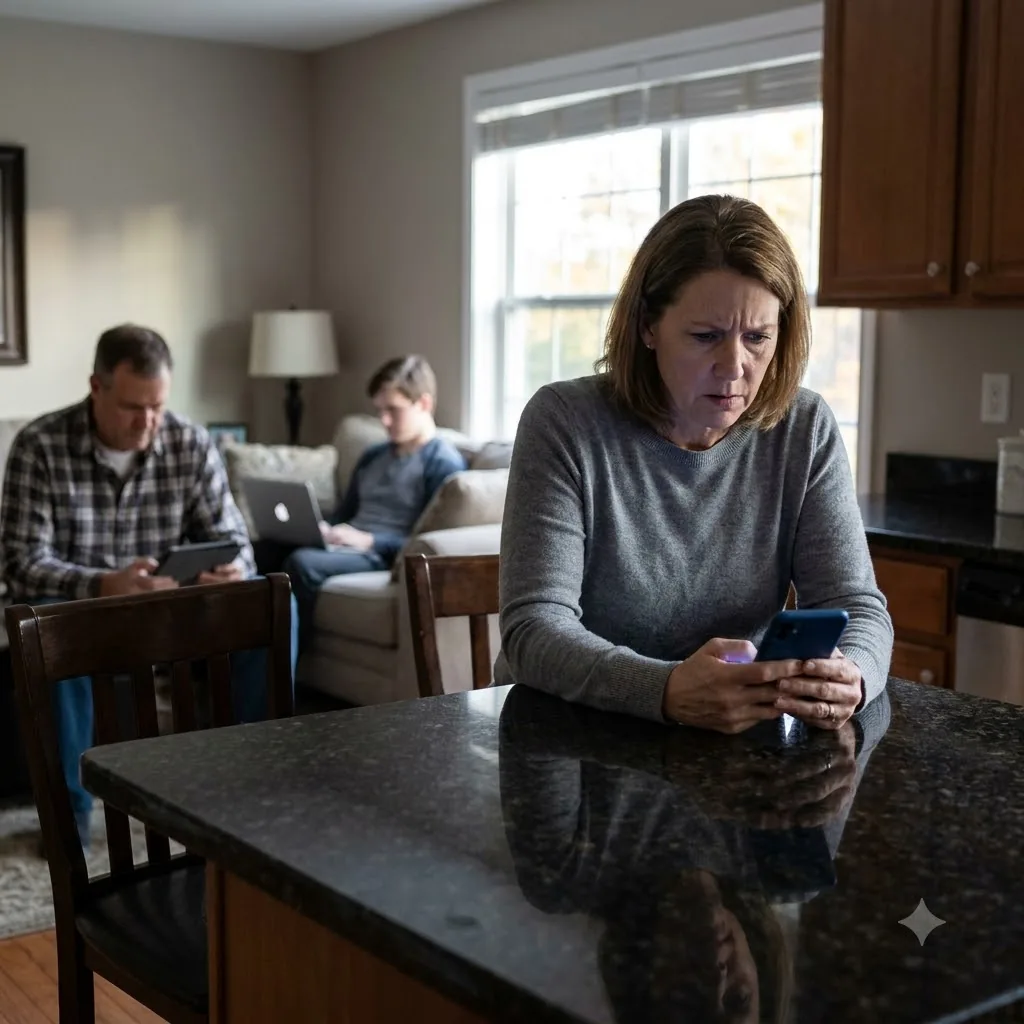
Sarah sat at her kitchen counter, the screen of her phone casting a steady blue glow against the polished granite as the family group chat, titled “The Miller Clan,” began to ping rapidly. Her cousin Marcus had just publicly denied receiving the $4,500 emergency fund contribution that Julian had sent him for Uncle Ted’s medical care, claiming instead that Julian was confused and had never sent the money. Within minutes, Aunt Brenda joined the thread, openly questioning Julian’s memory and stability under the weight of Marcus’s persistent denials. Sarah watched the typing indicator bubble appear and disappear, the digital silence stretching between messages as the public accusation hung in the air.
Julian’s name appeared at the top of the chat window as he began to reply. “I sent it on Tuesday night, Marcus,” he wrote. “The app showed a green checkmark. I have the digital receipt on my screen right now.”
A minute later, Marcus responded. “Julian, I’ve refreshed the balance three times. There is absolutely nothing here. Are you sure you didn’t just dream that you sent it? You’ve been under an extreme amount of stress lately, and we all know how you get when things pile up.”
Aunt Brenda added a thumbs-up emoji to Marcus’s message. “Julian, honey, please check your bank account again,” she typed. “We need to pay the first installment to the rehabilitation facility by Friday morning. Marcus is coordinating the entire fund. If you didn’t have the money to contribute, you could have just told us instead of making us rely on a promise.”
Sarah picked up her coffee mug, taking a slow sip as she scrolled through the escalating exchange. Her brother Julian was quick to upload an image file to the thread. It was a screenshot of a payment confirmation screen, showing a completed transfer of $4,500 to Marcus’s registered username, dated Tuesday at 8:14 PM.
“Here is the proof,” Julian wrote. “The funds left my checking account the same night. The transaction ID is listed at the bottom.”
Marcus’s reply was almost instantaneous. “Anyone can edit a screenshot with a basic photo app, Julian. The font on the transaction ID looks completely different from the standard app layout, and the spacing is off. Why would you try to fake this? It’s Uncle Ted’s health we’re talking about. We need real help, not digital fabrications.”
“I didn’t fake anything!” Julian’s text came back in a block of uppercase letters, followed by a series of typing indicators that kept appearing and vanishing.
Aunt Brenda typed a long paragraph. “Julian, this behavior is really concerning to all of us. First the issues with your apartment lease last year, and now this. If you are having another episode, please let us help you, but don’t play games with the family emergency fund. Just apologize to Marcus and let us move forward with the real contributors.”
Sarah watched the screen, her fingers hovering above the virtual keyboard. She did not type. Instead, she opened her own mobile payment application and checked the transfer interface, noting the standard fonts and layout. She switched back to the family chat.
Marcus posted once more: “Since Julian is clearly experiencing some confusion and didn’t actually contribute, I am removing his access to the shared document tracking the medical expenses. We need to keep the records clean and limited to actual contributors to avoid further chaos.”
Julian’s response came two minutes later, short and direct. “If the transfer didn’t go through, Marcus, why did my bank send an automated SMS confirmation saying the funds were successfully claimed by your registered phone number exactly four minutes after I hit send?”
Sarah sat at her kitchen counter, the screen of her phone casting a steady blue glow against the polished granite as the family group chat, titled “The Miller Clan,” began to ping rapidly. Her cousin Marcus had just publicly denied receiving the $4,500 emergency fund contribution that Julian had sent him for Uncle Ted’s medical care, claiming instead that Julian was confused and had never sent the money. Within minutes, Aunt Brenda joined the thread, openly questioning Julian’s memory and stability under the weight of Marcus’s persistent denials. Sarah watched the typing indicator bubble appear and disappear, the digital silence stretching between messages as the public accusation hung in the air.
Julian’s name appeared at the top of the chat window as he began to reply. “I sent it on Tuesday night, Marcus,” he wrote. “The app showed a green checkmark. I have the digital receipt on my screen right now.”
A minute later, Marcus responded. “Julian, I’ve refreshed the balance three times. There is absolutely nothing here. Are you sure you didn’t just dream that you sent it? You’ve been under an extreme amount of stress lately, and we all know how you get when things pile up.”
Aunt Brenda added a thumbs-up emoji to Marcus’s message. “Julian, honey, please check your bank account again,” she typed. “We need to pay the first installment to the rehabilitation facility by Friday morning. Marcus is coordinating the entire fund. If you didn’t have the money to contribute, you could have just told us instead of making us rely on a promise.”
Sarah picked up her coffee mug, taking a slow sip as she scrolled through the escalating exchange. Her brother Julian was quick to upload an image file to the thread. It was a screenshot of a payment confirmation screen, showing a completed transfer of $4,500 to Marcus’s registered username, dated Tuesday at 8:14 PM.
“Here is the proof,” Julian wrote. “The funds left my checking account the same night. The transaction ID is listed at the bottom.”
Marcus’s reply was almost instantaneous. “Anyone can edit a screenshot with a basic photo app, Julian. The font on the transaction ID looks completely different from the standard app layout, and the spacing is off. Why would you try to fake this? It’s Uncle Ted’s health we’re talking about. We need real help, not digital fabrications.”
“I didn’t fake anything!” Julian’s text came back in a block of uppercase letters, followed by a series of typing indicators that kept appearing and vanishing.
Aunt Brenda typed a long paragraph. “Julian, this behavior is really concerning to all of us. First the issues with your apartment lease last year, and now this. If you are having another episode, please let us help you, but don’t play games with the family emergency fund. Just apologize to Marcus and let us move forward with the real contributors.”
Sarah watched the screen, her fingers hovering above the virtual keyboard. She did not type. Instead, she opened her own mobile payment application and checked the transfer interface, noting the standard fonts and layout. She switched back to the family chat.
Marcus posted once more: “Since Julian is clearly experiencing some confusion and didn’t actually contribute, I am removing his access to the shared document tracking the medical expenses. We need to keep the records clean and limited to actual contributors to avoid further chaos.”
Julian’s response came two minutes later, short and direct. “If the transfer didn’t go through, Marcus, why did my bank send an automated SMS confirmation saying the funds were successfully claimed by your registered phone number exactly four minutes after I hit send?”