Story code: ST-001153
Part 3: The Verified Alert
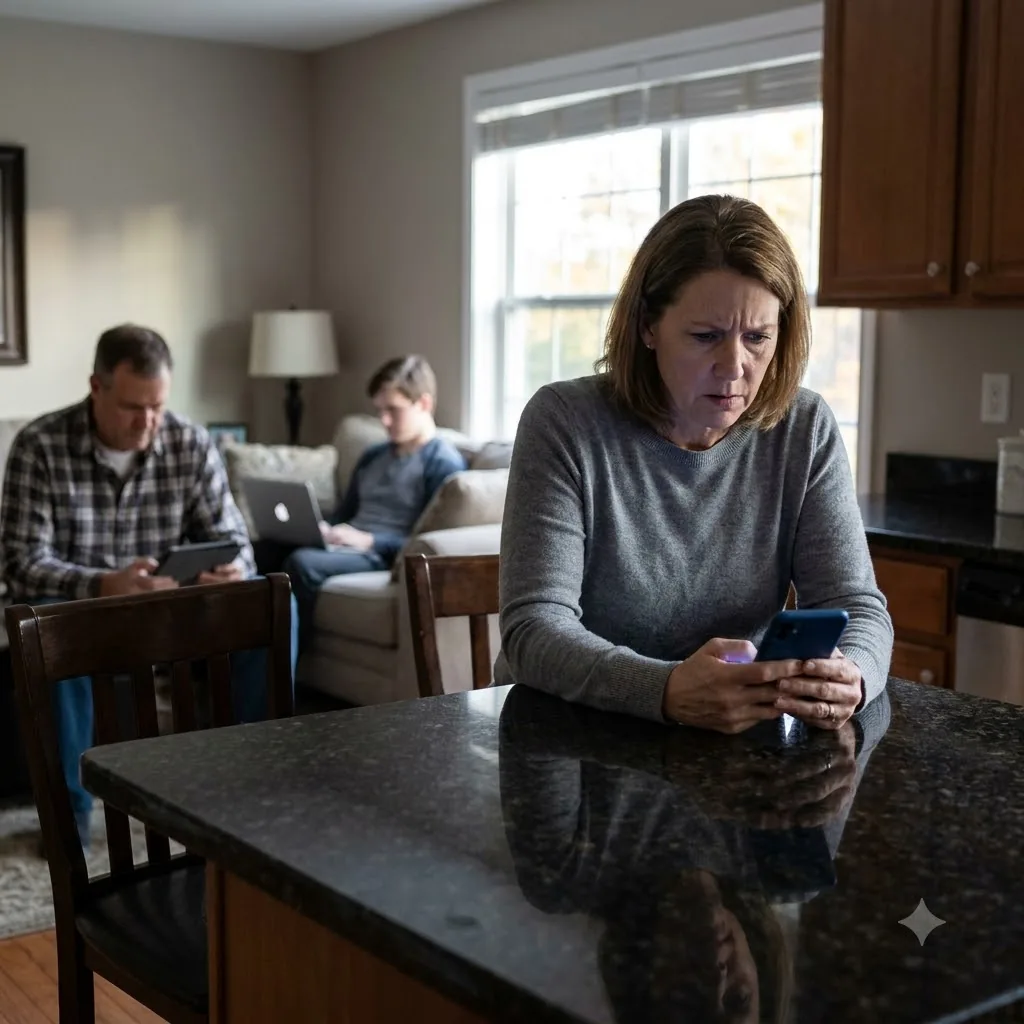
Sarah kept her gaze fixed on the glowing screen. She did not tap the text entry box. Her index finger scrolled upward slightly, returning to the cropped image Marcus had posted. The tiny green sliver at the very top of his image remained visible. In the group chat, Julian’s typing status appeared. “Marcus,” Julian wrote. “Look at the status bar in the screenshot you just uploaded. The notification banner is still partially visible. It shows a deposit of $4,500.” A minute of silence followed. The grey bubbles representing the other family members remained still. Sarah set her coffee mug down on the counter. The ceramic made a sharp click against the granite. Marcus’s name appeared with the typing indicator. “That’s an automated notification from a marketplace sale I made on Monday, Julian. I sell vintage audio gear online. It has nothing to do with your supposed transfer. Nice try, though.” “A marketplace sale for exactly $4,500.00?” Julian replied. “Yes,” Marcus sent back. “A high-end amplifier. I don’t need to justify my personal sales to you. The point remains that your transaction never cleared my ledger. Stop looking for conspiracies in cropped images and call your bank to resolve your account balance.” Aunt Brenda typed: “Julian, please. This is reaching a level of paranoia that we cannot tolerate. Marcus is trying to organize your uncle’s care, and you are dissecting his screenshots. If you cannot behave rationally, I will ask the administrator to remove you from the thread. We have actual bills to pay.” Sarah watched the screen. She adjusted her grip on her phone, her thumb hovering near the edge of the glass. The notification light on her phone blinked green once. Julian posted a link. The preview card labeled it as a verified transaction status alert from the payment application’s official automated merchant portal. “I requested a public transaction verification alert through the app’s automated system,” Julian wrote. “Since we are both registered in the same group vault, the app allows public status checks for pending disputes.” Sarah tapped the link. The page loaded instantly in her phone’s browser. It was a clean, black-and-white system alert with a verified security badge at the top. The text read: System Alert: Transaction ID #8892-X (Amount: $4,500.00). Status: Deposited and Cleared. Sender: Julian M. Recipient: Marcus M. (Account ending in 4029). Routing Destination: External Visa Card ending in 9912. Timestamp: Tuesday, May 14, 8:18 PM. Below the verification block, a small footnote stated: This transaction cannot be reversed or modified by the recipient. Sarah scrolled back to the group chat. Julian typed a single line: “The card ending in 9912 is your Chase Sapphire card, Marcus. The one you linked to the shared vault last winter. You routed the emergency money directly to your credit card balance four minutes after I sent it.” The typing indicator under Marcus’s name appeared immediately. It fluctuated, disappearing for a few seconds before returning. “There is a technical explanation for how the app routes incoming balances when a personal card is linked to a shared vault,” Marcus typed. “The system defaults to the last active card if the primary vault account is undergoing a routine security audit.” Julian did not reply. The group chat remained active, showing that three other family members were currently viewing the thread. The silence stretched for several minutes, the cursor blinking at the bottom of the screen.