Story code: ST-000103
Part 1: He Blocked My Check-In With Someone Else’s Words
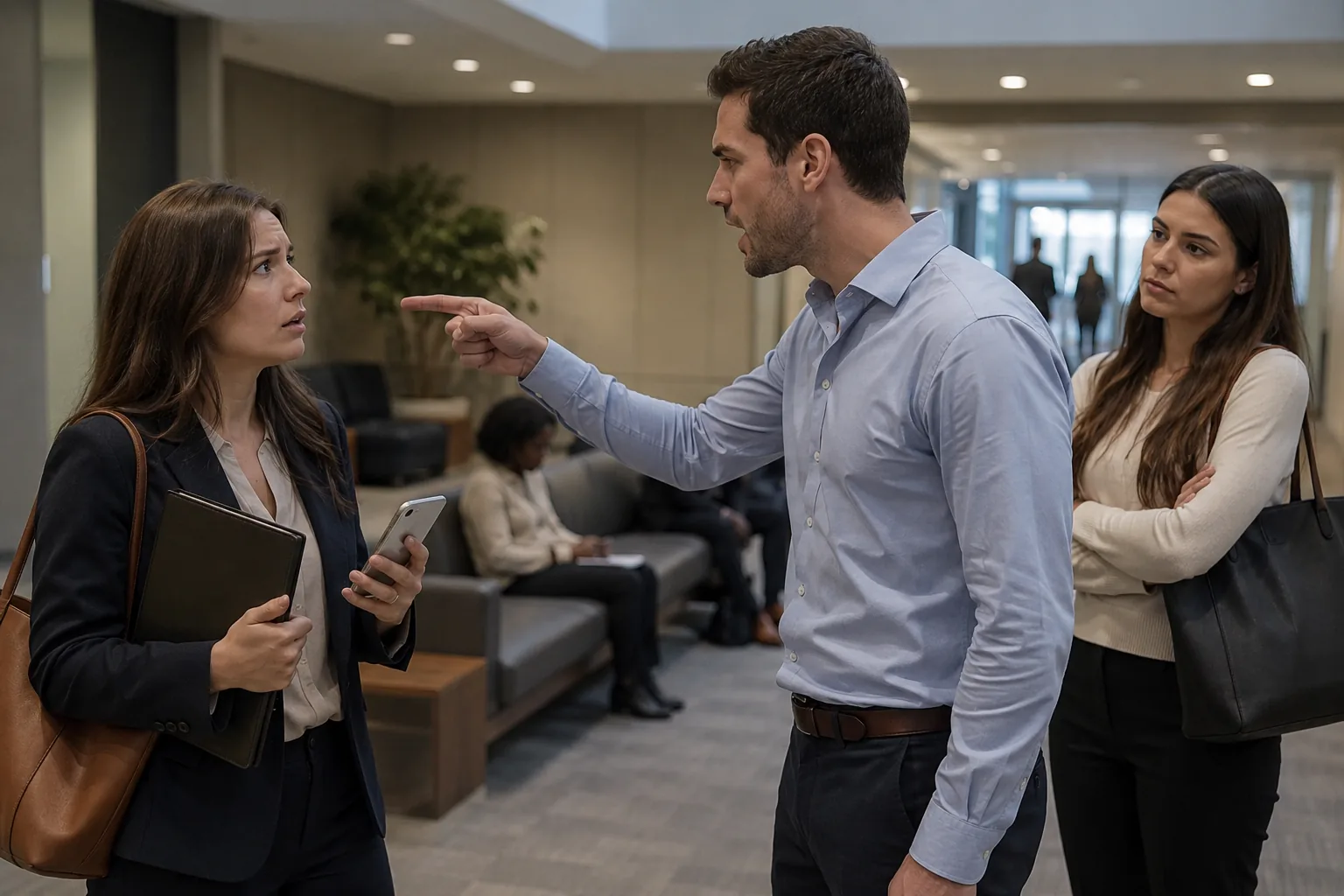
I got to the interview lobby twenty minutes early with my phone open to a reference email, my resume folder under my arm, and a man I had never seen in my life stepped directly in front of me and said, loud enough for the front desk and the other candidates to hear, “You need to tell them about the ethics complaint before they badge you upstairs.” It was one of those tight, rehearsed lines that does damage before you even understand what is happening, and the worst part was watching the woman at the front desk stop reaching for my visitor pass. The lobby was busy in that normal office way that makes everything feel more official than it is. A copier door kept opening somewhere behind the check-in area. Two people in suits were sitting in the row of chairs near the water station, looking down at their portfolios until that sentence made both of them look up. A guy in a navy tie was halfway through signing a clipboard and froze with the pen still in his hand. I said, “I’m sorry, what?” The man did not move. Mid-thirties maybe, gray quarter-zip, visitor sticker already on his chest. “You need to disclose the ethics complaint,” he said again, almost exactly the same way. “Before they process you. I was told they should know what kind of situation this is.” That second line was even stranger, because he said it like he was reading it off a card only he could see. “Who are you?” I asked. He gave me a quick look, then glanced toward the front desk. “Brent,” he said. “Brent Collier.” Denise Hall, whose nameplate was on the desk, lifted one hand in that cautious way people do when they are trying not to let a lobby scene get bigger. “Ma’am, if there is an issue we need to know about before the interview, I need to pause your check-in for a moment.” That sentence hit me harder than his did, because hers came with process behind it. A pause. A note. A delay. Enough to turn one rumor into a scheduling problem. I stepped sideways to see around Brent and said to Denise, “There is no issue. I have my confirmation email and my reference email right here. I don’t know this man.” Brent shifted right with me. Not aggressively, but enough to keep himself in my line. “I was asked to make sure they knew,” he said. “By who?” He took half a second too long. “Someone connected to you.” I could feel every other person in that lobby pretending not to listen while listening to every word. I unlocked my phone again and pulled up the message from Marisol Vega, the executive director I had worked with on a volunteer board project the year before. She had written me a warm, plain reference and copied her company signature under it. It was the reason I had my phone ready in the first place. I had wanted to look calm at check-in, not scramble if they asked who referred me. I held the screen out toward Denise. “This is my reference email. Marisol Vega. She knows I’m here. This interview is scheduled.” Denise leaned forward, but she did not take her eyes off Brent. “Sir, what exactly are you alleging?” He cleared his throat. “That she had an ethics complaint at her last placement. And that if you credential her without noting it, that’s a problem.” That was the moment something snagged in my head. Not because the accusation made sense. It didn’t. I had never had an ethics complaint anywhere. But because of the word credential. People in hospitals say credential. Universities sometimes say credential. Corporate interview floors in a downtown office tower with a visitor badge printer and a clipboard do not. They say check in. Sign in. Badge. Visitor access. He was using a word that belonged to some other setting, like somebody had handed him a line and he had memorized it without understanding where he was supposed to use it. I looked straight at him and said, “Credential me?” His mouth tightened. “You know what I mean.” “No, I don’t.” I kept my voice level because if I raised it, this would become about my tone instead of his claim. “You stopped me in a lobby full of people and said I had to disclose an ethics complaint before they credential me. Who says that here?” Denise’s eyes flicked to the badge printer beside her, then back to Brent. He said, “It means before they let you through.” “Then why didn’t you say that?” He looked irritated now, but it was the irritation of somebody being pushed off script. “Because that’s what I was told to say.” He said it too fast, like he wanted to pull the words back the second they were out. The man with the pen at the clipboard lowered it onto the counter without signing. One of the seated candidates picked up her phone but kept watching over the top of it. I asked, “Told by who?” Brent looked toward the elevators. Then down at the floor. Then at my phone, still open to Marisol’s email. “A person who knows your history,” he said. My stomach dropped, not because I believed him, but because there were not many people who would think they had the right to describe my history in a lobby before a job interview. Denise finally held out her hand for my phone. She read the sender line, the company block, the opening paragraph, then gave it back. Her tone changed just enough to become procedural. “Ms. Mercer, please wait one moment. Sir, stay where you are.” I did not move. Brent swallowed once and adjusted the edge of his visitor sticker with his thumb. I knew the accusation was fake. I knew the interview was real. But now I also knew one more thing: Brent had not invented that.
I got to the interview lobby twenty minutes early with my phone open to a reference email, my resume folder under my arm, and a man I had never seen in my life stepped directly in front of me and said, loud enough for the front desk and the other candidates to hear, “You need to tell them about the ethics complaint before they badge you upstairs.” It was one of those tight, rehearsed lines that does damage before you even understand what is happening, and the worst part was watching the woman at the front desk stop reaching for my visitor pass. The lobby was busy in that normal office way that makes everything feel more official than it is. A copier door kept opening somewhere behind the check-in area. Two people in suits were sitting in the row of chairs near the water station, looking down at their portfolios until that sentence made both of them look up. A guy in a navy tie was halfway through signing a clipboard and froze with the pen still in his hand. I said, “I’m sorry, what?” The man did not move. Mid-thirties maybe, gray quarter-zip, visitor sticker already on his chest. “You need to disclose the ethics complaint,” he said again, almost exactly the same way. “Before they process you. I was told they should know what kind of situation this is.” That second line was even stranger, because he said it like he was reading it off a card only he could see. “Who are you?” I asked. He gave me a quick look, then glanced toward the front desk. “Brent,” he said. “Brent Collier.” Denise Hall, whose nameplate was on the desk, lifted one hand in that cautious way people do when they are trying not to let a lobby scene get bigger. “Ma’am, if there is an issue we need to know about before the interview, I need to pause your check-in for a moment.” That sentence hit me harder than his did, because hers came with process behind it. A pause. A note. A delay. Enough to turn one rumor into a scheduling problem. I stepped sideways to see around Brent and said to Denise, “There is no issue. I have my confirmation email and my reference email right here. I don’t know this man.” Brent shifted right with me. Not aggressively, but enough to keep himself in my line. “I was asked to make sure they knew,” he said. “By who?” He took half a second too long. “Someone connected to you.” I could feel every other person in that lobby pretending not to listen while listening to every word. I unlocked my phone again and pulled up the message from Marisol Vega, the executive director I had worked with on a volunteer board project the year before. She had written me a warm, plain reference and copied her company signature under it. It was the reason I had my phone ready in the first place. I had wanted to look calm at check-in, not scramble if they asked who referred me. I held the screen out toward Denise. “This is my reference email. Marisol Vega. She knows I’m here. This interview is scheduled.” Denise leaned forward, but she did not take her eyes off Brent. “Sir, what exactly are you alleging?” He cleared his throat. “That she had an ethics complaint at her last placement. And that if you credential her without noting it, that’s a problem.” That was the moment something snagged in my head. Not because the accusation made sense. It didn’t. I had never had an ethics complaint anywhere. But because of the word credential. People in hospitals say credential. Universities sometimes say credential. Corporate interview floors in a downtown office tower with a visitor badge printer and a clipboard do not. They say check in. Sign in. Badge. Visitor access. He was using a word that belonged to some other setting, like somebody had handed him a line and he had memorized it without understanding where he was supposed to use it. I looked straight at him and said, “Credential me?” His mouth tightened. “You know what I mean.” “No, I don’t.” I kept my voice level because if I raised it, this would become about my tone instead of his claim. “You stopped me in a lobby full of people and said I had to disclose an ethics complaint before they credential me. Who says that here?” Denise’s eyes flicked to the badge printer beside her, then back to Brent. He said, “It means before they let you through.” “Then why didn’t you say that?” He looked irritated now, but it was the irritation of somebody being pushed off script. “Because that’s what I was told to say.” He said it too fast, like he wanted to pull the words back the second they were out. The man with the pen at the clipboard lowered it onto the counter without signing. One of the seated candidates picked up her phone but kept watching over the top of it. I asked, “Told by who?” Brent looked toward the elevators. Then down at the floor. Then at my phone, still open to Marisol’s email. “A person who knows your history,” he said. My stomach dropped, not because I believed him, but because there were not many people who would think they had the right to describe my history in a lobby before a job interview. Denise finally held out her hand for my phone. She read the sender line, the company block, the opening paragraph, then gave it back. Her tone changed just enough to become procedural. “Ms. Mercer, please wait one moment. Sir, stay where you are.” I did not move. Brent swallowed once and adjusted the edge of his visitor sticker with his thumb. I knew the accusation was fake. I knew the interview was real. But now I also knew one more thing: Brent had not invented that.