Story code: ST-001007
Part 1: He Said I Was the Problem While I Was Holding His Pad Together
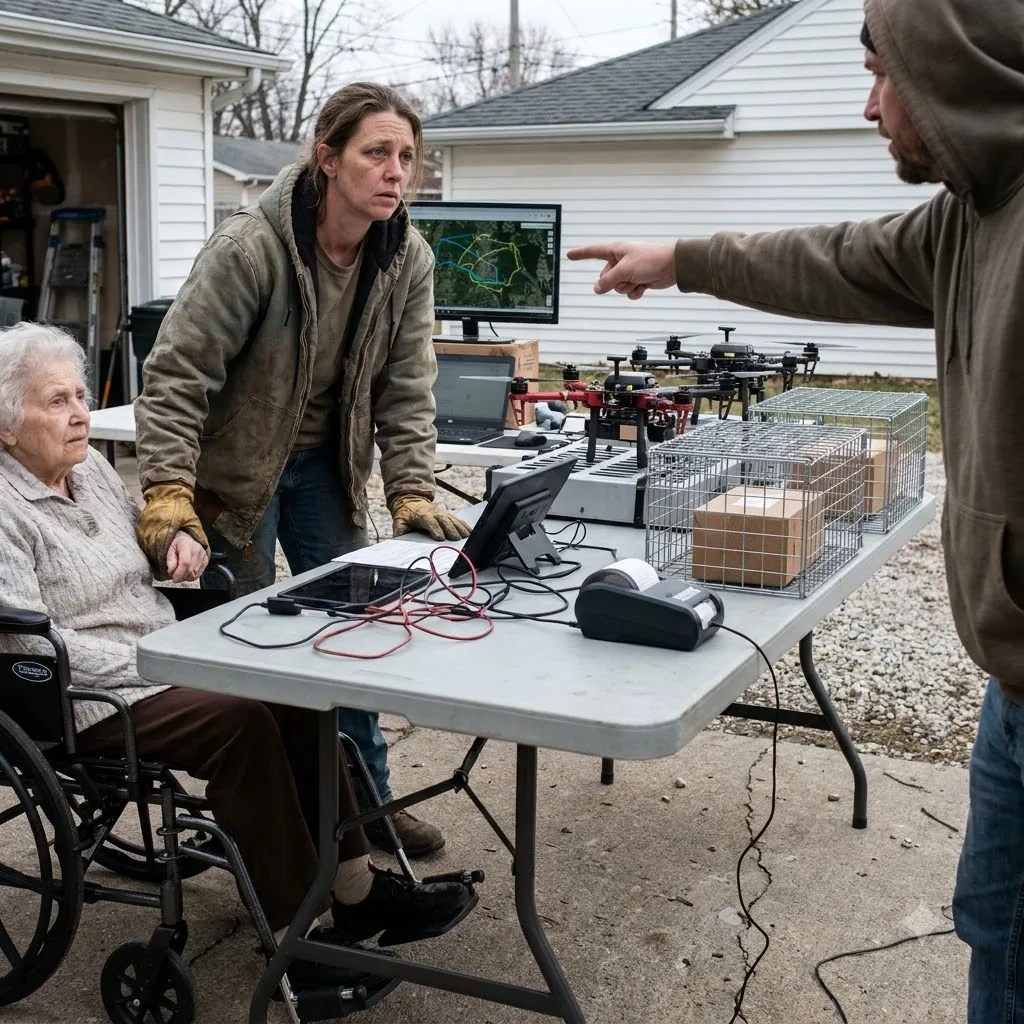
My cousin Evan pointed at me across the Jensen Air launch pad and said I was the reason launches were failing while I was steadying Rosa with one hand, reprinting his bad labels with the other, and the digital delivery manifest was still open behind him showing who had actually touched the routes. He did it in front of the dispatch table, the charging rack aisle, Nico at the screens, Tessa by the printer, and two drivers waiting on handoff bins like I had been sabotaging the place instead of keeping it upright. The worst part was that his story almost worked because the work he was blaming me for was the same care work everybody used and nobody wanted to count. If you have never seen a family-run drone launch pad during a bad hour, it looks less like tech and more like a kitchen fire with propellers. Chargers blink down one wall. Route queue screens chirp every few seconds. Packages get scanned from the cage to the loading stripe. Somebody is always asking where a battery key went. Somebody else is always swearing a label already printed. I got there before sunrise like I usually did. The battery rotation board still had last night’s numbers on it, two handoff bins were unlabeled, and Rosa was already at the folding support table by the side wall with her paper cup and her medication pouch sitting beside a stack of outbound mailers. She looked toward me before I even set my bag down. “Did I miss my ride?” she asked. “Not yet,” I told her. I put the pouch where she could see it, checked the time on my phone, then moved straight to the charging racks. That was the normal pattern. I reset what had been left half-done, answered route questions while moving batteries, and stopped whenever Rosa needed help hearing over the noise or figuring out which bag was hers. None of that was hidden. It happened in the middle of the floor, every shift. By 8:10, the first delay hit. Tessa was standing at the label printer station with three reprints in her hand and one folded into her hoodie pocket. She held one out without looking up. “Route 14 got printed with Route 17’s customer block again,” she said. I checked the barcode, then the manifest on the nearest screen. Wrong destination cluster. If that package had gone out, the drone would have burned flight time fixing a mistake on the back end. “Reprint these two. Hold 14 until I clear it,” I told her. Evan heard the word hold and stepped in like I’d pulled a fire alarm for fun. He tapped the edge of the screen and gave me that polished voice he uses when he wants staff to hear him sounding important. “This is exactly what I mean,” he said. “Mara keeps freelancing process. Every time she inserts herself, flow gets worse. We need one chain of control. Not side decisions.” I had a battery in one hand and Rosa’s pouch in the other. “The label is wrong.” He looked past the label and right at the audience. Nico stayed at the dispatch table with one hand on the route queue keyboard. Tessa stopped feeding stock into the printer. One of the drivers shifted his bin from hip to hip. “No,” Evan said, louder. “The issue is you stop launches for personal distractions, then call it helping. We are behind because you keep turning operations into your own station.” That landed exactly the way he wanted. Not because it was true, but because everybody on that floor had seen me pause scans to help Rosa sit down, sort her medication pouch, answer her repeated questions, or walk her away from the loading stripe when the noise got too high. If somebody wanted to twist that into interference, there was plenty of visible material. What there was not, at least not in the way people look during a rush, was equal attention on who had failed to rotate batteries on time, who had let bad labels stack at the printer, or who never answered Rosa until I did. I set the battery down, took the reprint from Tessa, and turned the screen so the route block was visible. “This package says Maple Terrace on the label and Cedar Glen in the manifest,” I said. Evan barely glanced. “You are doing it again. Making yourself the center of the system.” That was the first public cut. After that, every normal correction I made got framed as proof of the accusation. When I pulled a drone because the battery number on its belly did not match the board, Evan called it another delay. When I walked Rosa back from the loading stripe after she drifted too close during a handoff rush, he said I was abandoning station coverage. When I answered Tessa’s question about which cages had already been scanned, he called it “cross-command noise.” Nico spoke once, quietly, without looking away from the route queue. “Launch 6 was already red before Mara stepped over here.” Evan ignored him and kept going. By late morning he had built a whole speech out of it. He said standards were slipping because I blurred family care and operations. He said people were confused because I inserted myself everywhere. He said if we wanted the pad to scale, we had to stop letting one person make emotional decisions in the middle of dispatch. He said all of this while Rosa sat ten feet away waiting for someone to open her medication pouch because her hands were shaking against the zipper, and while Tessa kept feeding reprints into a printer that would not have been running nonstop if the labels had been right the first time. I did not argue much in the moment because arguing on a live pad just makes more dead air. I kept moving. I logged battery swaps. I noted when Rosa needed help. I marked.
My cousin Evan pointed at me across the Jensen Air launch pad and said I was the reason launches were failing while I was steadying Rosa with one hand, reprinting his bad labels with the other, and the digital delivery manifest was still open behind him showing who had actually touched the routes. He did it in front of the dispatch table, the charging rack aisle, Nico at the screens, Tessa by the printer, and two drivers waiting on handoff bins like I had been sabotaging the place instead of keeping it upright. The worst part was that his story almost worked because the work he was blaming me for was the same care work everybody used and nobody wanted to count. If you have never seen a family-run drone launch pad during a bad hour, it looks less like tech and more like a kitchen fire with propellers. Chargers blink down one wall. Route queue screens chirp every few seconds. Packages get scanned from the cage to the loading stripe. Somebody is always asking where a battery key went. Somebody else is always swearing a label already printed. I got there before sunrise like I usually did. The battery rotation board still had last night’s numbers on it, two handoff bins were unlabeled, and Rosa was already at the folding support table by the side wall with her paper cup and her medication pouch sitting beside a stack of outbound mailers. She looked toward me before I even set my bag down. “Did I miss my ride?” she asked. “Not yet,” I told her. I put the pouch where she could see it, checked the time on my phone, then moved straight to the charging racks. That was the normal pattern. I reset what had been left half-done, answered route questions while moving batteries, and stopped whenever Rosa needed help hearing over the noise or figuring out which bag was hers. None of that was hidden. It happened in the middle of the floor, every shift. By 8:10, the first delay hit. Tessa was standing at the label printer station with three reprints in her hand and one folded into her hoodie pocket. She held one out without looking up. “Route 14 got printed with Route 17’s customer block again,” she said. I checked the barcode, then the manifest on the nearest screen. Wrong destination cluster. If that package had gone out, the drone would have burned flight time fixing a mistake on the back end. “Reprint these two. Hold 14 until I clear it,” I told her. Evan heard the word hold and stepped in like I’d pulled a fire alarm for fun. He tapped the edge of the screen and gave me that polished voice he uses when he wants staff to hear him sounding important. “This is exactly what I mean,” he said. “Mara keeps freelancing process. Every time she inserts herself, flow gets worse. We need one chain of control. Not side decisions.” I had a battery in one hand and Rosa’s pouch in the other. “The label is wrong.” He looked past the label and right at the audience. Nico stayed at the dispatch table with one hand on the route queue keyboard. Tessa stopped feeding stock into the printer. One of the drivers shifted his bin from hip to hip. “No,” Evan said, louder. “The issue is you stop launches for personal distractions, then call it helping. We are behind because you keep turning operations into your own station.” That landed exactly the way he wanted. Not because it was true, but because everybody on that floor had seen me pause scans to help Rosa sit down, sort her medication pouch, answer her repeated questions, or walk her away from the loading stripe when the noise got too high. If somebody wanted to twist that into interference, there was plenty of visible material. What there was not, at least not in the way people look during a rush, was equal attention on who had failed to rotate batteries on time, who had let bad labels stack at the printer, or who never answered Rosa until I did. I set the battery down, took the reprint from Tessa, and turned the screen so the route block was visible. “This package says Maple Terrace on the label and Cedar Glen in the manifest,” I said. Evan barely glanced. “You are doing it again. Making yourself the center of the system.” That was the first public cut. After that, every normal correction I made got framed as proof of the accusation. When I pulled a drone because the battery number on its belly did not match the board, Evan called it another delay. When I walked Rosa back from the loading stripe after she drifted too close during a handoff rush, he said I was abandoning station coverage. When I answered Tessa’s question about which cages had already been scanned, he called it “cross-command noise.” Nico spoke once, quietly, without looking away from the route queue. “Launch 6 was already red before Mara stepped over here.” Evan ignored him and kept going. By late morning he had built a whole speech out of it. He said standards were slipping because I blurred family care and operations. He said people were confused because I inserted myself everywhere. He said if we wanted the pad to scale, we had to stop letting one person make emotional decisions in the middle of dispatch. He said all of this while Rosa sat ten feet away waiting for someone to open her medication pouch because her hands were shaking against the zipper, and while Tessa kept feeding reprints into a printer that would not have been running nonstop if the labels had been right the first time. I did not argue much in the moment because arguing on a live pad just makes more dead air. I kept moving. I logged battery swaps. I noted when Rosa needed help. I marked.