Story code: ST-001007
Part 2: The Manifest Started Talking Back
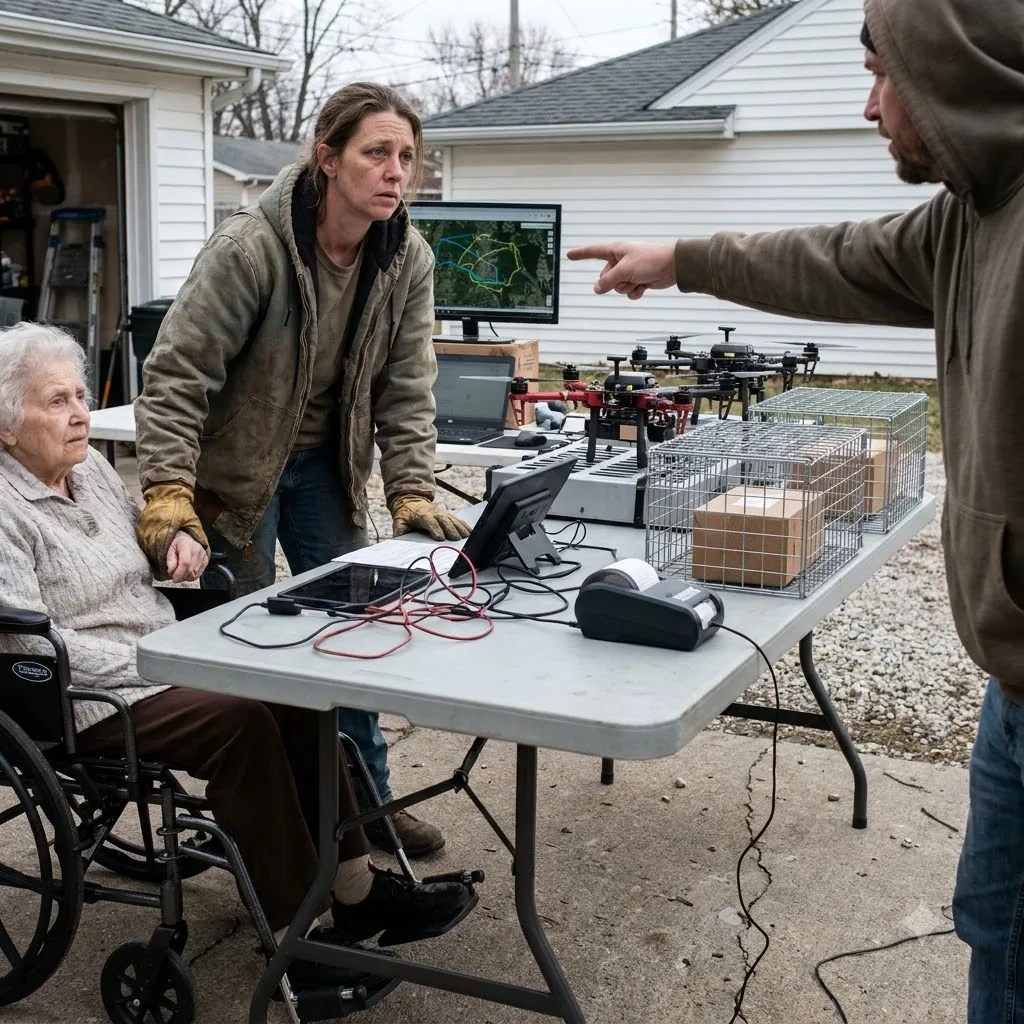
By the time the lunch rush should have cleared, Evan had repeated his version of the problem enough that even the silence around the dispatch table sounded like agreement. He kept saying I was clogging operations with side decisions, but the digital delivery manifest was still sitting there with timestamps attached to every hold, reprint, route release, and launch delay. He had a speech. I had rows of time. I stayed on shift and started building the morning back in order from what could actually be seen. The first thing I checked was Route 14, the label problem he had turned into a lecture about control. The manifest showed the package was placed on hold at 8:12. The corrected label printed at 8:14. Launch clearance did not go green until 8:21. That seven-minute gap mattered. Because at 8:15, according to the route queue screen Nico still had open, Launch 6 threw a battery mismatch alert in another bay. I knew I had crossed to that side because I wrote the battery number in my notes after I swapped it. Right under that entry I had written, “Rosa meds 8:17, water, seated.” My notebook was not fancy. Just time marks, battery numbers, and quick lines so I would remember who needed what when the floor got loud. But it was enough to put me in two visible places doing two necessary things while Evan was claiming I had been grandstanding over a printer. Nico leaned back from the keyboard when I asked him for the route history. “I can show you the queue events,” he said. “Just the times,” I said. He clicked through the alerts with two fingers. He always did that before speaking, like he wanted the screen to answer first. “Route 14 label hold at 8:12,” he said. “Battery alert on Launch 6 at 8:15. Route 9 sat unassigned until 8:18. Handoff confirmation for 14 at 8:21.” “Who was on 9?” He pointed to the manifest line instead of answering with a guess. Evan’s initials were still attached to the route assignment field until the reassignment dropped at 8:18. That did not prove everything by itself. But it cut a clean hole in his speech. If I was supposedly freezing the whole pad over one printer issue, why was one of his own routes sitting idle in the same window? I went back through the next cluster. At 8:32, I had noted that Rosa asked the same ride question three times in under two minutes and drifted away from the folding table toward the loading stripe. The manifest showed two handoff scans delayed at 8:33 and 8:34. Evan had pointed to those delays in front of everybody and said I was leaving station coverage for personal reasons. What the pad itself showed was different. Tessa was beside the printer rerunning labels at 8:31 and 8:32. Nico had a route queue warning active at 8:33. Rosa was near the stripe. I had walked her back, got her seated, and opened the medication pouch because nobody else did. Then I went straight to the handoff bins. The scans resumed at 8:35. That is care work people like Evan dismiss as hovering right up until they need someone else to absorb the consequence of it not being done. He gave me the proof of that himself about twenty minutes later. Rosa called from the side wall, not loudly, just enough to carry between the chargers and the table. “Can somebody open this?” I was at the package cage matching a battery key to a rack number. Tessa was carrying bins to the stripe. Nico was clearing a route conflict. Evan was the closest person to Rosa by at least six feet. He turned when she spoke. So everybody saw it. “One second,” he said, but he did not go to her. He tapped the screen beside him, looked toward the loading line, then told Tessa, “Finish those bins first.” Rosa stood there with the pouch in both hands and waited. She asked again, this time toward the room instead of at anyone specific. Nobody moved for a beat. Then I put the key down and crossed the floor. When I took the pouch, the zipper was caught in the corner seam. It needed one steady pull, nothing dramatic. I got her pills into her hand, gave her the paper cup, and asked her to sit until I came back. Evan saw the whole thing, because when I turned he was already talking. “This is the exact boundary issue,” he said. “You keep making yourself indispensable, and then operations depend on your interruptions.” Nico finally looked up fully. “She crossed because nobody else did.” Evan’s jaw tightened. He pressed his thumb against the edge of the dispatch table, then looked at the route queue instead of at Nico. That was the first crack that staff could see without me explaining anything. Not a confession. Not a dramatic scene. Just a simple public fact: he had been nearest to the task he kept saying was being mishandled, and he still left it for me. Later, when the afternoon slowdown hit, Tessa came over with a stack of bad labels held flat against her chest. She did not hand them to me right away. She looked toward the printer station first, then toward Evan near the screen wall. “These were the ones from this morning,” she said quietly. “Some got corrected. Some got reprinted twice.” I took the stack and checked the top few. Route numbers crossed out. Customer blocks redone. Timing marks from the printer margin. Enough to show a pattern, not just one mistake. Then Tessa added one sentence without raising her voice. “He told me not to log all the first prints if they were getting fixed fast.” She said it while looking at the labels, not at me. And that was the moment the question changed from whether Evan had blamed the wrong person to how much Tessa had already.