Story code: ST-000197
Part 1: The Bin Wasn’t the Only Thing She Locked Out
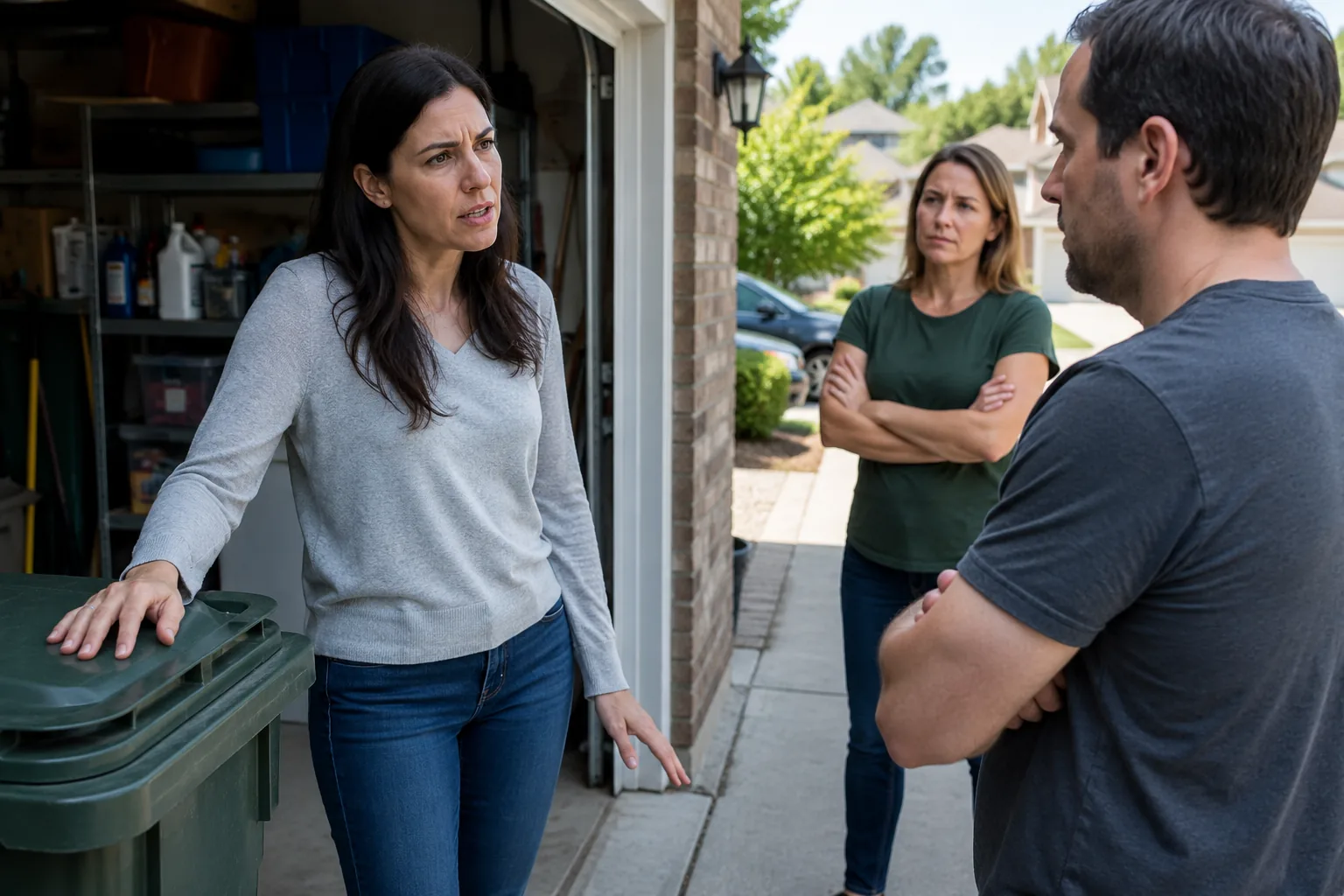
Maya Miller stood in the garage doorway with one hand on the compost bin and said the bin was no longer mine to use. Dan Miller had been carrying a sack of yard scraps toward it when she blocked the path, right there by the washer, with the trash cans lined up and the driveway open behind her. The rule came out in the same flat voice she used for everything that sounded settled. The problem was simple enough to see: the bin was still sitting in the same spot, but access to it had been taken away by a rule nobody could repeat the same way twice.
Linda Miller looked up from the folding table where she had been sorting seed packets into a plastic tray. She didn’t speak at first. Her eyes moved from Maya’s hand on the lid to the bag in Dan’s hand, then to the bin itself, as if checking whether the object had changed while nobody was looking.
Dan set the sack down on the floor. He did not move closer. “What rule?” he asked.
Maya kept her hand on the bin and said, “The compost system is paused. We need to reduce contamination.” She said it like a notice posted on a wall, not like something she was making up in the moment.
“Paused where?” Dan asked. “In the garage? In the yard? For everybody?”
“For the setup,” Maya said.
That was the first answer. It did not line up cleanly with the second one that came after. When Dan asked if that meant the kitchen scraps were supposed to go somewhere else, Maya pointed past the open garage and said the outdoor bin had the same issue. Then she added that the side yard bin was also out. Then, after a short pause, she said any bin that had not been properly labeled was not in service.
Linda lifted one seed packet, glanced at the handwritten sticker, and put it back. “The little bin by the herb planters has a label,” she said.
Maya’s eyes went to the doorway. “That one is different.”
“How?” Dan asked.
Maya looked at the compost bin again. “Because that one is not part of the household waste stream.”
Dan stood there with the bag in his hand and looked from the bin to the driveway to the herb planter by the steps. Nothing about the physical setup had changed in the last minute except who was allowed to touch what. The bin was visible. The scraps were visible. The garage was visible. The rule was not.
He asked one more time for the source of it. A post, a note, a text, anything that could be read the same way twice. Maya said it had been discussed already and didn’t need to be repeated. That answer didn’t match the way she kept repeating it. Every time Dan asked about a different container, the scope widened. Every time he picked one spot to test, she moved the line to another.
Linda rose from the folding chair and walked to the bin without touching it. She read the label on the lid, then the marker tags on the side, then glanced toward the driveway where the second container sat near the hose reel. “If the rule is about contamination,” she said, “why is the clean bin in the garage the one getting blocked?”
Maya answered too fast. “Because it is the one in use.”
Dan looked at the bag in his own hand. It was still tied shut. The scraps had not touched anything. He set the bag down beside the bin and pointed to the other container outside, the one Maya had just called different. “Then why does the same rule reach that one, too?”
Maya did not answer right away. She stepped out of the doorway, crossed the garage threshold, and checked the bin by the driveway with the toe of her shoe. Then she came back and said that bin had been grandfathered in, which was odd because nobody in the garage had ever used that word before. Linda looked at Dan, then at Maya, then at the driveway bin again.
Dan asked for the line that made one container allowed and another not. Maya opened her mouth, closed it, and said the problem was not the bin. The problem was compliance.
That was the moment the rule stopped sounding like a rule and started sounding like a move. Dan looked at the garage bin, then at the driveway bin, then at the little labeled bin by the herbs, and asked the same question one more time: if the compost restriction was real, why could nobody explain why it stopped at one place and started at another?
Maya Miller stood in the garage doorway with one hand on the compost bin and said the bin was no longer mine to use. Dan Miller had been carrying a sack of yard scraps toward it when she blocked the path, right there by the washer, with the trash cans lined up and the driveway open behind her. The rule came out in the same flat voice she used for everything that sounded settled. The problem was simple enough to see: the bin was still sitting in the same spot, but access to it had been taken away by a rule nobody could repeat the same way twice.
Linda Miller looked up from the folding table where she had been sorting seed packets into a plastic tray. She didn’t speak at first. Her eyes moved from Maya’s hand on the lid to the bag in Dan’s hand, then to the bin itself, as if checking whether the object had changed while nobody was looking.
Dan set the sack down on the floor. He did not move closer. “What rule?” he asked.
Maya kept her hand on the bin and said, “The compost system is paused. We need to reduce contamination.” She said it like a notice posted on a wall, not like something she was making up in the moment.
“Paused where?” Dan asked. “In the garage? In the yard? For everybody?”
“For the setup,” Maya said.
That was the first answer. It did not line up cleanly with the second one that came after. When Dan asked if that meant the kitchen scraps were supposed to go somewhere else, Maya pointed past the open garage and said the outdoor bin had the same issue. Then she added that the side yard bin was also out. Then, after a short pause, she said any bin that had not been properly labeled was not in service.
Linda lifted one seed packet, glanced at the handwritten sticker, and put it back. “The little bin by the herb planters has a label,” she said.
Maya’s eyes went to the doorway. “That one is different.”
“How?” Dan asked.
Maya looked at the compost bin again. “Because that one is not part of the household waste stream.”
Dan stood there with the bag in his hand and looked from the bin to the driveway to the herb planter by the steps. Nothing about the physical setup had changed in the last minute except who was allowed to touch what. The bin was visible. The scraps were visible. The garage was visible. The rule was not.
He asked one more time for the source of it. A post, a note, a text, anything that could be read the same way twice. Maya said it had been discussed already and didn’t need to be repeated. That answer didn’t match the way she kept repeating it. Every time Dan asked about a different container, the scope widened. Every time he picked one spot to test, she moved the line to another.
Linda rose from the folding chair and walked to the bin without touching it. She read the label on the lid, then the marker tags on the side, then glanced toward the driveway where the second container sat near the hose reel. “If the rule is about contamination,” she said, “why is the clean bin in the garage the one getting blocked?”
Maya answered too fast. “Because it is the one in use.”
Dan looked at the bag in his own hand. It was still tied shut. The scraps had not touched anything. He set the bag down beside the bin and pointed to the other container outside, the one Maya had just called different. “Then why does the same rule reach that one, too?”
Maya did not answer right away. She stepped out of the doorway, crossed the garage threshold, and checked the bin by the driveway with the toe of her shoe. Then she came back and said that bin had been grandfathered in, which was odd because nobody in the garage had ever used that word before. Linda looked at Dan, then at Maya, then at the driveway bin again.
Dan asked for the line that made one container allowed and another not. Maya opened her mouth, closed it, and said the problem was not the bin. The problem was compliance.
That was the moment the rule stopped sounding like a rule and started sounding like a move. Dan looked at the garage bin, then at the driveway bin, then at the little labeled bin by the herbs, and asked the same question one more time: if the compost restriction was real, why could nobody explain why it stopped at one place and started at another?