Story code: ST-000892
Part 4: Ruth Made Her Finish It
For a second Maya tried to keep it verbal.
She put one hand on the edge of the table and said, “I don’t think we’re going to let a live educational event get hijacked by people who don’t understand composting.”
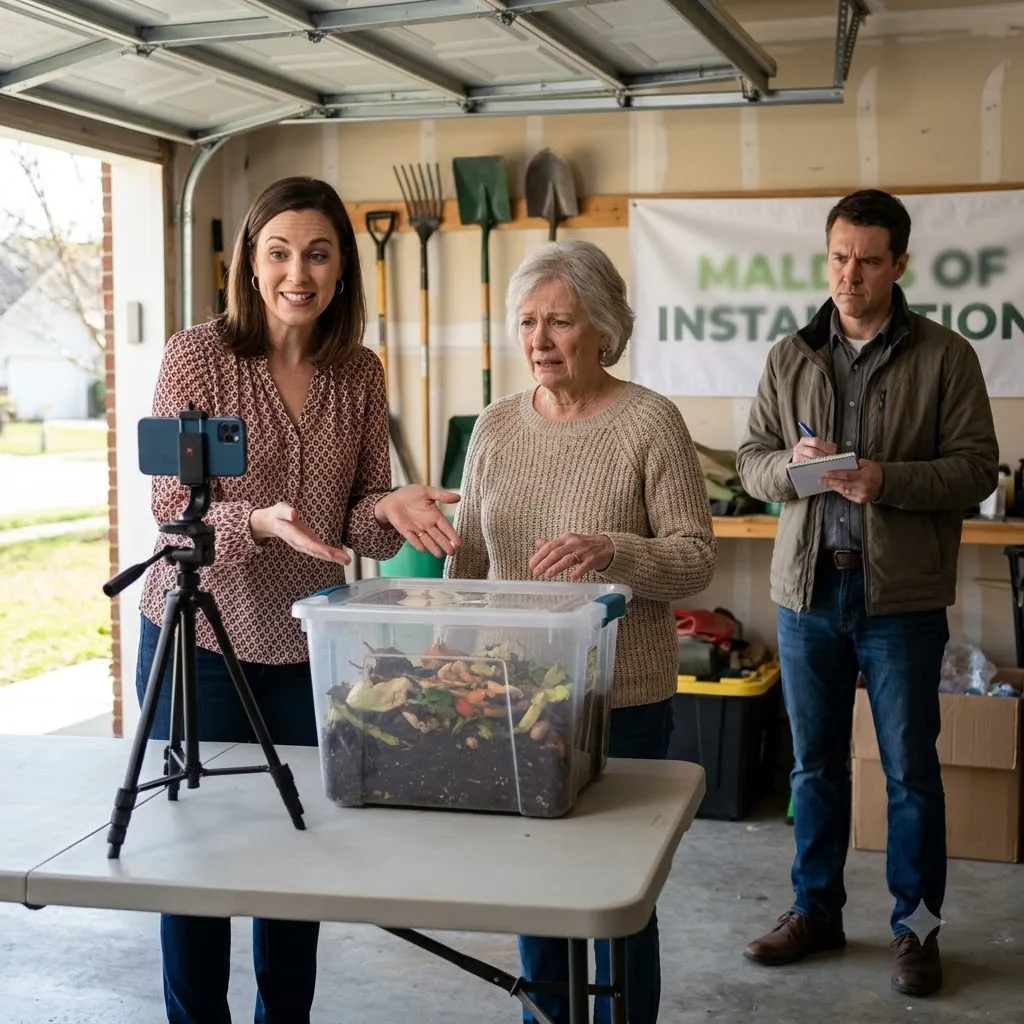
But by then the room had moved past slogans. The proof was no longer one overheard line. It was the full process sitting in plain view: the clear bin with the staged top layer, the shelf with the labels, the cups Elaine had kept taking out of sight, and the black bag hanging behind the tubs like the part of the story Maya needed people not to notice.
Ruth did not argue with her. She stepped to the tripod, tilted the phone down so the bin, shelf, and bag all sat inside the frame, and said, “Then this protects you too. Finish the sort exactly as presented.”
That shifted the whole garage at once. Two donors moved closer instead of leaving. The teenager kept the comments visible on his screen. Someone near the driveway said, “Yeah, just do it.” Another voice answered, “If it’s fine, show it.”
Maya looked toward Elaine again.
Elaine stayed still, hands at her sides.
That was the point where the room changed sides. Not because of one dramatic accusation. Because the person Maya had been using as backup stopped moving for her, and everybody else could see the gap.
Maya bent, took hold of the black bag, and set it on the demonstration table with a snap of plastic loud enough to cut through the talking. The bag sagged open. Used paper cups, wet napkins, waxy wrappers, lids, and clumped scraps showed at the top. A couple of guests made the same short face people make when they smell something sour, though no one stepped back.
“Go ahead,” Ruth said.
Maya started sorting fast, like speed might still look like competence. She pulled out a cup with streaks of frosting and dropped it into COMPOST. Ruth said, “Read the label out loud and place it where it actually goes.” Maya moved it to LANDFILL. She grabbed a damp napkin, then a plastic lid, then a wrapper with brownie crumbs still stuck inside. Each item slowed her down. Each correction took place under the same ring light she had set up for her zero-waste script.
The comments on the stream were coming fast enough now that the teenager gave up reading them individually and just said, “They’re screen recording this.”
Maya stopped with a wax-coated cup in her hand.
Nick, still near the freezer, said, “That’s the stuff she kept handing off.”
No one told him to be quiet. No one defended Maya’s version anymore.
Elaine finally spoke, but not to rescue her. She pointed at the clear display bin and said, very flat, “There’s more mixed in the middle.”
Every head turned.
Ruth said, “Empty it too.”
That was the act Maya had been avoiding the entire afternoon. Not explaining. Not reframing. Completing the process she had claimed was already simple and transparent.
She lifted the clear bin with both hands and tipped it into a shallow sorting tray from the snack table. The pretty layer broke first. Eggshells, coffee grounds, and lettuce ends slid out, followed by damp paper cup pieces, stuck-on labels, a plastic fork, and compacted sludge that had clearly been arranged to look cleaner from the top. A neighbor near the signboard let out one sharp, disbelieving laugh. Someone else said, “Oh, come on.” Another voice, louder, said, “That’s what she was filming?”
The crowd beat hit all at once after that. People started talking over each other. Not a mob, not chaos, but the kind of fast, hot overlap that tells you control has left the host and gone to the room.
“She had her mother lying for this.”
“People donated during that demo.”
“Turn the QR code off.”
“Ruth, shut it down.”
Ruth already had her phone in her hand. She stepped away from the table just long enough to open the fundraiser dashboard. I was close enough to see the organizer screen reflected in her glasses.
“I’m locking the collection page and pausing disbursement until donors get a correction,” she said. Then, looking straight at Maya: “You are done as on-camera host for this event.”
She turned the signboard around so the QR code faced the garage wall instead of the driveway. Then she held up her phone and showed the nearest donors the status line on the account screen: campaign paused.
That visible little phrase did more than another ten minutes of arguing would have done. The money lane was closed. The performance lane was closed. The event could not keep running on Maya’s script.
Maya set down the empty clear bin. Her hands were dirty now, coffee grounds stuck to one wrist and a strip of wet paper clinging near her thumb. For the first time all afternoon, she matched the mess she had been insisting did not exist.
Elaine picked up a roll of paper towels from the back table, set it beside the sorting tray, and did not look at the camera. She also did not step back into place beside Maya.
People started talking in smaller groups. A few donors walked over to Ruth instead of the signboard. One neighbor unplugged the ring light. The garage got dimmer in a normal, late-afternoon way.
Nothing about it looked reconciled. No group hug. No speech fixing the family. Just the account locked, the demonstration exposed by its own contents, and the pressure finally dropping because someone with control had used it.
When I left through the driveway threshold, the compost bin was upside down on the table, the black bag was tied shut for actual disposal sorting, and Maya was no longer the center of the room. After an afternoon of being told not to listen, that was enough to feel like air coming back into the garage.