Story code: ST-000892
Part 3: She Lost The Room One Specific Motion At A Time
The second people started looking at the shelf instead of the ring light, Maya’s whole setup changed shape.
Until then, she had been running the garage like a guided tour. She named the bins, supplied the answers, and kept everybody’s attention moving in the direction she wanted. Now the questions were landing faster than she could stage them, and every answer had to survive the next visible motion.
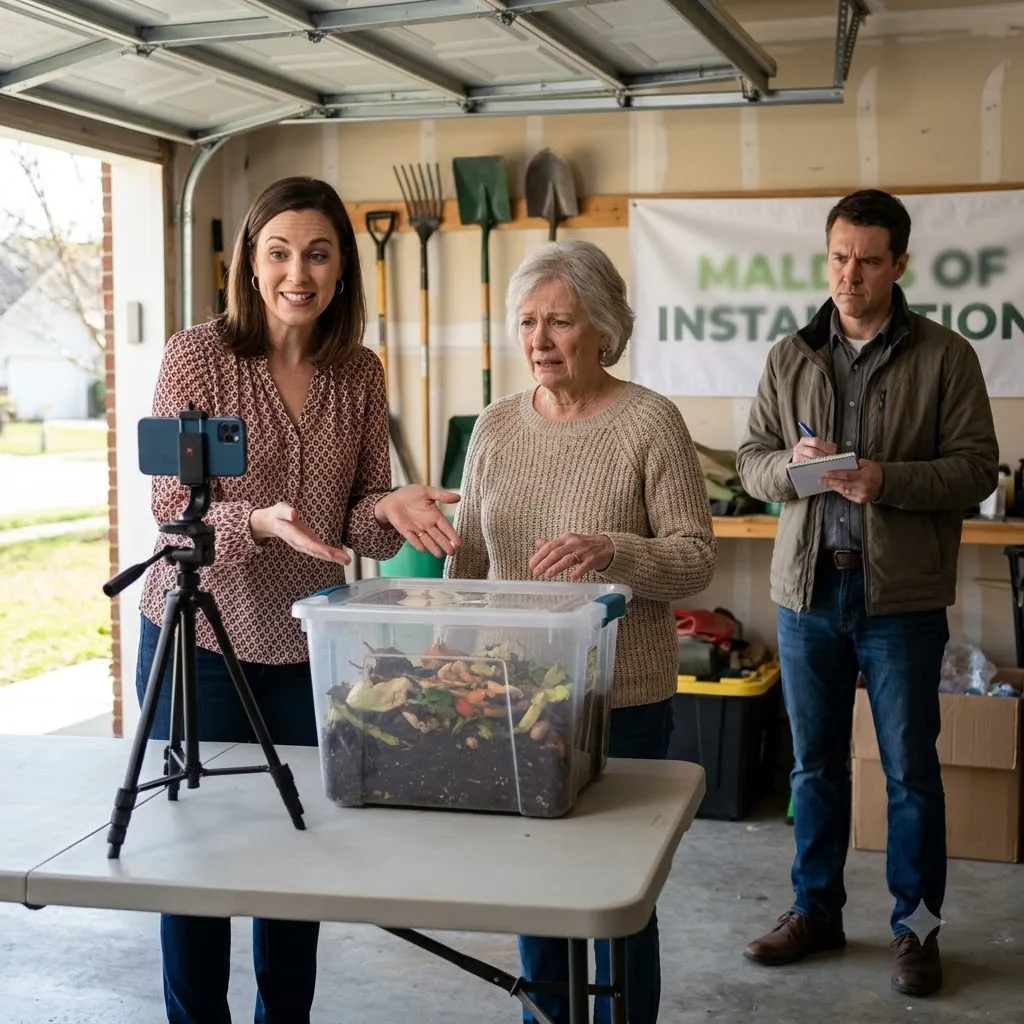
Elaine was still holding two used paper cups. Ruth stood at the edge of the demonstration table with her phone down at her side, not filming, just watching. The woman who had spotted the black bag stayed where she was near the signboard, cookie still in hand, like she did not want to miss the next step.
Maya turned back toward the tripod and said, “Okay, quick clarification for everybody jumping to conclusions in the comments. Educational demos always involve temporary staging. That doesn’t mean anything is being wasted.”
That might have settled a room that had not already seen the hidden bag. In this one, it only made people watch Elaine more closely.
A man in the second row lifted his chin toward the shelf. “Then show us,” he said. “If it’s temporary, finish the sort.”
Maya gave a short laugh. “We’re literally in the middle of a fundraiser, not a compliance lab.”
Ruth answered before anyone else could. “The fundraiser is exactly why it matters.”
No yelling yet. But the line had changed the room. Donors who had been standing loose by the driveway threshold moved closer to the table. Two people stopped reaching for the QR code poster. A teenager who had been half watching the stream from his own phone turned his screen around so the comments were visible to the people next to him. I could not read every line from where I stood, but I caught enough: Why is her mom fixing everything off camera? What’s in the black bag? Show the full sorting.
Maya kept talking. That was the first place the crack widened. Every time someone asked for one physical step, she answered with three broad sentences about sustainability, education, and community habits. It sounded polished. It also meant the compost bin stayed untouched while the questions got more exact.
“You said those cups were part of the demo,” Ruth said. “Put them where they go.”
Maya looked at Elaine. Not the quick side glance from before. A straight look, held too long.
Elaine’s hands tightened around the cups until one dented in the middle.
“Mom already explained we’re mid-process,” Maya said.
Elaine did not speak.
That silence did more than another argument could have done. Back in the first half hour, Maya had been using Elaine’s voice as proof. Now she was standing beside the same table, saying nothing while Maya answered for both of them.
The bin started telling on her again.
A child dropped a cluster of grape stems toward the clear compost display and missed. The stems slid down the side of the bin and knocked the pretty top layer out of place. Under the lettuce ends and eggshells was a denser, darker mash packed flat, like it had been pressed there. When Maya reached to fluff the surface back up, a damp paper cup edge showed for one second near the front wall of the bin.
The teenager by the driveway said, “Hold up. Was that a cup in there?”
“No,” Maya said immediately.
The problem was that three people had already stepped forward to look.
Ruth pointed, not at Maya, but at the bin itself. “Don’t smooth it over. Lift from the top and show the layer.”
Maya stayed where she was.
Then Nick spoke from beside the freezer, where he had been stacking folding chairs. He did not raise his voice. He just made the earlier line material.
“You told her to put the wet stuff on top,” he said. “That’s what people are looking at now.”
That landed hard because it matched what the room could already see. Not rumor. Not some speech about character. A neat top layer, a hidden bag, a cup edge in the packed middle, and the mother doing cleanup after every claim.
Maya swung toward him. “You were eavesdropping on a private family conversation.”
Nick answered, “You said it in the garage at your fundraiser while I was two feet from the cord you asked me to move.”
The woman by the signboard said, “And she told her mom to say it was sorted earlier.”
Elaine’s mouth opened, then closed. She set the two cups down on the table instead of the shelf. That was the first motion she had made all afternoon that did not fit Maya’s rhythm.
Ruth stepped beside the clear bin. “Maya, if your process matches what you’ve been telling donors, complete it in front of everyone. Empty the display and sort every item from the table and the black bag into the labeled tubs, right now, on camera.”
Maya’s smile disappeared completely.
Nobody clapped. Nobody filled the silence for her. The stream phone kept running, the ring light still bright on the concrete floor and storage shelves, while the whole room waited to see whether she would touch the black bag she had kept hidden behind her compost lesson.