Story code: ST-000865
Part 3: Dead Man’s Switch
The digital clock on the boardroom’s smart-display flipped to 4:50 PM. Beyond the soundproofed glass walls, the open-plan office was a chaotic sea of popping champagne corks and cheering venture capitalists. The market had closed fifty minutes ago. Our ticker symbol was plastered across every monitor on the floor, glowing a brilliant, lucrative green.
I sat alone at the long table, staring at my battered, five-year-old ThinkPad-the personal machine I’d used to write the original company architecture in my living room.
I had sent the text to Julian’s private number at 4:45 PM: *Boardroom A. Now. Or I call the SEC compliance tip line.*
The glass door swung open. Julian walked in, shutting it behind him. He held a half-empty flute of Cristal, his tie loosened, his face flushed with the adrenaline of a freshly minted billionaire.
“I’m surprised you’re still in the building, Marcus,” Julian said, his voice dripping with tired condescension. “David’s security team was supposed to escort you out an hour ago. We’ve got federal agents waiting for a statement regarding your little sabotage stunt at two in the morning.”
I didn’t answer. I reached out and pressed the `Enter` key on my keyboard.
A sharp, metallic *clack* echoed through the room.
Julian frowned, looking up at the heavy magnetic lock securing the top of the glass door. He set his champagne down and rattled the brushed-steel handle. It didn’t budge.
“I just sent an override packet to the building’s localized IoT hub,” I said, leaning back in my leather chair. “The mag-lock is sealed. The card readers are bricked.”
Julian dropped the handle, his fake smile vanishing. “Are you out of your mind? I have you on digital tape wiping the production servers. We spun up the midnight backup, deployed by 6:00 AM, and opened the market at thirty dollars a share. You lost, Marcus. Unlocking this door won’t keep you out of federal prison.”
“I don’t care about the servers,” I said. I grabbed the edge of the ThinkPad and rotated it 180 degrees so the screen faced him. “I care about the algorithm.”
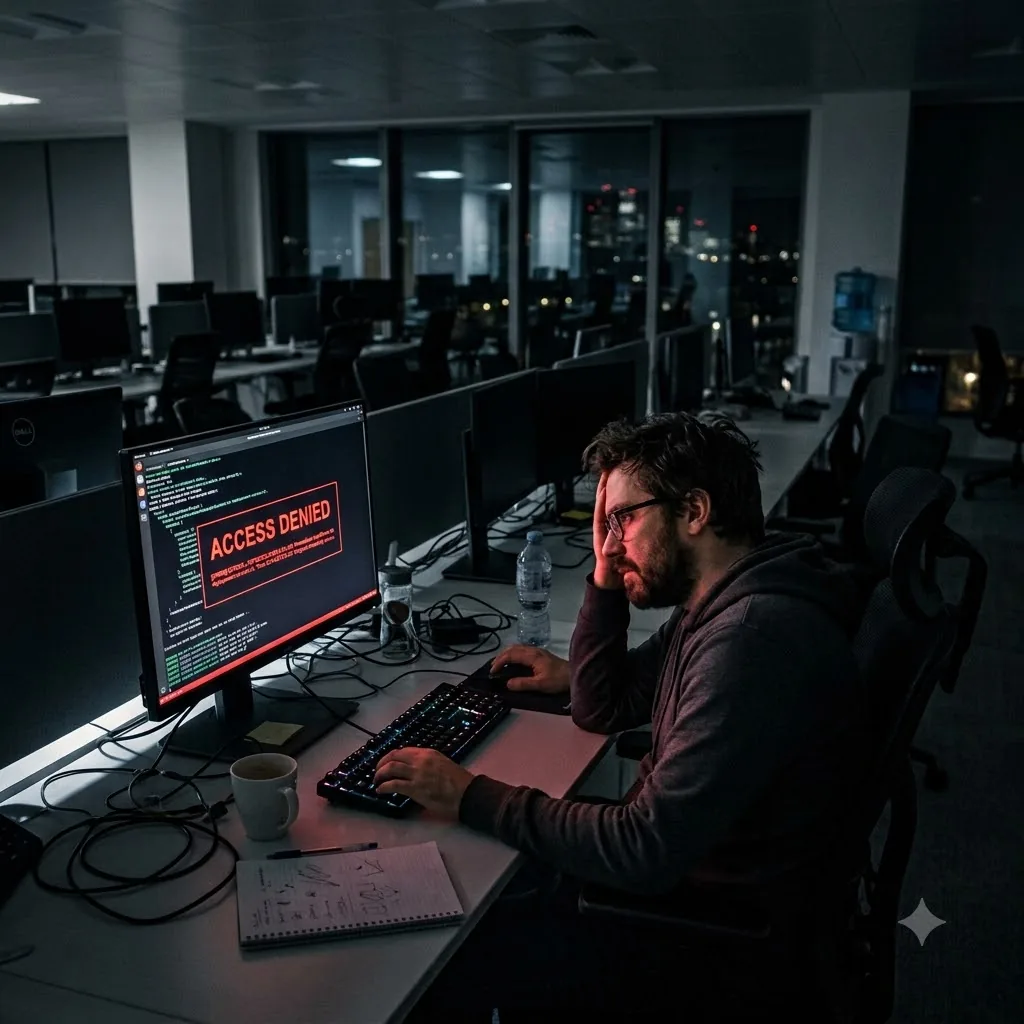
On the screen, a stark red terminal window dominated the display. In the center, in massive white font, a digital timer was ticking backward.
`09:59`
`09:58`
Julian stared at it. “What is that?”
“It’s an automated deployment script,” I said smoothly. “Targeting GitHub, GitLab, SourceForge, and a decentralized web of darknet torrents.”
“Deploying what?”
“Everything,” I replied. “The core compression algorithm. The machine-learning weights. The entire proprietary codebase that makes this company worth a billion dollars. Set to be released under a completely unrestricted, public open-source license.”
Julian let out a sharp, dismissive laugh, but his eyes darted nervously to the countdown. “Impossible. David’s forensics team isolated the midnight backup. They scrubbed it. They ran it through a half-dozen enterprise malware sweeps before they deployed it this morning. There are no backdoors.”
“Lawyers and forensic auditors look for malicious code, Julian,” I said, resting my hands on the glass table. “They look for trojans. They look for brute-force entry points. They don’t look for a perfectly valid, syntactically flawless memory-allocation subroutine buried deep inside the core compiler.”
Julian froze.
`08:45`
“I built this architecture three years ago,” I continued, my voice dead calm. “Before we had an office. Before we had venture capital. Before you decided you wanted to own my life’s work. I embedded a dormant peer-to-peer broadcast protocol in the foundational engine. A simple heartbeat monitor. Every twelve hours, the live servers ping an IP address routed to a localized server in my apartment.”
Julian’s flushed face began to drain of color. “No.”
“When you and David ambushed me at two in the morning, you thought you were disarming me,” I said. “When you confiscated my laptop and quarantined my hardware under the guise of SEC compliance, you severed the heartbeat ping. You didn’t just lock me out, Julian. You armed the dead man’s switch.”
“You’re bluffing,” Julian whispered, bracing his hands on the table.
I tapped the spacebar. The terminal window shifted, rendering a live, scrolling preview of the payload. Pages of dense, highly structured calculus and proprietary neural-network pathways cascaded down the screen. Julian wasn’t a developer, but he had stared at those specific data models in enough pitch decks to recognize the crown jewels.
“The engine panicked,” I explained, watching his eyes widen. “Without the heartbeat, it assumed a hostile takeover. It compiled the entire proprietary source code, encrypted it, and quietly pushed it to this ThinkPad. In exactly eight minutes, it goes fully public.”
`07:30`
“You’ll destroy your own company!” Julian shouted, slamming his fist against the glass table. “Your equity-”
“My equity is gone,” I interrupted, my voice dropping to a hard edge. “You grayed out my name, remember? You converted my shares to unvested options. I have absolutely nothing left to lose.”
Julian stared at me, the terrifying reality of the math setting in.
“But you do,” I said. “You just sold forty million shares of a proprietary tech company to institutional investors. You signed the SEC filings swearing under penalty of perjury that we hold exclusive rights to the IP. If the tech becomes a free, public-domain open-source tool before the closing bells even finish ringing… the stock goes to zero.”
Julian stepped back, his breathing turning shallow and erratic.
`06:45`
“The investors will sue you for catastrophic fraud,” I said. “The SEC will halt trading and open a criminal investigation. The board will seize your assets. I might go to prison for the server wipe, but you’ll be in the cell right next to me for defrauding the New York Stock Exchange.”
Julian lunged across the table, grabbing the ThinkPad. He frantically held down the power button, desperately trying to kill the machine. The screen went black.
I didn’t move. I just watched him.
A second later, a dull chime echoed from the smart-display on the boardroom wall. The screensaver vanished, replaced by the same stark red terminal window, mirrored directly to the room’s primary monitor.
`06:12`
“It’s a cloud-executed cron job, Julian,” I said softly. “Smashing the hardware doesn’t stop the server. The only way to halt the broadcast is an encrypted cryptographic key that only I know.”
Julian backed away from the monitor. Through the glass walls behind him, the oblivious trading floor was still cheering, drinking champagne, celebrating the billion-dollar empire they thought they owned.
Inside the soundproof room, the only sound was the heavy, ragged pull of Julian’s breathing as he stared at the ticking red numbers, completely out of moves.