Story code: ST-000546
Part 2: The Timeline Starts Breaking
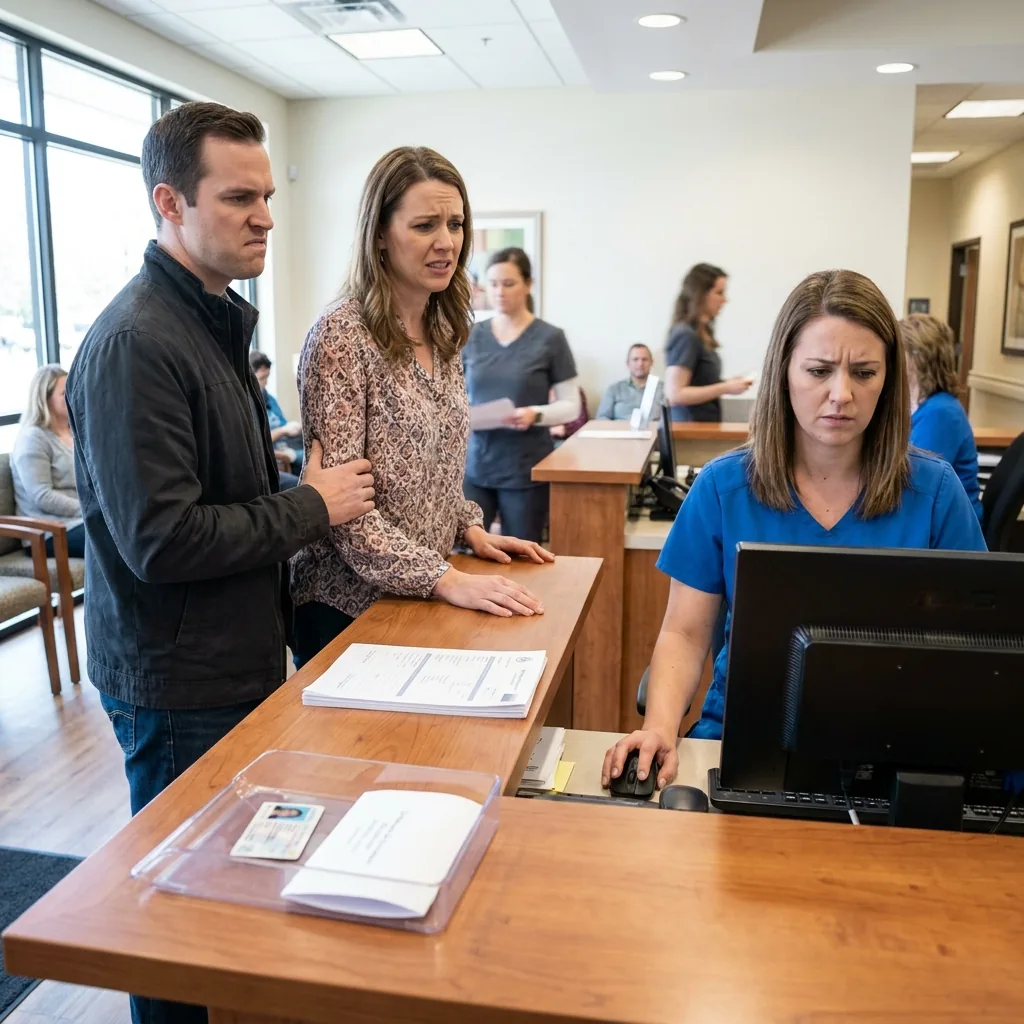
Rachel Kim did not take Derek’s explanation at face value. She kept the tablet on the counter, angled just enough to read, while Tina stood beside her with the paper packet and the scanner queue entry clipped behind the embryo consent form. “Let’s keep this narrow,” Rachel said. “Who called whom, when was the form handled, and when did the portal activity post?” Derek gave a quick, irritated exhale. “I already told the front desk. I called yesterday afternoon and said the transfer had to stop until the consent issue was fixed.” Rachel asked, “Which number did you call?” He named the main clinic line. Tina checked the call log screen attached to the desk phone. Rachel checked the chart log on her tablet. “We have an inbound call from your number at 4:31 p.m.,” Rachel said. “Length: fifty-two seconds. It was routed to front office, not nurse coordination. No clinical note created off that call.” Derek shifted his weight. “Then I was transferred.” “Transferred to who?” “I don’t know her name.” Rachel nodded once, not as agreement, just to mark the answer. “Do you have an outgoing callback from the clinic after that?” He said, “Someone called me back.” Rachel touched the screen again. “There is no completed callback to your number in the charted log before the hold note at 4:42. There is an outbound call at 5:03 to Emily’s number from nurse coordination. It lasted three minutes.” Emily looked down at her phone, scrolled, and held it up. “I have that one. They confirmed arrival instructions.” Derek said, too quickly, “That doesn’t mean they didn’t speak to me first.” Rachel did not argue. She turned to Tina. “Show me the packet routing sticker.” Tina slid the form packet over. The top sheet had Emily’s patient label, treatment date, and a small scanner barcode in the corner. On the back was the scanner queue print: received 4:58 p.m., indexed 5:07 p.m. Rachel set one finger on the queue time. “This is the consent packet tied to today’s transfer. Correct?” Tina said yes. Rachel looked at Derek. “You are saying the clinic acted on a consent problem before 4:42. But the packet associated with today’s hold was not even scanned into the queue until 4:58.” He answered with more words, not better ones. “Because the issue existed before the scan. I was alerting you to it. The paperwork lagged. That’s normal.” Rachel asked, “Then what exactly did you tell the clinic at 4:31 if the packet wasn’t in the system yet?” He spread one hand toward Emily without looking at her. “That there was disagreement. That the transfer should pause.” Emily’s voice stayed level. “You told me on the drive over that the clinic had fixed whatever was wrong.” He kept speaking to staff. “I said I had handled it.” Rachel made no comment on that. She asked Tina for the desk packet history. Tina flipped through the cover sheet and the itinerary behind it. “This was printed for morning treatment flow at 6:26 p.m.,” Tina said. “Front office batch print. If the hold was active and complete, this packet should have been pulled before batch assembly.” Rachel nodded. “And the portal instructions?” Emily held out her phone again. Rachel read the time stamp directly from the screen. “6:11 p.m. Sent by nurse coordination.” That gave them a visible sequence anyone at the counter could follow: Derek’s fifty-two second call at 4:31, a hold note entered at 4:42, the consent packet not scanned until 4:58, nurse coordination calling Emily at 5:03, portal instructions sent at 6:11, and the transfer-day packet printed at 6:26. Rachel said it out loud, one piece at a time. “If your stop instruction had already been received, verified, and attached to the embryo consent sequence the way you’re claiming, the chart would not show treatment prep continuing after 4:42. It does. If the consent packet drove the hold, it could not have driven it before 4:58 because it was not in the scanner queue yet. And if nurse coordination had been told to stop this case, they would not have called Emily with confirmation at 5:03 and sent portal instructions at 6:11.” Derek’s jaw tightened. “So your staff made mistakes. That’s not my problem.” Rachel’s eyes lifted from the tablet. “Maybe. But mistakes still have an order. Right now your version requires a hold based on a consent sequence that was not yet in the queue, a clinical contact that is not in the logs, and continued prep after an alleged stop.” Tina added quietly, “And this packet was handed to front office as active treatment flow, not pulled exception review. I remember the stack from last night.” That was the first witnessable handoff in the room, and Rachel treated it like one. “Who gave you the stack?” she asked. “Evening coordination runner,” Tina said. “No exception flag on Emily’s packet. Just standard morning assembly.” Rachel looked back at the screen, then at the form packet, then at Derek. “There is a missing event here,” she said. “Either a hold was entered without the consent object that supposedly justified it, or someone tried to create authority before the consent sequence could support it.” Derek started talking again, faster now, pulling in fragments of clinic language: release rules, partner rights, unresolved embryo direction, safety issue. Rachel let him finish and then asked one more basic question. “If this was a real clinic-approved stop, why did it leave no matching handoff between the 4:42 hold note and the 4:58 scan queue entry?” Nobody at the counter answered that. Rachel picked up the packet and turned to Tina. “I’m taking this to nurse coordination and pulling full portal audit, desk routing, and call history. No movement on this chart until we reconstruct the missing event.” Then she faced Emily directly for the first time. “Please stay in the waiting area. Do not leave the building yet.” Emily nodded once and gathered her phone, folder, and water bottle. Derek.