Story code: ST-000388
Part 1: The Plate in the Middle of the Table
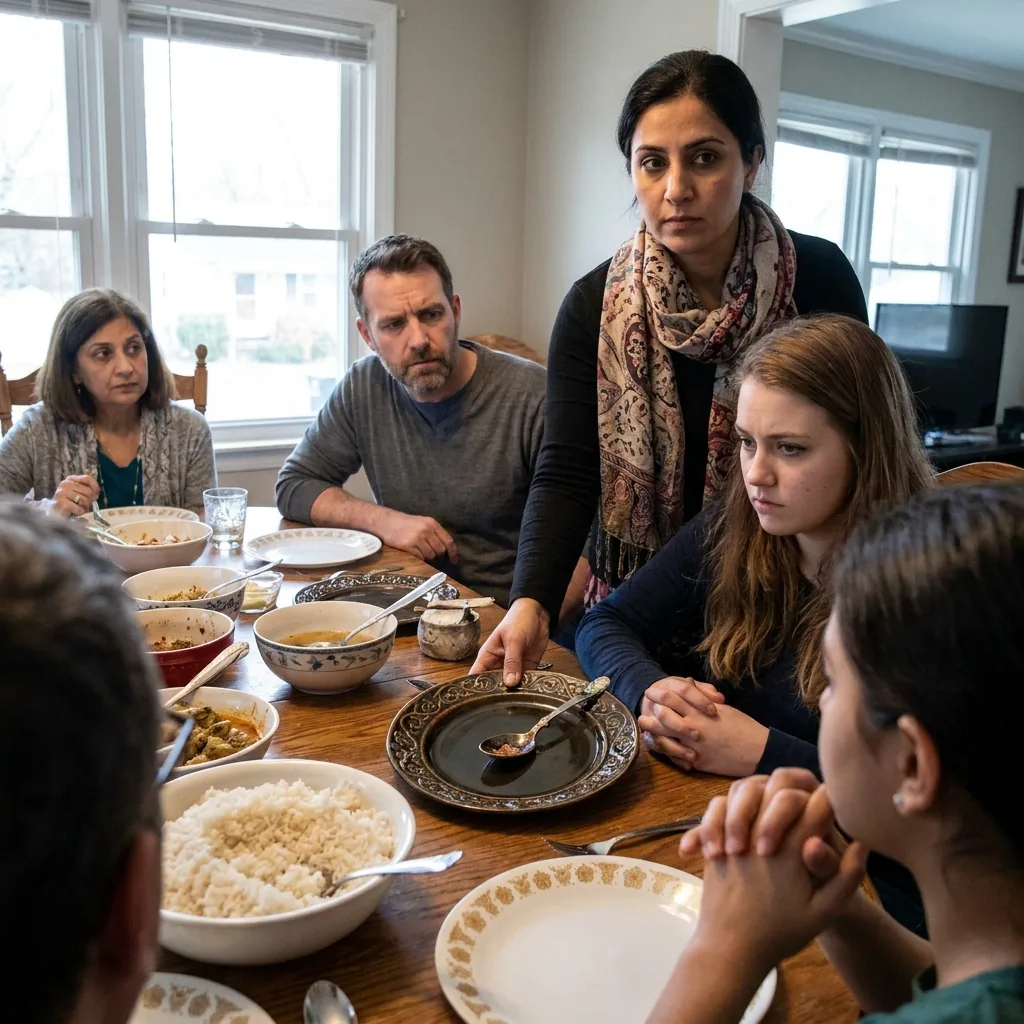
Nadia Rahman set a decorative ceremony plate in front of Alyssa Carter like it was evidence, not serving ware, and asked for money in the same breath she asked someone to pass the rice. When Alyssa said she needed to talk to Ethan before moving that much from their budget, Nadia did not treat it like a private couple decision. She used the middle of her crowded dining room, a family custom, and a full table of relatives to turn that pause into an accusation.
That was the part Alyssa kept repeating when she walked me through the night later: it was not a quiet ask, and it was not optional the way Nadia framed it.
The dinner was already in motion when the request landed. Serving spoons were changing hands. A stack of flatbread sat near the plate. Someone was carrying another dish in from the kitchen. Nadia, immaculate as always and still wearing her host smile, slid the ceremony plate a few inches so it sat centered between Alyssa’s water glass and the shared dishes.
“We all contribute when family has a need,” she said.
Alyssa answered the way careful people answer when they know every word will be weighed. She did not say no. She asked, “How much exactly, and for what payment?”
Nadia did not give a number first. She gave a lesson.
“In this house,” she said, tapping the edge of the plate with two fingers, “we don’t reduce everything to transactions. Some things are respect.”
That was the first clean attack on Alyssa’s boundary. Not because money came up, but because the request was pushed past the line where a couple gets to decide what leaves their account. Alyssa and Ethan had been saving tightly. She had told him before the dinner that they needed to watch every extra expense that month. So when Nadia named twelve hundred dollars as an urgent family contribution, Alyssa did what anybody managing a real budget would do. She asked what deadline, what bill, and whether the family had other options.
Nadia’s tone changed on the second question.
“A woman who joins a family should not need every detail before helping,” she said.
There it was. Belonging attached to payment.
Ethan tried to step in, but only halfway. He lifted a hand, started with, “Mom, maybe we can just-” and then changed direction. “We can discuss it after dinner.”
That might have worked if Nadia had wanted the discussion private. She did not leave it there. She looked down the table, then back at Alyssa, and said, “If it were your own mother asking, I don’t think you would make her defend herself like this.”
Utensils slowed. Uncle Raymond put his fork down. Sana, who had just come in from the kitchen carrying a bowl, stopped near the sideboard instead of sitting.
Alyssa kept her voice even. “I’m not refusing help. I’m asking what the money is for.”
Nadia repositioned the ceremony plate again, this time turning it so the painted center faced outward toward the table. The move was small, but everyone saw it. It made the plate look less like part of the meal and more like a symbol she was presenting.
“You young people always want proof before kindness,” Nadia said. “That is the problem.”
Then she made the refusal for Alyssa. Not a practical refusal. A moral one.
“So if family needs support, you would rather protect your savings than show up. Fine. At least everyone understands what kind of help they can expect from you.”
That was the first visible harm. Alyssa had not said no, but Nadia translated caution into cruelty in front of the whole room.
Uncle Raymond asked the most ordinary question in the house. “What’s the payment for?”
Nadia answered him the same way she had answered Alyssa: with respect language instead of specifics. “It is for something that should already have been handled, Raymond.”
Alyssa noticed what Sana was carrying then. Not the bowl. The bag looped over her wrist. Small, glossy, and new. It was from a boutique in the shopping center near Nadia’s neighborhood, the kind of place people recognize because the tissue paper is branded and stiff. Sana set the bowl down on the island and the bag tipped sideways for a second.
Alyssa could see a narrow shoe box inside.
That mattered because Nadia had just described the family need as urgent and overdue. Tight money does not usually sit next to fresh boutique tissue paper on the same evening.
The room kept moving, but the sequence started to look wrong. Sana glanced at the bag, then at Nadia, then reached to stand it upright. Nadia crossed from the table faster than she had moved all evening and turned the bag so the logo faced the wall.
It was a tiny thing. A bag. A box. A fast hand over a handle.
But Alyssa watched it happen right after being told there was an urgent family payment that could not wait and that asking questions was disrespectful.
She looked back at the ceremony plate in front of her, then toward the kitchen island where the boutique bag now sat half-hidden behind a casserole dish, and asked one more careful question.
“If this is so urgent,” she said, “why is there a brand-new shoe box on the counter tonight?”
Nadia Rahman set a decorative ceremony plate in front of Alyssa Carter like it was evidence, not serving ware, and asked for money in the same breath she asked someone to pass the rice. When Alyssa said she needed to talk to Ethan before moving that much from their budget, Nadia did not treat it like a private couple decision. She used the middle of her crowded dining room, a family custom, and a full table of relatives to turn that pause into an accusation.
That was the part Alyssa kept repeating when she walked me through the night later: it was not a quiet ask, and it was not optional the way Nadia framed it.
The dinner was already in motion when the request landed. Serving spoons were changing hands. A stack of flatbread sat near the plate. Someone was carrying another dish in from the kitchen. Nadia, immaculate as always and still wearing her host smile, slid the ceremony plate a few inches so it sat centered between Alyssa’s water glass and the shared dishes.
“We all contribute when family has a need,” she said.
Alyssa answered the way careful people answer when they know every word will be weighed. She did not say no. She asked, “How much exactly, and for what payment?”
Nadia did not give a number first. She gave a lesson.
“In this house,” she said, tapping the edge of the plate with two fingers, “we don’t reduce everything to transactions. Some things are respect.”
That was the first clean attack on Alyssa’s boundary. Not because money came up, but because the request was pushed past the line where a couple gets to decide what leaves their account. Alyssa and Ethan had been saving tightly. She had told him before the dinner that they needed to watch every extra expense that month. So when Nadia named twelve hundred dollars as an urgent family contribution, Alyssa did what anybody managing a real budget would do. She asked what deadline, what bill, and whether the family had other options.
Nadia’s tone changed on the second question.
“A woman who joins a family should not need every detail before helping,” she said.
There it was. Belonging attached to payment.
Ethan tried to step in, but only halfway. He lifted a hand, started with, “Mom, maybe we can just-” and then changed direction. “We can discuss it after dinner.”
That might have worked if Nadia had wanted the discussion private. She did not leave it there. She looked down the table, then back at Alyssa, and said, “If it were your own mother asking, I don’t think you would make her defend herself like this.”
Utensils slowed. Uncle Raymond put his fork down. Sana, who had just come in from the kitchen carrying a bowl, stopped near the sideboard instead of sitting.
Alyssa kept her voice even. “I’m not refusing help. I’m asking what the money is for.”
Nadia repositioned the ceremony plate again, this time turning it so the painted center faced outward toward the table. The move was small, but everyone saw it. It made the plate look less like part of the meal and more like a symbol she was presenting.
“You young people always want proof before kindness,” Nadia said. “That is the problem.”
Then she made the refusal for Alyssa. Not a practical refusal. A moral one.
“So if family needs support, you would rather protect your savings than show up. Fine. At least everyone understands what kind of help they can expect from you.”
That was the first visible harm. Alyssa had not said no, but Nadia translated caution into cruelty in front of the whole room.
Uncle Raymond asked the most ordinary question in the house. “What’s the payment for?”
Nadia answered him the same way she had answered Alyssa: with respect language instead of specifics. “It is for something that should already have been handled, Raymond.”
Alyssa noticed what Sana was carrying then. Not the bowl. The bag looped over her wrist. Small, glossy, and new. It was from a boutique in the shopping center near Nadia’s neighborhood, the kind of place people recognize because the tissue paper is branded and stiff. Sana set the bowl down on the island and the bag tipped sideways for a second.
Alyssa could see a narrow shoe box inside.
That mattered because Nadia had just described the family need as urgent and overdue. Tight money does not usually sit next to fresh boutique tissue paper on the same evening.
The room kept moving, but the sequence started to look wrong. Sana glanced at the bag, then at Nadia, then reached to stand it upright. Nadia crossed from the table faster than she had moved all evening and turned the bag so the logo faced the wall.
It was a tiny thing. A bag. A box. A fast hand over a handle.
But Alyssa watched it happen right after being told there was an urgent family payment that could not wait and that asking questions was disrespectful.
She looked back at the ceremony plate in front of her, then toward the kitchen island where the boutique bag now sat half-hidden behind a casserole dish, and asked one more careful question.
“If this is so urgent,” she said, “why is there a brand-new shoe box on the counter tonight?”