Story code: ST-001061
Part 4: The Formal Record
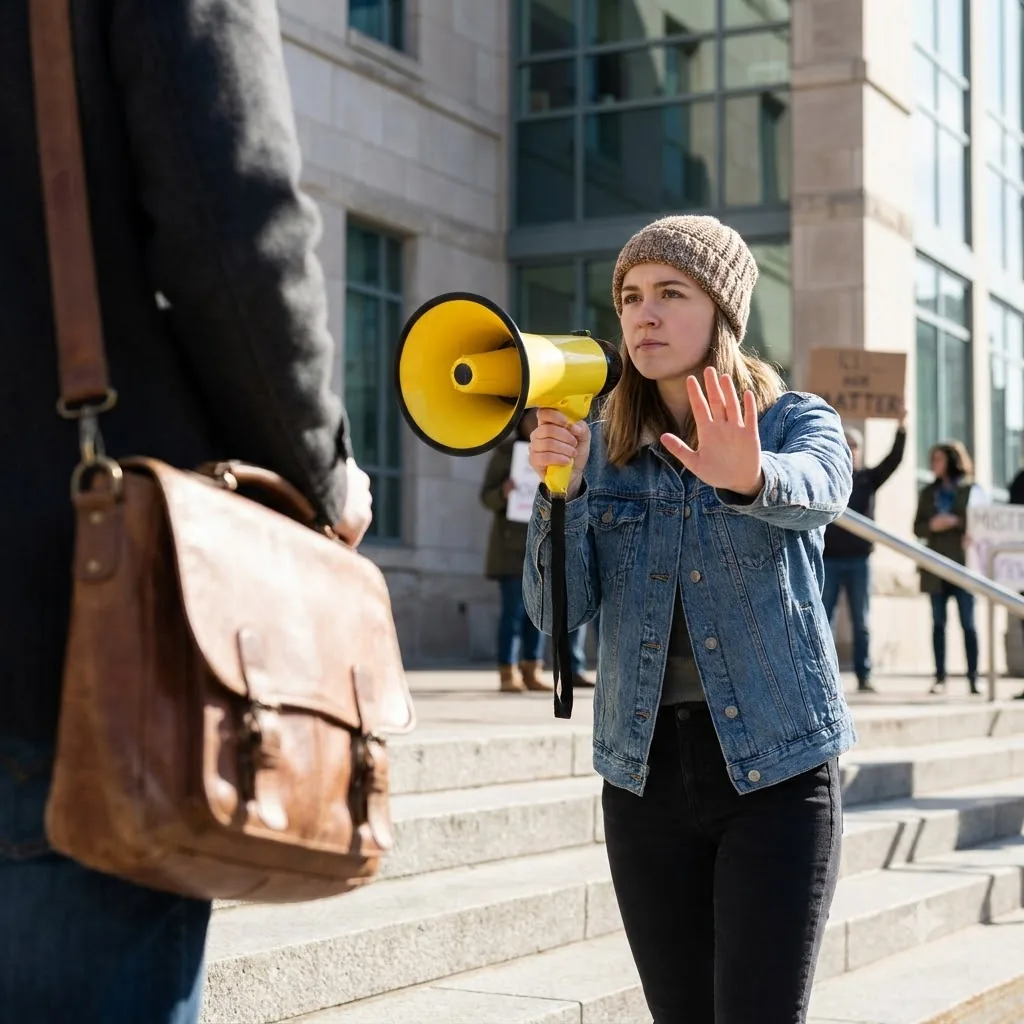
The silence on the city council steps was absolute. The news stringer kept the camera pointed at Maya, waiting for a response that did not come. The two activists holding the canvas banner looked at each other, then slowly lowered the wooden supports. The stiff fabric folded inward, the bold red letters of the false timeline wrinkling and disappearing from view.
“This is your choice, Maya,” I said, keeping my voice level, stripped of any familial warmth. “You can stand here and explain to the camera how your group obtained a document signed by a man in a hospital bed, or you can formally retract the accusation now.”
She stared at me, her eyes reflecting the cold afternoon light. Her jaw set, her expression turning hard. “We are protecting the wetlands, Thomas. The cause is bigger than your schedule.”
“The cause does not authorize forgery,” I replied. I turned to the city security officer who had stepped down to the plaza. “Officer, I need to file a formal municipal incident report for public defamation on city property. I want the names of the individuals who organized this gathering recorded.”
Maya’s defensive posture shattered. “Thomas, don’t do this. It was an administrative oversight. We can adjust the timeline.”
“There is no timeline to adjust,” I said. “The variance you targeted was rejected by my office three weeks ago. The wetlands remain protected. You fabricated the approval to create a villain for your rally.”
The city security officer opened his clipboard, presenting the official form. I took the pen. With administrative coldness, I filled in the fields: the date, the location on the city council steps, and the name of the organization leader: Maya Vance. I attached the digital printout of the hospital admission record to the incident sheet.
“This will go to the city attorney’s office,” I told the officer. “It will also be appended to the zoning report I am about to deliver to the council. Any future public comment filings from this coalition will require notarized verification.”
Maya watched the pen move across the paper. She did not yell; she simply stood there as the camera recorded the quiet, official filing of the report. The onlookers began to disperse, drifting back down the steps and into the afternoon traffic. The spectacle was over, resolved not by a dramatic confession, but by the slow, grinding gears of municipal documentation.
“You’re ruining the coalition’s status,” Maya whispered, her voice devoid of megaphone bravado. “They won’t let us speak at the hearings now.”
“You did that when you painted the banner,” I said.
I unzipped my leather satchel, slid the tablet back inside, and pulled out a legal envelope I had carried for weeks. It was a formal revocation of the healthcare proxy and emergency contact status I had granted her years ago when her mother passed. I handed it to her.
“I’ll have my attorney mail the official copies tomorrow,” I said. “Your access to my municipal profile is revoked.”
She looked down at the envelope, her fingers twitching but not taking it. I placed it on top of the folded canvas banner resting on the stone step.
She turned away without another word, gesturing to her companions. They picked up the collapsed banner and began the long walk down the steps toward the parking lot, their boots clicking against the concrete.
I adjusted the strap of my satchel and walked through the glass doors of the municipal lobby. The air inside was cool, smelling of floor wax and old paper. The planning director nodded to me as I walked past the security desk, the silent acknowledgment of my clearance already circulating through the building’s network.
There was no sense of triumph as I entered the council chamber. The relief was muted, heavy with the knowledge of the empty seats at the next family dinner. I laid my zoning report on the podium, cleared my throat, and began to read.