Story code: ST-000345
Part 1: The Passport Sleeve
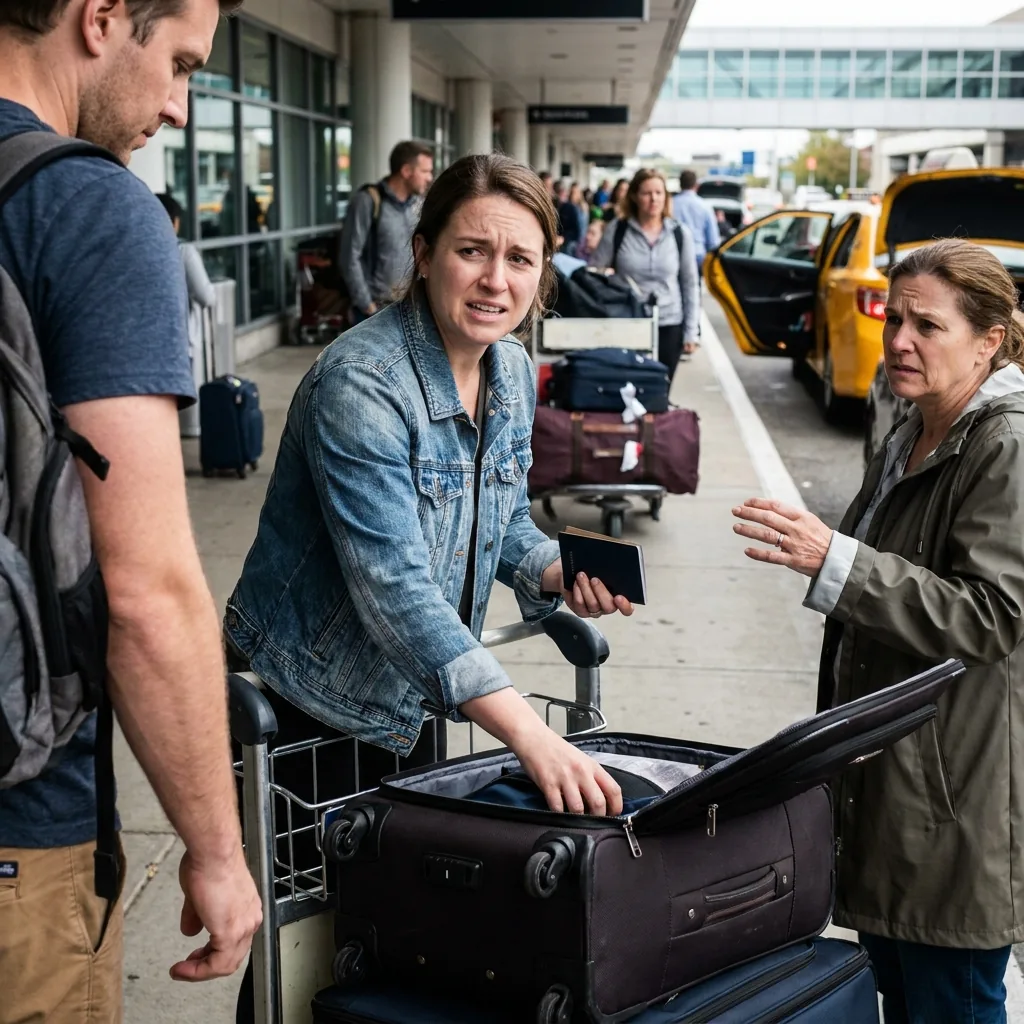
Leah Bennett stopped our airport curb sendoff by reaching straight into my rolling carry-on and pinching the passport sleeve in front of everybody, right there in the active loading lane beside the baggage cart area, while the family food bag sat open on the curb and a rideshare line backed up behind us. She held up the sleeve like she had found something that did not belong to me, and the first thing that cracked was the cheerful part of the goodbye. I was still standing under curbside signage with my mother’s hand on my shoulder when Leah said, loud enough for the driver and the airline worker to hear, that the sleeve had her detail inside it, not mine.
It was one of those airport curb moments where everybody keeps moving until they realize something has gone wrong in public. The curbside agent had one hand on a stack of tags, one eye on the lane, and no patience for anybody who slowed the loading flow. My sister did not step back. She kept her shoes planted beside the rear bumper and held the passport sleeve up between two fingers like she was waiting for the ink to confess.
Elaine Bennett reached for it first. She touched the edge, then the zipper, then the little card pocket stitched inside, the way people do when they are trying to turn a scene back into something normal. “Mara, what is that?” she said. Her voice stayed level, but her hand was still on the sleeve when she asked it.
I took the sleeve back before anyone else could. The outside looked ordinary enough: dark leather, soft corners, the kind of thing a person could toss into a tote without thinking twice. But Leah was not pointing at the outside. She was pointing at the tucked-in insert, the one that showed just enough of a label to make her stop. The sleeve had a slim card pocket with a hotel key card half hidden behind the passport, and Leah had already seen the corner.
“That is not your business,” I said.
Leah did not move. She looked at the card, then at me, then at Daniel Ortiz, who had been standing near the trunk with a travel tote on one shoulder and his phone in his hand. He had already checked the screen twice since he got out of the vehicle. When Leah turned toward him, he looked up too fast, like he had been caught mid-step.
“You know what that is,” Leah said.
Daniel answered with a shrug that did not fit the question. “I know she is late for her flight.”
That was the first false alibi. It came out quick, like a cover that had been rehearsed just enough to sound easy. It did not land. Leah kept her hand out, not for the passport, but for the card corner she had already seen. Elaine heard the words and stopped smiling altogether. The food bag rustled against her wrist as she turned to look at Daniel, then back at me.
I said, “It is a backup room key. Nothing more.”
Leah gave a short laugh that did not hold any humor. She pointed at the sleeve. “No, it is the place in Miami. The one you said you never went back to.”
That line changed the curb. It made the driver stare forward instead of loading. It made the nearby traveler slow down with a suitcase handle in both hands. It made Elaine’s grip slip off my shoulder. The sleeve was still in my hand, but now it felt heavier than leather should feel.
Daniel looked at Leah for a second too long. Then he looked down at his phone again, and the screen lit his face with a blue shine. He did not say anything, but he did not deny it either.
Leah saw that too. She moved one step closer to him, not me, and said, “You already know, don’t you?”
That was the part nobody at the curb could have explained yet. Daniel had the wrong kind of pause. He knew which detail had been recognized before Leah finished saying it, and he knew it fast enough to make the rest of us go still. The passport sleeve was no longer just a travel item. It had become the thing that told on me, and Daniel’s silence said he had seen the same proof before anyone else did.
Leah Bennett stopped our airport curb sendoff by reaching straight into my rolling carry-on and pinching the passport sleeve in front of everybody, right there in the active loading lane beside the baggage cart area, while the family food bag sat open on the curb and a rideshare line backed up behind us. She held up the sleeve like she had found something that did not belong to me, and the first thing that cracked was the cheerful part of the goodbye. I was still standing under curbside signage with my mother’s hand on my shoulder when Leah said, loud enough for the driver and the airline worker to hear, that the sleeve had her detail inside it, not mine.
It was one of those airport curb moments where everybody keeps moving until they realize something has gone wrong in public. The curbside agent had one hand on a stack of tags, one eye on the lane, and no patience for anybody who slowed the loading flow. My sister did not step back. She kept her shoes planted beside the rear bumper and held the passport sleeve up between two fingers like she was waiting for the ink to confess.
Elaine Bennett reached for it first. She touched the edge, then the zipper, then the little card pocket stitched inside, the way people do when they are trying to turn a scene back into something normal. “Mara, what is that?” she said. Her voice stayed level, but her hand was still on the sleeve when she asked it.
I took the sleeve back before anyone else could. The outside looked ordinary enough: dark leather, soft corners, the kind of thing a person could toss into a tote without thinking twice. But Leah was not pointing at the outside. She was pointing at the tucked-in insert, the one that showed just enough of a label to make her stop. The sleeve had a slim card pocket with a hotel key card half hidden behind the passport, and Leah had already seen the corner.
“That is not your business,” I said.
Leah did not move. She looked at the card, then at me, then at Daniel Ortiz, who had been standing near the trunk with a travel tote on one shoulder and his phone in his hand. He had already checked the screen twice since he got out of the vehicle. When Leah turned toward him, he looked up too fast, like he had been caught mid-step.
“You know what that is,” Leah said.
Daniel answered with a shrug that did not fit the question. “I know she is late for her flight.”
That was the first false alibi. It came out quick, like a cover that had been rehearsed just enough to sound easy. It did not land. Leah kept her hand out, not for the passport, but for the card corner she had already seen. Elaine heard the words and stopped smiling altogether. The food bag rustled against her wrist as she turned to look at Daniel, then back at me.
I said, “It is a backup room key. Nothing more.”
Leah gave a short laugh that did not hold any humor. She pointed at the sleeve. “No, it is the place in Miami. The one you said you never went back to.”
That line changed the curb. It made the driver stare forward instead of loading. It made the nearby traveler slow down with a suitcase handle in both hands. It made Elaine’s grip slip off my shoulder. The sleeve was still in my hand, but now it felt heavier than leather should feel.
Daniel looked at Leah for a second too long. Then he looked down at his phone again, and the screen lit his face with a blue shine. He did not say anything, but he did not deny it either.
Leah saw that too. She moved one step closer to him, not me, and said, “You already know, don’t you?”
That was the part nobody at the curb could have explained yet. Daniel had the wrong kind of pause. He knew which detail had been recognized before Leah finished saying it, and he knew it fast enough to make the rest of us go still. The passport sleeve was no longer just a travel item. It had become the thing that told on me, and Daniel’s silence said he had seen the same proof before anyone else did.