Story code: ST-001324
Part 3: The Countdown on the Node
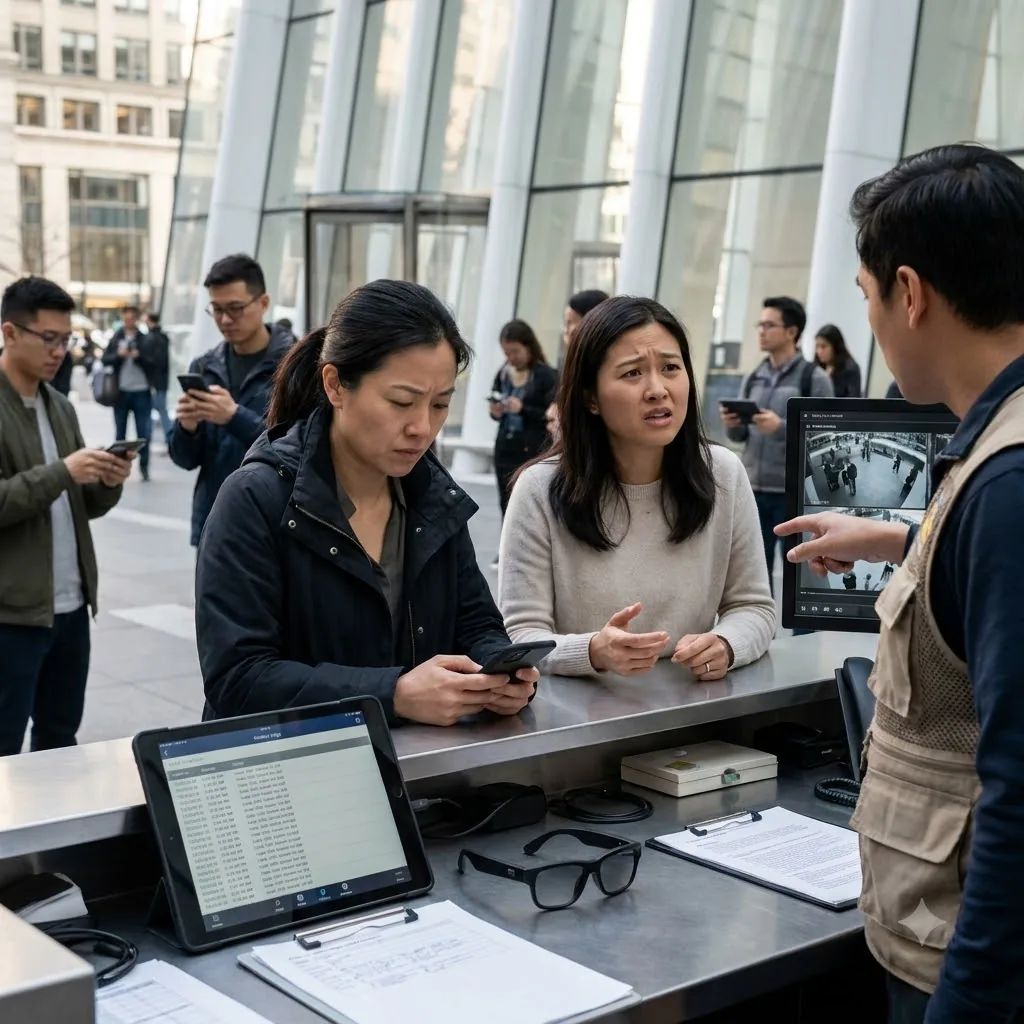
The system logs recorded the exact propagation of the memory leak as it crossed from the local test node into the plaza’s main distribution line at 13:57. On the physical security feed, Chloe Lin’s movements became noticeably erratic. She tapped the side of her StellarEye glasses four times in rapid succession, then gripped the edge of the work counter, her knuckles turning white. The plaza sponsors had moved several feet back, their attention shifting from the broken AR display to their own tablets. One sponsor spoke into a wrist communicator, then shook his head, looking toward the exit. According to the transaction log, Maya Lin did not look at the sponsors or her sister. The terminal logs show her launching a local command line interface under her developer signature. The security cameras captured her adjusting her glasses with a slow, deliberate double-tap on the frame. She was not typing fast, but the input log shows a steady execution of a nested protocol: a credential reclamation request. Because the shared family account structure required a primary developer signature to authorize permanent transfers, Chloe’s sudden acquisition of the Shader Source Code Ledger at 13:42 had been flagged as a temporary lease pending verification. My terminal showed the countdown timer: three minutes remaining before the automated system forced a validation check. Chloe leaned closer to Maya. The directional microphone at the work counter captured her voice, strained but quiet. “Maya, it’s failing the handshake. Just input your bypass key. The sponsors are leaving.” Maya did not respond. The keyboard log indicates she pressed the enter key on a sequence labeled REV_SEC_074. At 14:01, the plaza’s diagnostic monitor displayed a new prompt: “Developer Handshake Timeout. Initiate Credential Audit?” This was the irreversible pressure point. If Chloe allowed the audit to proceed, the plaza’s system would automatically run a code-origin trace, revealing that the entire shader engine was compiled from Maya’s local directory. If she canceled it, the memory leak would crash the demonstration and disable her profile for seventy-two hours due to resource abuse. Chloe’s fingers hovered over her console. The camera caught her glancing at the sponsors, then at the diagnostic terminal. She swiped her access card through the reader slot again, trying to force an administrative override. But the system rejected it. The log shows: “Override Denied. Biomechanical signature mismatch.” At exactly 14:02, the queue on Maya’s terminal cleared. The status of the Shader Source Code Ledger changed from ‘Pending Transfer’ to ‘Reclamation Initiated.’ The screen on Chloe’s device began to flash a series of yellow validation warning indicators, showing that the system was preparing to freeze her active session. As the investigator reviewing these logs, I noted the physical gaps in the interaction. There was no shouting, no dramatic scene that would draw the attention of the wider plaza crowd. Instead, the tension was carried entirely through the silent exchange of data packets and the stiffening of Chloe’s posture. Maya remained focused on the terminal, her breathing steady, while Chloe’s hand shook slightly as she cleared another failing build log. The camera feed shows Hayes stepping closer, tablet in hand, confirming that the network load was peaking due to Chloe’s repeated, failed attempts to compile. The local network nodes were flashing red, indicating that an automatic diagnostic quarantine would be triggered if the memory leak was not resolved within sixty seconds.