Story code: ST-001324
Part 4: The Clean Split
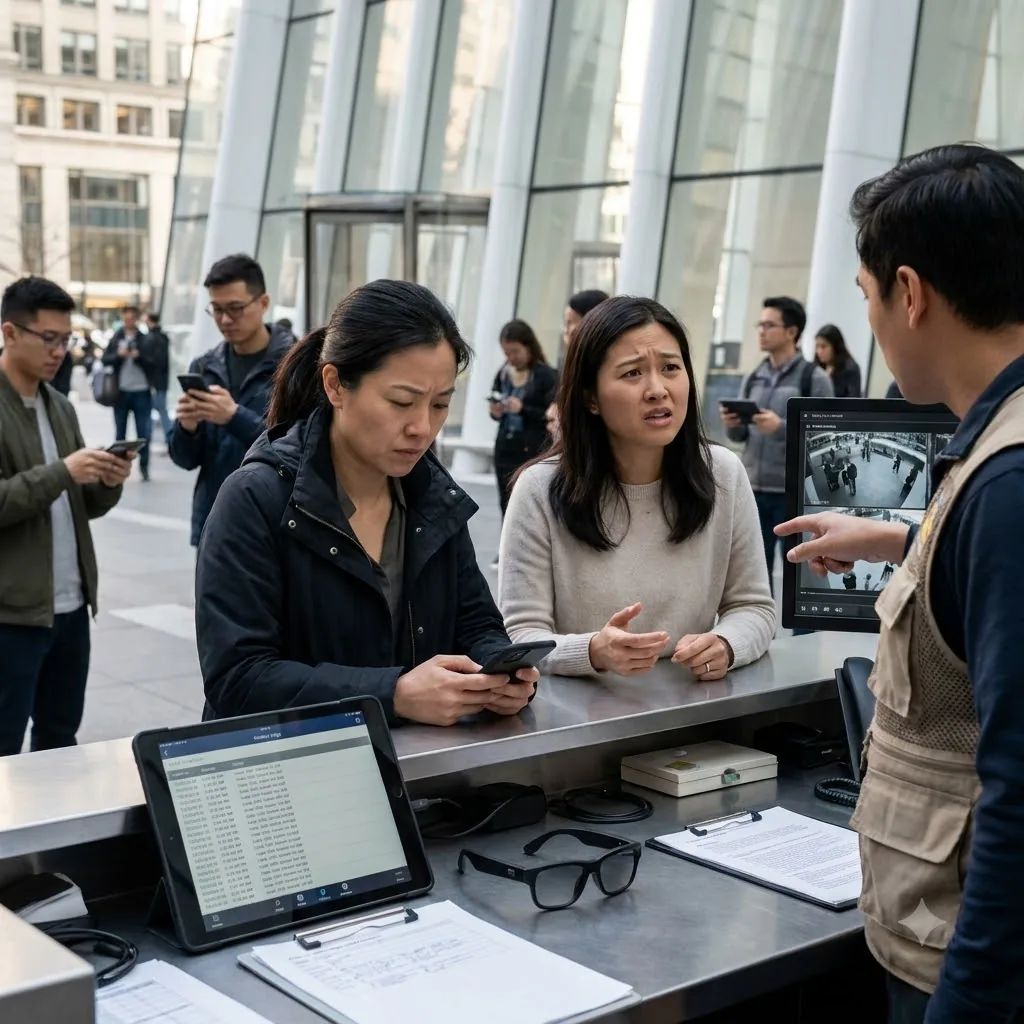
The transition sequence at 14:02:15 UTC was silent. The system logs show the immediate execution of the private boundary lock. The Shader Source Code Ledger reverted entirely to Maya Lin’s local repository. Chloe’s StellarEye glasses went dark. The amber warning light on her frame blinked once, then turned a solid, inert grey, indicating the hardware had been disconnected from the shader engine’s compilation thread. On the shared display monitor, the torn graphics and flickering static vanished, replaced by a clean, default plaza screensaver. The security footage records Chloe stepping back from the terminal. She did not yell or create a scene; the presence of the sponsors and the diagnostic auditor kept her silent. Instead, she stared at the terminal display, which now read: “Developer Access Revoked. Device Deregistered.” Maya Lin stood up from her chair. The cameras captured her polishing her glasses once more with her sleeve before sliding them into her case. She did not look at her sister or the sponsors. The local network log shows she completed the final lockdown protocol, separating the family plan shared developer credentials into two distinct, isolated accounts. Chloe’s profile was left with zero active repositories and an outstanding resource abuse flag from the near-crash of the plaza node. The sponsors approached Chloe, but their posture was formal and distant. One of them handed back the demonstration tablet, pointing to the empty developer field. Chloe gestured toward the screen, speaking quickly, but the sponsors turned and walked toward the plaza exit. The transaction was over. From my station, I finalized the audit report. The logs were clear: no unauthorized hacking had occurred, only the clean execution of a primary user’s security rights. Maya walked toward the exit of the Nexus AR Game Plaza, her backpack slung over one shoulder. Her pace was steady, her expression neutral. The digital trail she left behind was perfectly clean. The assets were locked, the credentials restored, and the system integrity maintained. As she crossed the threshold into the afternoon light, the plaza’s network status indicator returned to a calm, steady green. The pressure that had built up over the last twenty minutes evaporated, leaving only the quiet finality of a secured account ledger. To ensure the record was complete, I pulled the network status history for the family account. The split was clean. Maya’s security token had completely isolated the shader engine, leaving Chloe with no way to access the source code or replicate the optical effects. The physical footage shows Chloe standing by the empty counter, her arms crossed, watching the sponsors walk away. She did not attempt to follow them. Her opportunity to secure the developer grant was gone, documented in the system logs as an unvalidated attempt to compile stolen resources. The audit trail records the final confirmation of Maya’s ownership, signed with her unique biomechanical key. In my report, I marked the case resolved. There was no need for plaza security to intervene, nor did the dispute escalate into a public disruption. The system’s own design, guided by Maya’s prepared security protocols, had executed the boundary lock exactly as intended. I watched the final packets transfer on my tablet, noting the drop in network latency back to normal levels. The hum of the plaza’s cooling fans seemed quieter now that the system crash had been averted. Maya did not look back as she exited the plaza gates, leaving behind a completely secure workspace and an empty terminal that no longer recognized her sister’s credentials.