Story code: ST-000790
Part 1: My Sister Put My Intake on a Live Feed
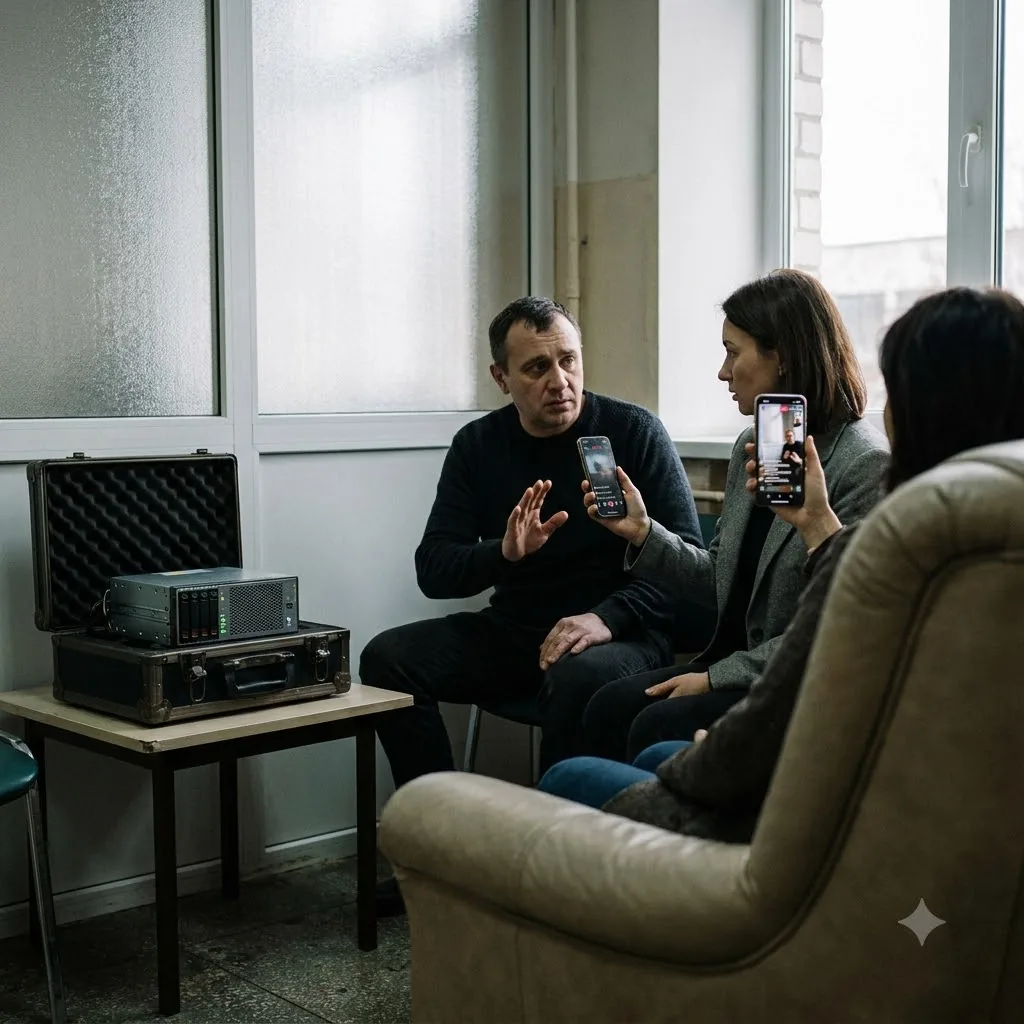
My sister lifted her phone in the upload clinic waiting area, caught me with the consciousness drive case open beside my chair, and told her viewers, “The family deserves to see everything they’re doing to her.” By the time I looked up from the intake tablet, my private clinic questions were on her livestream, two strangers were staring at my screen reflection, and the room had already decided my family was hiding something ugly. What nobody watching could see was what happened right before that clip started.
We were at a licensed clinic outside Columbus, the kind with soft gray chairs, charging stations between every other seat, and a glass door marked INTAKE – AUTHORIZED FAMILY ONLY. A wall monitor kept rotating through transfer prep reminders while people waited with coffee cups and overnight bags. Daniel had my consciousness drive case on his knee until Rina Solis called my name and asked us to confirm the handoff sequence before we crossed the intake threshold.
The drive sat in foam inside a black protective shell, smaller than most people expect for something that expensive. Daniel always kept one hand on it. I kept my voice low because the waiting area was full and because the questions were the kind you answer once, to staff, not to an audience with phones.
Rina stood half inside the doorway with her clinic badge turned out. She asked me to verify the pause option, the observation window, and who had access to updates during transfer. Normal intake. Posted rules were right behind her shoulder: NO UNAUTHORIZED RECORDING IN PROTECTED AREAS. Leah was off to my left near the chairs, scrolling hard with one thumb and not looking at the sign.
Then Rina asked the one question that made people nearby glance up.
“Do you want a private confirmation before final upload intake, or do you want your family present for that step?”
I answered, “Private. Just staff for that part.”
That was it. That was the line Leah chose.
She moved fast enough that I saw the phone before I saw her face. She stepped backward into the aisle, camera up, and said in the bright voice people use when they want witnesses more than conversation, “Listen to that. Private. They don’t want family in the room when it matters.”
Daniel stood up so quickly the drive case tipped and he caught it against his chest. He told her to put the phone down. Rina said, “Ma’am, recording is not permitted here,” and pointed to the sign instead of arguing with her. Leah kept walking sideways so her camera could hold all three of us and the intake doorway at once.
On her screen I caught my own face for a second, then the comments strip moving. Family needs transparency. Why private? Ask what they’re making her sign. Somebody added a siren emoji. Somebody else typed, This is exactly how they isolate people.
There were no signatures in front of me. No hidden form. No locked office. Just a clinic threshold and my answer to a privacy question every patient gets.
It did not matter once the clip started traveling.
Owen Park had been two rows over with wireless earbuds in. I know his name because he said it at reception and because Rina used it later when she asked who had been seated where. At that moment he pulled one earbud out and looked from Leah’s phone to Daniel’s hands around the drive case. A woman by the coffee machine angled her own screen up to catch Leah’s stream. Another man gave us the long look people use when they think they walked into the middle of a scandal.
Leah narrated over all of it.
“They’re shutting family out at the last second,” she said. “If this was so clean, why does she need privacy from the people who love her?”
The ugliest part was how little she needed. My lowered voice. Daniel holding the case. A clinic door. Ten missing seconds before her camera came up. That was enough to make ordinary intake look like evidence.
Rina repeated the policy, firmer this time, and reached for the security extension clipped to the desk by the doorway. Leah pivoted away from her and kept speaking to the phone instead of to any person in the room. Daniel moved between me and the lens. From where I sat, I could only see the upper corner of Leah’s screen, but I could hear notification chimes stacking one after another.
“End the stream,” I said.
Leah answered me without lowering the phone. “No. People should know what this place lets families do.”
That line changed the room more than the recording did. Chairs turned. Screens tilted. I stopped being a patient in intake and became the center of a live argument I never agreed to join.
Rina asked who had access to the video. Leah said, “Enough.” Daniel said she had started before the question. Leah said, “Prove it.” Then she looked at her own screen for one second too long, like she had seen something she didn’t want anyone else naming out loud.
Daniel saw it too. He took one step toward her and said, very flat, “You didn’t crop it yet.”
Leah tightened her grip on the phone, backed toward the waiting chairs, and said he had no right to touch her device. But she had already shown enough for me to catch a thin preview bar at the bottom of the livestream window, with several seconds of footage sitting before the line she wanted people to hear.
So while the room was still treating my privacy like entertainment, one other fact became visible.
The version Leah was broadcasting was not the whole recording.
My sister lifted her phone in the upload clinic waiting area, caught me with the consciousness drive case open beside my chair, and told her viewers, “The family deserves to see everything they’re doing to her.” By the time I looked up from the intake tablet, my private clinic questions were on her livestream, two strangers were staring at my screen reflection, and the room had already decided my family was hiding something ugly. What nobody watching could see was what happened right before that clip started.
We were at a licensed clinic outside Columbus, the kind with soft gray chairs, charging stations between every other seat, and a glass door marked INTAKE – AUTHORIZED FAMILY ONLY. A wall monitor kept rotating through transfer prep reminders while people waited with coffee cups and overnight bags. Daniel had my consciousness drive case on his knee until Rina Solis called my name and asked us to confirm the handoff sequence before we crossed the intake threshold.
The drive sat in foam inside a black protective shell, smaller than most people expect for something that expensive. Daniel always kept one hand on it. I kept my voice low because the waiting area was full and because the questions were the kind you answer once, to staff, not to an audience with phones.
Rina stood half inside the doorway with her clinic badge turned out. She asked me to verify the pause option, the observation window, and who had access to updates during transfer. Normal intake. Posted rules were right behind her shoulder: NO UNAUTHORIZED RECORDING IN PROTECTED AREAS. Leah was off to my left near the chairs, scrolling hard with one thumb and not looking at the sign.
Then Rina asked the one question that made people nearby glance up.
“Do you want a private confirmation before final upload intake, or do you want your family present for that step?”
I answered, “Private. Just staff for that part.”
That was it. That was the line Leah chose.
She moved fast enough that I saw the phone before I saw her face. She stepped backward into the aisle, camera up, and said in the bright voice people use when they want witnesses more than conversation, “Listen to that. Private. They don’t want family in the room when it matters.”
Daniel stood up so quickly the drive case tipped and he caught it against his chest. He told her to put the phone down. Rina said, “Ma’am, recording is not permitted here,” and pointed to the sign instead of arguing with her. Leah kept walking sideways so her camera could hold all three of us and the intake doorway at once.
On her screen I caught my own face for a second, then the comments strip moving. Family needs transparency. Why private? Ask what they’re making her sign. Somebody added a siren emoji. Somebody else typed, This is exactly how they isolate people.
There were no signatures in front of me. No hidden form. No locked office. Just a clinic threshold and my answer to a privacy question every patient gets.
It did not matter once the clip started traveling.
Owen Park had been two rows over with wireless earbuds in. I know his name because he said it at reception and because Rina used it later when she asked who had been seated where. At that moment he pulled one earbud out and looked from Leah’s phone to Daniel’s hands around the drive case. A woman by the coffee machine angled her own screen up to catch Leah’s stream. Another man gave us the long look people use when they think they walked into the middle of a scandal.
Leah narrated over all of it.
“They’re shutting family out at the last second,” she said. “If this was so clean, why does she need privacy from the people who love her?”
The ugliest part was how little she needed. My lowered voice. Daniel holding the case. A clinic door. Ten missing seconds before her camera came up. That was enough to make ordinary intake look like evidence.
Rina repeated the policy, firmer this time, and reached for the security extension clipped to the desk by the doorway. Leah pivoted away from her and kept speaking to the phone instead of to any person in the room. Daniel moved between me and the lens. From where I sat, I could only see the upper corner of Leah’s screen, but I could hear notification chimes stacking one after another.
“End the stream,” I said.
Leah answered me without lowering the phone. “No. People should know what this place lets families do.”
That line changed the room more than the recording did. Chairs turned. Screens tilted. I stopped being a patient in intake and became the center of a live argument I never agreed to join.
Rina asked who had access to the video. Leah said, “Enough.” Daniel said she had started before the question. Leah said, “Prove it.” Then she looked at her own screen for one second too long, like she had seen something she didn’t want anyone else naming out loud.
Daniel saw it too. He took one step toward her and said, very flat, “You didn’t crop it yet.”
Leah tightened her grip on the phone, backed toward the waiting chairs, and said he had no right to touch her device. But she had already shown enough for me to catch a thin preview bar at the bottom of the livestream window, with several seconds of footage sitting before the line she wanted people to hear.
So while the room was still treating my privacy like entertainment, one other fact became visible.
The version Leah was broadcasting was not the whole recording.