Story code: ST-000697
Part 1: He Said My Box Needed His Approval
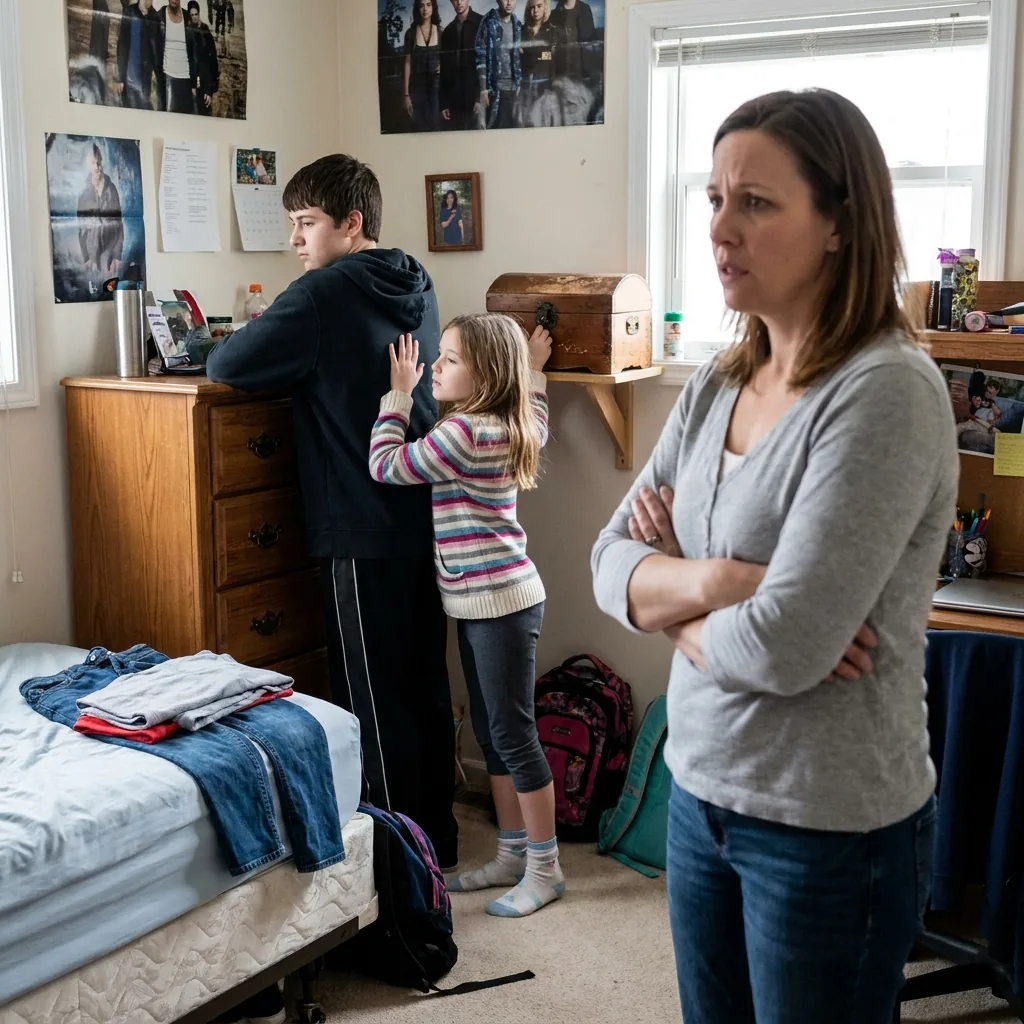
Derek Morgan blocked Alyssa from opening her own wooden memory box while she was standing on her side of the shared bedroom in socks, half-folded laundry still on the bed, and said she needed his permission first. He said it in the flat voice people use when they want a made-up rule to sound older than it is. The problem was simple enough to sound ridiculous and sharp enough to stop her hand in midair: he was acting like her keepsakes had suddenly started running through him.
The box sat where it always sat, pushed under the edge of Alyssa’s desk, next to a phone charger and a canvas tote with school papers sticking out. It was a small wooden box with a scratched lid and a brass-colored latch, the kind people keep ticket stubs and notes in because the object itself starts to feel like part of the memory. Alyssa crouched to pull it out. Derek stepped across the line between the two desks and planted one hand on the lid before she could touch the latch.
“You need clearance first,” he said.
Alyssa straightened up slowly. “From who?”
“From me.”
He did not smile when he said it. That made the room go quieter than it should have. There was still ordinary movement in it: a hoodie hanging off his chair, one drawer left open, the dryer buzzer sounding faintly down the hall. But he was delivering his line as if a process had already been discussed somewhere else and she was late to obeying it.
Alyssa asked the next question the way people ask when they suspect a bluff but can’t afford to call it too early. “What rule?”
“The room rule,” Derek said. “Nothing gets opened in here without being checked now.”
“Checked by who?”
“Me. I’m managing the system.”
That was the phrase that mattered later, because it was too polished for the room it was being used in. Shared bedrooms in family houses have plenty of arguments, but “managing the system” is not a sentence that appears by accident over a memory box.
Alyssa pointed at the box. “That is mine.”
Derek kept his hand on the lid. “It’s still in the room.”
He did not point to a note on the wall. He did not name a parent. He did not mention any conversation where this had been announced. He just repeated the claim with small adjustments, as if repetition itself could become proof.
Alyssa asked whether Marina had said that. Derek answered, “It’s understood.” She asked whether Ben had said that. He answered, “It’s how things are going to work.” She asked when. He said, “Starting now.”
That answer narrowed the issue fast. A rule that starts the exact second one person wants to use it is not a rule anybody else can verify.
Marina was in the kitchen when Alyssa called down the hall, but she did not rush in like this was a crisis. She came to the bedroom doorway wiping her hands on a dish towel and looked first at Alyssa, then at Derek’s hand still resting on the box. Her first question was not who was upset. It was, “What exact words were said?”
Alyssa answered directly. “He said I need his permission to open my own box.”
Marina looked at Derek. “Did you say that?”
“Yes,” he said. “Because we need room control. Nobody can just keep doing things without approval.”
“Nobody?” Marina asked.
He nodded once.
“Who told you that?”
“It doesn’t matter who told me. It’s common sense.”
Marina stayed in the doorway. “Common sense is not the same thing as a house rule.”
Derek pulled his hand off the lid then, but only to fold his arms. He did not step back from the box. “You always wait until something gets out of hand, and then I’m the only one trying to fix it.”
That still did not answer the source question. It also did not explain why the first “fix” in his new system landed on an object that had been sitting untouched on Alyssa’s side of the room.
Alyssa asked if she could open her notebook next. Derek said, “That’s different.” She touched the drawer under her desk. He said drawers counted too. She reached for the lamp switch. He said the rule was about access, not lights. The shape of his policy kept changing depending on where her hand moved.
Marina noticed that part immediately. “Stop. Say the rule one time so it stays the same.”
Derek opened his mouth, looked at the box, then at the drawer, then at Alyssa’s charger on the floor as if the objects themselves had become a problem in the wording.
“What exactly needs your permission,” Marina asked, “and how far does that go?”
He had already used the rule on the memory box. He had already said it covered the room. But with three plain objects in front of him and one basic question hanging there, he still could not explain whether Alyssa needed his approval to open a box, a drawer, a notebook, or anything on her own side of the bedroom.
Derek Morgan blocked Alyssa from opening her own wooden memory box while she was standing on her side of the shared bedroom in socks, half-folded laundry still on the bed, and said she needed his permission first. He said it in the flat voice people use when they want a made-up rule to sound older than it is. The problem was simple enough to sound ridiculous and sharp enough to stop her hand in midair: he was acting like her keepsakes had suddenly started running through him.
The box sat where it always sat, pushed under the edge of Alyssa’s desk, next to a phone charger and a canvas tote with school papers sticking out. It was a small wooden box with a scratched lid and a brass-colored latch, the kind people keep ticket stubs and notes in because the object itself starts to feel like part of the memory. Alyssa crouched to pull it out. Derek stepped across the line between the two desks and planted one hand on the lid before she could touch the latch.
“You need clearance first,” he said.
Alyssa straightened up slowly. “From who?”
“From me.”
He did not smile when he said it. That made the room go quieter than it should have. There was still ordinary movement in it: a hoodie hanging off his chair, one drawer left open, the dryer buzzer sounding faintly down the hall. But he was delivering his line as if a process had already been discussed somewhere else and she was late to obeying it.
Alyssa asked the next question the way people ask when they suspect a bluff but can’t afford to call it too early. “What rule?”
“The room rule,” Derek said. “Nothing gets opened in here without being checked now.”
“Checked by who?”
“Me. I’m managing the system.”
That was the phrase that mattered later, because it was too polished for the room it was being used in. Shared bedrooms in family houses have plenty of arguments, but “managing the system” is not a sentence that appears by accident over a memory box.
Alyssa pointed at the box. “That is mine.”
Derek kept his hand on the lid. “It’s still in the room.”
He did not point to a note on the wall. He did not name a parent. He did not mention any conversation where this had been announced. He just repeated the claim with small adjustments, as if repetition itself could become proof.
Alyssa asked whether Marina had said that. Derek answered, “It’s understood.” She asked whether Ben had said that. He answered, “It’s how things are going to work.” She asked when. He said, “Starting now.”
That answer narrowed the issue fast. A rule that starts the exact second one person wants to use it is not a rule anybody else can verify.
Marina was in the kitchen when Alyssa called down the hall, but she did not rush in like this was a crisis. She came to the bedroom doorway wiping her hands on a dish towel and looked first at Alyssa, then at Derek’s hand still resting on the box. Her first question was not who was upset. It was, “What exact words were said?”
Alyssa answered directly. “He said I need his permission to open my own box.”
Marina looked at Derek. “Did you say that?”
“Yes,” he said. “Because we need room control. Nobody can just keep doing things without approval.”
“Nobody?” Marina asked.
He nodded once.
“Who told you that?”
“It doesn’t matter who told me. It’s common sense.”
Marina stayed in the doorway. “Common sense is not the same thing as a house rule.”
Derek pulled his hand off the lid then, but only to fold his arms. He did not step back from the box. “You always wait until something gets out of hand, and then I’m the only one trying to fix it.”
That still did not answer the source question. It also did not explain why the first “fix” in his new system landed on an object that had been sitting untouched on Alyssa’s side of the room.
Alyssa asked if she could open her notebook next. Derek said, “That’s different.” She touched the drawer under her desk. He said drawers counted too. She reached for the lamp switch. He said the rule was about access, not lights. The shape of his policy kept changing depending on where her hand moved.
Marina noticed that part immediately. “Stop. Say the rule one time so it stays the same.”
Derek opened his mouth, looked at the box, then at the drawer, then at Alyssa’s charger on the floor as if the objects themselves had become a problem in the wording.
“What exactly needs your permission,” Marina asked, “and how far does that go?”
He had already used the rule on the memory box. He had already said it covered the room. But with three plain objects in front of him and one basic question hanging there, he still could not explain whether Alyssa needed his approval to open a box, a drawer, a notebook, or anything on her own side of the bedroom.