Story code: ST-000818
Part 1: She Renamed the Box
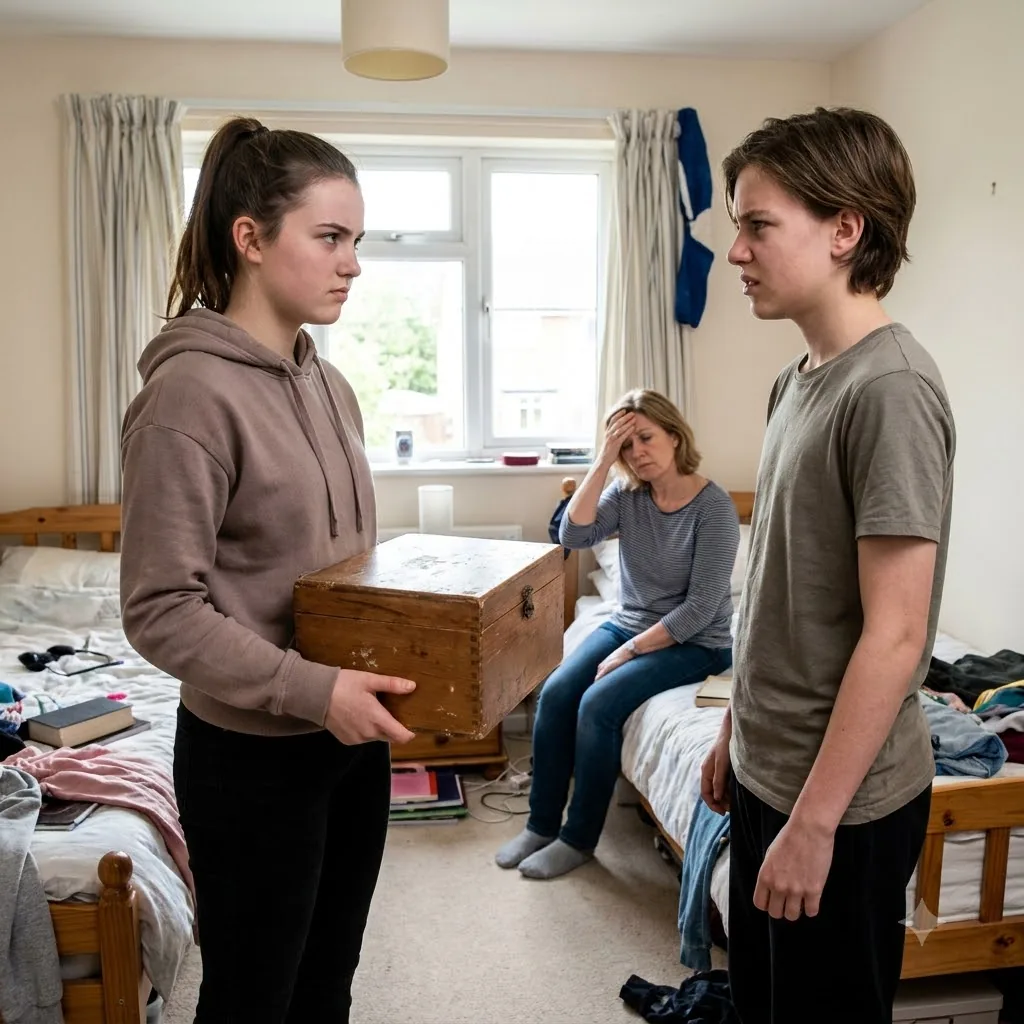
My stepsister stood in our shared bedroom with my mom’s memory box in both hands and told me I was not qualified to question her “grief-object stabilization protocol.” I was on my knees matching socks from the laundry basket beside our beds, and she said it loud enough for my mom in the doorway to hear, like I was some reckless idiot who might ruin the last box of photos, letters, and hospital bracelets we had left.
The room is small enough that if one of us pulls out the under-bed drawers, the other one has to turn sideways to pass. We keep our lives on top of each other in there: stacked shoe bins, a narrow bookshelf, two laundry hampers, and the cedar memory box my mom keeps on the shelf over my bed because that side stays out of the sun. I am the one who dusts that shelf, swaps the moisture packets, and checks if the lid is sitting flat. That morning I was folding towels on my comforter when Brielle dragged over my desk chair, climbed up, and lifted the box down without asking.
I said, “Put it back. Mom didn’t say move it.”
She didn’t even look at me first. She kept her eyes on the box and said, “You can’t just relocate a memory vessel without transitional handling. That creates surface shock.”
I said, “A what?”
Then she looked at me over one shoulder with that patient voice she uses when she wants to make a normal question sound embarrassing.
“Surface shock,” she said. “It’s what happens when a person with no archival sensitivity changes shelf temperature and contact sequence too fast. This is exactly why people should not freestyle with bereavement objects.”
My mom had stopped at the doorway with a clean fitted sheet over one arm. “Is that real?” she asked.
Brielle answered before I could. “Yes. Especially with mixed-material keepsakes. You have paper, metal, fabric, residue transfer. If Nina keeps handling it casually, you could accelerate breakdown.”
She said my name like she was reading a warning label.
I stood up. “I’ve been handling it the same way for months. You just made that up.”
Brielle gave a short laugh through her nose and shifted the box higher against her chest. “No, you just don’t know the terminology. There is a difference.”
That was the move she had gotten very good at in the room. She never started by saying she wanted something. She started by changing the language until everyone else sounded clumsy. A drawer became a humidity pocket. Cleaning became fiber disturbance. Asking where she put something became interrupting a regulation system. If I used plain words, she acted like plain words were evidence I shouldn’t be part of the conversation.
My mom stepped farther in. “So where should it go?”
I looked at her and said, “On the same shelf where it’s been.”
Brielle cut across me. “No. It needs a low-traffic recovery zone. Under-bed storage is actually better short term if it’s buffered and not repeatedly opened. And nobody should access it directly without a settling window.”
“A settling window,” I repeated.
“Yes,” she said, firm as a nurse giving discharge instructions. “Forty-eight hours minimum after transfer.”
My mom adjusted the sheet in her arms and glanced from me to the box. She didn’t move closer. “I don’t want anything in there damaged.”
“Nothing is being damaged,” I said. “She’s carrying it around the room right now because she likes how this sounds.”
Brielle turned the box slightly and ran her fingers along the lid edge like she was demonstrating to a class. “See? This is what I mean. Defensive people always focus on movement and not pressure mapping.”
“Pressure mapping of what?” I asked.
She answered right away. “Of the memory seal.”
There was no seal. It was a cedar box with a brass latch my aunt bought at a craft fair years ago. But the way Brielle said it made the room pause. My mom’s mouth tightened. The fitted sheet slid a little lower on her arm.
“Can it really get messed up from being opened too much?” she asked.
Brielle nodded once. “Absolutely. Especially if the item order inside has already been compromised.”
That was aimed at me too. Last month I had taken out a photo envelope so my mom could show Marcus a picture. Brielle had acted like I cracked open a museum vault.
I said, “Then explain what a memory seal is. Right now.”
She shifted the box to one hip and said, without any stumble at all, “It’s the stabilized relational layer that forms when keepsakes have remained undisturbed in consistent sequence. Once that layer is fractured, you need a guided recontainment process or the object loses integrity.”
My mom went quiet. From the hall, I heard Marcus on a phone call and the TV in the den. In our room, all you could hear was the dryer buzzer going off and Brielle breathing like she had just ended the discussion.
Then my mom said, “Okay. Put it under the bed for now if that’s safer.”
Brielle crouched and slid the memory box into the long plastic storage slot under her side of the room, not mine, then pushed one of her duffel bags in front of it. She stood up and dusted her hands like she’d completed some official procedure.
I asked, “If nobody can touch it for forty-eight hours, how do you know you didn’t just trap it in heat under a bed vent?”
Brielle faced me, calm as ever, and said, “Because I know how thermal buffering works.”
She said it so confidently that my mom carried the fitted sheet out of the room with nothing else to add. And I was left staring at my own bed while my mother’s memory box sat hidden under Brielle’s side, sealed off by a term that sounded expensive and fake at the same time.
My stepsister stood in our shared bedroom with my mom’s memory box in both hands and told me I was not qualified to question her “grief-object stabilization protocol.” I was on my knees matching socks from the laundry basket beside our beds, and she said it loud enough for my mom in the doorway to hear, like I was some reckless idiot who might ruin the last box of photos, letters, and hospital bracelets we had left.
The room is small enough that if one of us pulls out the under-bed drawers, the other one has to turn sideways to pass. We keep our lives on top of each other in there: stacked shoe bins, a narrow bookshelf, two laundry hampers, and the cedar memory box my mom keeps on the shelf over my bed because that side stays out of the sun. I am the one who dusts that shelf, swaps the moisture packets, and checks if the lid is sitting flat. That morning I was folding towels on my comforter when Brielle dragged over my desk chair, climbed up, and lifted the box down without asking.
I said, “Put it back. Mom didn’t say move it.”
She didn’t even look at me first. She kept her eyes on the box and said, “You can’t just relocate a memory vessel without transitional handling. That creates surface shock.”
I said, “A what?”
Then she looked at me over one shoulder with that patient voice she uses when she wants to make a normal question sound embarrassing.
“Surface shock,” she said. “It’s what happens when a person with no archival sensitivity changes shelf temperature and contact sequence too fast. This is exactly why people should not freestyle with bereavement objects.”
My mom had stopped at the doorway with a clean fitted sheet over one arm. “Is that real?” she asked.
Brielle answered before I could. “Yes. Especially with mixed-material keepsakes. You have paper, metal, fabric, residue transfer. If Nina keeps handling it casually, you could accelerate breakdown.”
She said my name like she was reading a warning label.
I stood up. “I’ve been handling it the same way for months. You just made that up.”
Brielle gave a short laugh through her nose and shifted the box higher against her chest. “No, you just don’t know the terminology. There is a difference.”
That was the move she had gotten very good at in the room. She never started by saying she wanted something. She started by changing the language until everyone else sounded clumsy. A drawer became a humidity pocket. Cleaning became fiber disturbance. Asking where she put something became interrupting a regulation system. If I used plain words, she acted like plain words were evidence I shouldn’t be part of the conversation.
My mom stepped farther in. “So where should it go?”
I looked at her and said, “On the same shelf where it’s been.”
Brielle cut across me. “No. It needs a low-traffic recovery zone. Under-bed storage is actually better short term if it’s buffered and not repeatedly opened. And nobody should access it directly without a settling window.”
“A settling window,” I repeated.
“Yes,” she said, firm as a nurse giving discharge instructions. “Forty-eight hours minimum after transfer.”
My mom adjusted the sheet in her arms and glanced from me to the box. She didn’t move closer. “I don’t want anything in there damaged.”
“Nothing is being damaged,” I said. “She’s carrying it around the room right now because she likes how this sounds.”
Brielle turned the box slightly and ran her fingers along the lid edge like she was demonstrating to a class. “See? This is what I mean. Defensive people always focus on movement and not pressure mapping.”
“Pressure mapping of what?” I asked.
She answered right away. “Of the memory seal.”
There was no seal. It was a cedar box with a brass latch my aunt bought at a craft fair years ago. But the way Brielle said it made the room pause. My mom’s mouth tightened. The fitted sheet slid a little lower on her arm.
“Can it really get messed up from being opened too much?” she asked.
Brielle nodded once. “Absolutely. Especially if the item order inside has already been compromised.”
That was aimed at me too. Last month I had taken out a photo envelope so my mom could show Marcus a picture. Brielle had acted like I cracked open a museum vault.
I said, “Then explain what a memory seal is. Right now.”
She shifted the box to one hip and said, without any stumble at all, “It’s the stabilized relational layer that forms when keepsakes have remained undisturbed in consistent sequence. Once that layer is fractured, you need a guided recontainment process or the object loses integrity.”
My mom went quiet. From the hall, I heard Marcus on a phone call and the TV in the den. In our room, all you could hear was the dryer buzzer going off and Brielle breathing like she had just ended the discussion.
Then my mom said, “Okay. Put it under the bed for now if that’s safer.”
Brielle crouched and slid the memory box into the long plastic storage slot under her side of the room, not mine, then pushed one of her duffel bags in front of it. She stood up and dusted her hands like she’d completed some official procedure.
I asked, “If nobody can touch it for forty-eight hours, how do you know you didn’t just trap it in heat under a bed vent?”
Brielle faced me, calm as ever, and said, “Because I know how thermal buffering works.”
She said it so confidently that my mom carried the fitted sheet out of the room with nothing else to add. And I was left staring at my own bed while my mother’s memory box sat hidden under Brielle’s side, sealed off by a term that sounded expensive and fake at the same time.