Story code: ST-001084
Part 1: The Stolen Craft
Mara’s reconstruction of the timeline begins at the shared bedroom work counter on a Tuesday afternoon. The wood dust patterns show Leo was midway through applying the adhesive velvet lining to a carved cherrywood memory box when Maya walked in and took it. She did not ask; she simply lifted the polished box from the workbench, brushing past Leo’s shoulder, and carried it downstairs to the family room exhibition table. There, their stepmother, Sherry, was hosting the local crafts committee. By the time Leo walked down the stairs, Sherry was already announcing Maya’s name as the designer, and Maya was smiling, accepting a two-thousand-dollar deposit for an upcoming regional order.
The division of space in that bedroom tells the real story. Leo’s half of the room centered around a heavy, oil-stained workbench covered in wood shavings, a professional gouge chisel set, and a physical ledger where he logged every single hour of work. Maya’s half of the room featured a clean vanity, jewelry organizers, and social media ring lights. Yet, downstairs at the exhibition table, Sherry proudly displayed the cherrywood box, pointing to the intricate bevel cut that ran seamlessly along the lid’s edge. “Maya spends hours up there,” Sherry told the committee. Maya nodded, adjusting her sleeves, her hands completely free of the calluses and faint carbon stains that marked Leo’s fingers.
Leo stood near the kitchen doorway. He did not shout or interrupt the presentation. He watched as a regional buyer, a man named Henderson, inspected the tight joins of the memory box. Henderson was impressed enough to write a check on the spot for a bulk order of twenty custom boxes, but he added one final, public condition: he wanted to watch Maya perform a live carving demonstration of her signature bevel cut at the upcoming spring gallery opening in front of the local press. Sherry eagerly accepted on Maya’s behalf, claiming her daughter would be thrilled to show her process.
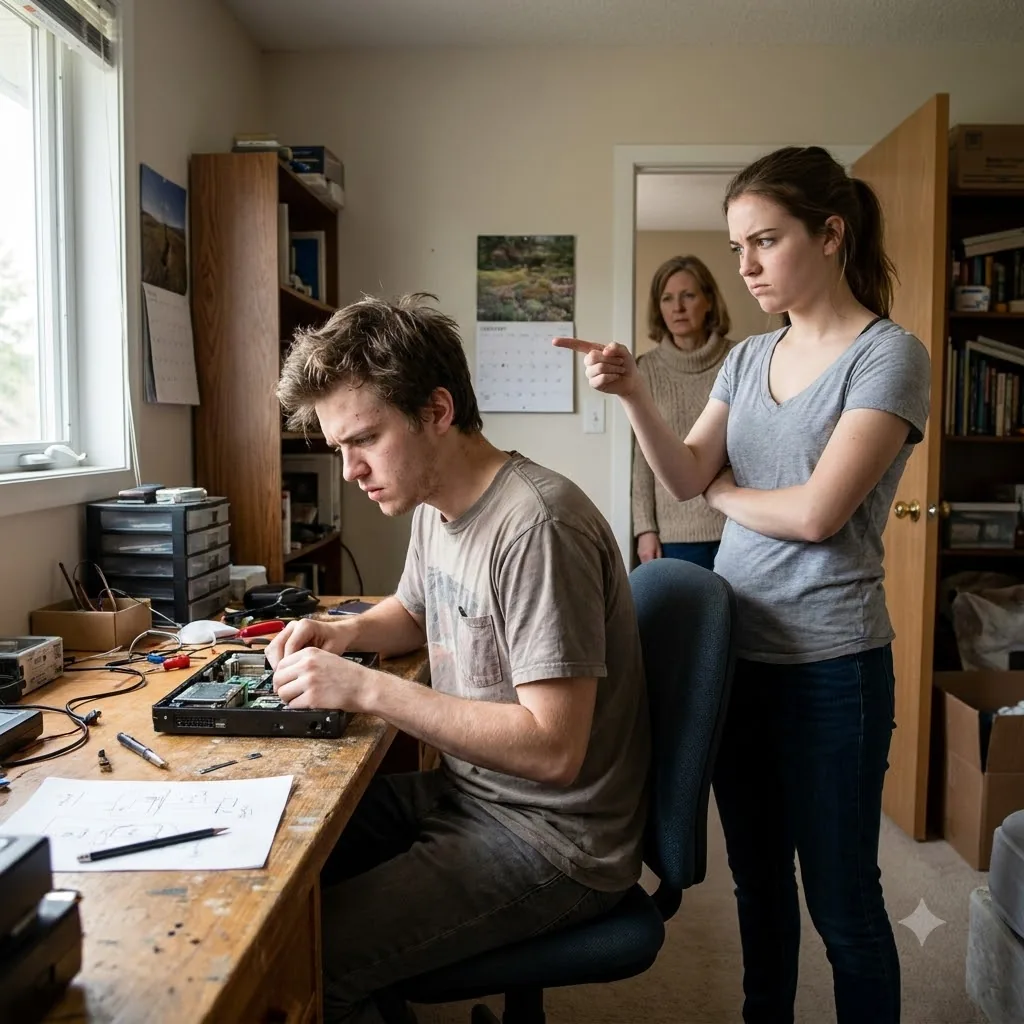
When Maya returned to the shared bedroom later that evening, the triumphant smile was gone. The physical evidence left on the workbench from that night tells a clear story. We found a fresh, jagged gouge in the pine frame of the desk where an amateur had tried to force a carving tool against the grain. There was a smear of dried blood on a scrap piece of cherrywood where a chisel had slipped. Maya stood over the workbench, holding Leo’s gouge chisel with a grip that was entirely wrong, her knuckles white and tense. She stared at the wood, then looked at Leo, who was quietly updating his physical ledger at his desk. Maya’s lack of woodworking skill was about to be put on display in front of the entire community, and she had no way to hide it. She needed to learn the technique, and she needed to learn it immediately. The silent tension in the room grew heavy as Maya realized she could not make a single cut without Leo’s help.
Mara’s reconstruction of the timeline begins at the shared bedroom work counter on a Tuesday afternoon. The wood dust patterns show Leo was midway through applying the adhesive velvet lining to a carved cherrywood memory box when Maya walked in and took it. She did not ask; she simply lifted the polished box from the workbench, brushing past Leo’s shoulder, and carried it downstairs to the family room exhibition table. There, their stepmother, Sherry, was hosting the local crafts committee. By the time Leo walked down the stairs, Sherry was already announcing Maya’s name as the designer, and Maya was smiling, accepting a two-thousand-dollar deposit for an upcoming regional order.
The division of space in that bedroom tells the real story. Leo’s half of the room centered around a heavy, oil-stained workbench covered in wood shavings, a professional gouge chisel set, and a physical ledger where he logged every single hour of work. Maya’s half of the room featured a clean vanity, jewelry organizers, and social media ring lights. Yet, downstairs at the exhibition table, Sherry proudly displayed the cherrywood box, pointing to the intricate bevel cut that ran seamlessly along the lid’s edge. “Maya spends hours up there,” Sherry told the committee. Maya nodded, adjusting her sleeves, her hands completely free of the calluses and faint carbon stains that marked Leo’s fingers.
Leo stood near the kitchen doorway. He did not shout or interrupt the presentation. He watched as a regional buyer, a man named Henderson, inspected the tight joins of the memory box. Henderson was impressed enough to write a check on the spot for a bulk order of twenty custom boxes, but he added one final, public condition: he wanted to watch Maya perform a live carving demonstration of her signature bevel cut at the upcoming spring gallery opening in front of the local press. Sherry eagerly accepted on Maya’s behalf, claiming her daughter would be thrilled to show her process.
When Maya returned to the shared bedroom later that evening, the triumphant smile was gone. The physical evidence left on the workbench from that night tells a clear story. We found a fresh, jagged gouge in the pine frame of the desk where an amateur had tried to force a carving tool against the grain. There was a smear of dried blood on a scrap piece of cherrywood where a chisel had slipped. Maya stood over the workbench, holding Leo’s gouge chisel with a grip that was entirely wrong, her knuckles white and tense. She stared at the wood, then looked at Leo, who was quietly updating his physical ledger at his desk. Maya’s lack of woodworking skill was about to be put on display in front of the entire community, and she had no way to hide it. She needed to learn the technique, and she needed to learn it immediately. The silent tension in the room grew heavy as Maya realized she could not make a single cut without Leo’s help.