Story code: ST-001519
Part 2: The Deficit
“No longer legally recognized,” Marcus repeated, the words feeling like dry sawdust in his mouth. He stared at the stranger’s manicured hand, the perfectly buffed nails hovering inches from his chest. The deep, rhythmic vibration of the diesel engine at his back suddenly felt completely foreign, as if the massive machine he had practically lived in for two years had already switched its allegiance.
“I have the keys,” Marcus said, his voice dropping to a gravelly, defensive threat. “I made the down payment. My name is on the title.”
“Your name *was* on the conditional lease agreement,” the man in the puffer vest corrected smoothly. He didn’t raise his voice, nor did he step back. “Section four, clause twelve. Immediate asset forfeiture upon critical efficiency failure. The human resources dispatch system logged your termination at eight-fourteen this morning. At eight-fifteen, the smart-contract executed. You are currently trespassing in corporate hardware.”
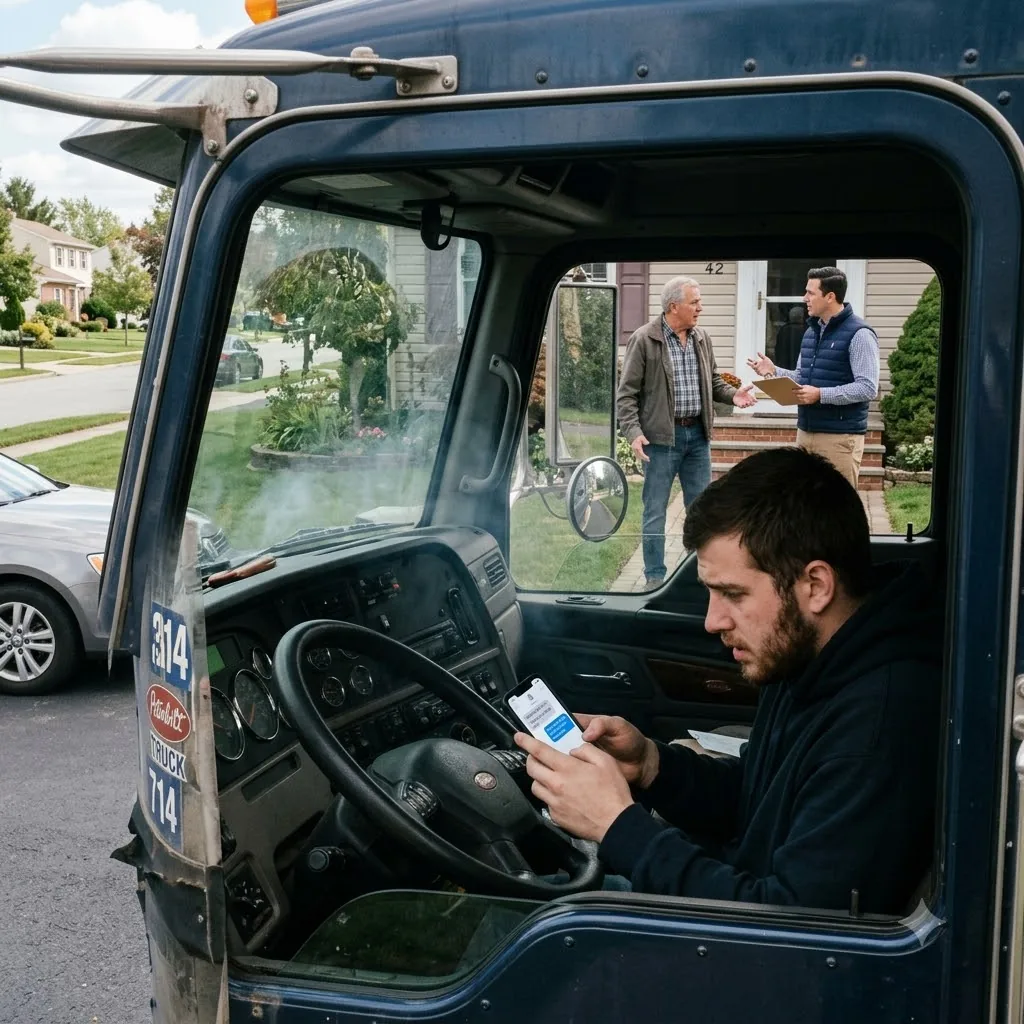
Marcus looked past the pristine nylon shoulder of the stranger’s vest, locking eyes with his uncle. Arthur was still clutching the metal clipboard to his chest like a makeshift shield. The older man’s face was utterly ashen, the deep, weathered creases around his eyes tight with a quiet, terrified panic.
“Arthur,” Marcus said, taking a heavy step forward. He didn’t care about the stranger’s raised hand. He pushed his heavy shoulder right through the man’s blocking arm, forcing the corporate auditor to take a sudden, off-balance step down into the crushed gravel. “Don’t sign a damn thing. They can’t do this. There’s a thirty-day grace period on the loan. It’s right there in the original paperwork.”
“Marcus,” Arthur croaked, his voice cracking into a dry wheeze. He looked down at the fluttering white pages clipped to the metal board. “He showed me the tablet, son. They aren’t just taking the rig.”
Marcus froze with his boot planted firmly on the second wooden step. “What?”
The stranger recovered his balance with infuriating grace, calmly brushing a speck of invisible dust from the navy blue fabric of his vest. “Your uncle is a highly pragmatic man, Mr. Vance. He understands that a massive, unmitigated breach of contract carries secondary liabilities.”
“I was three percent under the delivery quota!” Marcus shouted, spinning around to face the man. “Three percent! Because of the black ice in the mountain pass last week. You don’t take a man’s entire livelihood over a three percent delay.”
“The algorithm does not measure weather patterns, Mr. Vance. It measures statistical profitability,” the stranger said. He pulled the glass-fronted tablet back out of his vest pocket, tapping the sleek screen once with a silver stylus. “And because your efficiency rating dropped below the acceptable corporate margin, your contract was nullified. The immediate depreciation of the asset-your rig-due to sudden repossession leaves a deficit of exactly eighty-four thousand dollars.”
Marcus felt all the blood rush straight out of his head, leaving a loud, high-pitched ringing echoing in his ears. “Eighty-four… I only owe ninety on the note! The truck is worth a hundred and twenty!”
“Wholesale auction value, minus our standard recovery fees, minus the early termination penalties,” the stranger recited, not even bothering to look up from the glowing tablet. “The deficit is mathematically exact. And as your uncle co-signed the original loan, pledging the equity of this property…” The man gestured vaguely toward the peeling white paint of the old farmhouse with the silver stylus. “…he is immediately liable for the remaining balance.”
Marcus turned back to Arthur in sheer horror. Arthur’s knuckles were pure white against the edges of the clipboard. The older man wouldn’t meet Marcus’s gaze anymore. He was staring intensely at the warped porch floorboards, completely broken by a fifteen-minute corporate blitzkrieg.
“They want to put a lien on the house, Marc,” Arthur whispered, his voice barely audible over the idling truck. “If I sign this settlement, they take the truck and freeze the debt. They’ll give us a long-term payment plan on the eighty-four thousand. If I don’t sign it… he says they’ll file the electronic injunction by noon. They’ll freeze my pension accounts immediately.”
“It’s a shakedown,” Marcus snapped, stepping up onto the porch and grabbing the edge of the clipboard. He tried to pull it from Arthur’s grip, but the old man held on with terrifying, desperate strength. “Arthur, let go of it! You can’t sign this. It’s blatant extortion. We’ll get a lawyer. We’ll fight the algorithm in court.”
“With what money?” Arthur yelled, suddenly looking up, his red eyes shining with unshed tears. “You just checked your account in the cab, didn’t you? How much is in there, Marc? A hundred bucks? Two hundred? A corporate lawyer takes five thousand just to answer the damn phone!”
The brutal truth of the math hit Marcus like a physical blow to the ribs. He let go of the clipboard, stumbling back a half-step against the wooden railing. His uncle was entirely right. They were completely, utterly outmatched. The logistics company hadn’t just fired him; they had perfectly calculated the exact moment to strike, knowing he lacked the immediate capital to defend himself. They were weaponizing his failure to strip his uncle of his life savings.
Behind them, the rhythmic, churning vibration of the freight rig abruptly ceased.
Marcus spun around. The massive diesel engine hadn’t sputtered or choked on bad fuel; it had simply died, the sudden silence instantly suffocating the rural morning air. The daytime running headlights, which had been burning bright against the morning haze, flickered once and went entirely dark.
“Remote immobilization,” the stranger said, tapping his tablet one final time before slipping it away. “The primary recovery crew is roughly three minutes out.”
Marcus stared at the dead truck, his only means of making a living turned into a useless, twelve-ton paperweight in the blink of an eye. He looked at his own keys still dangling uselessly in the ignition through the bug-splattered windshield. He had lost the truck. He had lost his job. But the crushing weight of the phantom debt about to drop onto his uncle’s shoulders was a completely different kind of death.
The stranger calmly walked back up the wooden steps, his leather shoes clicking sharply on the planks. He held the polished silver pen out toward Arthur once again. “The settlement offer automatically expires when the recovery truck pulls into the driveway, gentlemen. I highly suggest you finalize the paperwork.”
Marcus watched Arthur’s trembling hand slowly reach out for the silver pen. If Arthur signed, the family house was mortgaged to a fabricated algorithm, chaining them both to poverty for the rest of their natural lives. If Marcus slapped the pen away, the automated injunction would freeze Arthur’s pension before lunch, and they would likely lose the house by the end of the month anyway. In the distance, the heavy, grinding squeal of a tow truck’s air brakes echoed down the rural highway, closing in fast.