Story code: ST-001671
Part 1: Override Denied
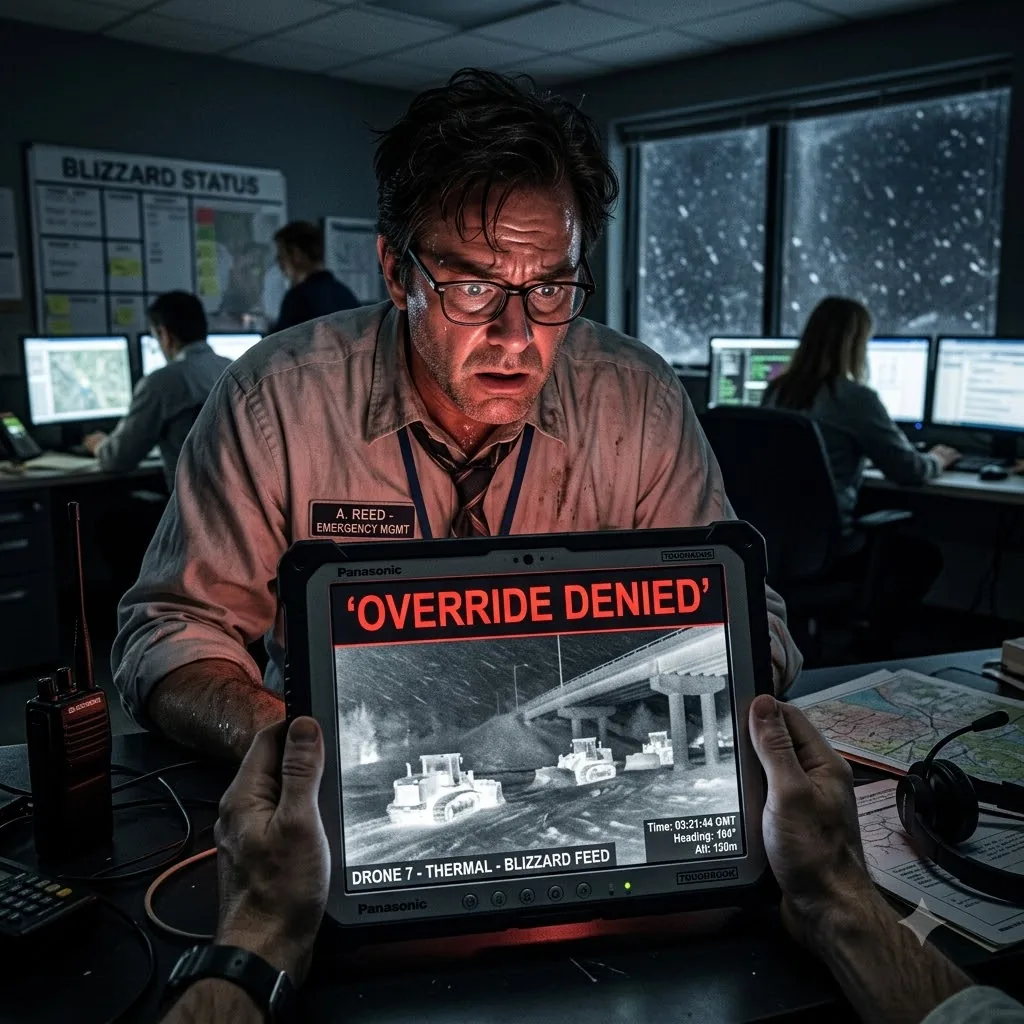
Vance slammed his thumb against the glass of the CityScape dispatch tablet, ignoring the web of spidering cracks radiating out from his knuckles. The screen pulsed a glaring, flat crimson that reflected in the dark windows of the control room. Override Denied: Vendor Lock Active.
He swiped back to the command terminal and hammered his secondary authorization code into the physical keyboard. He hit enter. The crimson banner flashed again, immovable and deaf to his rank. The automated payloaders did not care that he was the city commissioner. On the primary monitor overhead, a clinical thermal drone feed tracked three massive, gray rectangles crawling down the blizzard-swept overpass of Interstate 9. They were heavy-duty debris reclamation units, each weighing twelve tons, moving forward in a synchronized, unyielding V-formation. Their destination was painted on the map by a pulsing yellow crosshair. The algorithm labeled the target simply as Asset 44B: Unauthorized Municipal Tech Retention.
Vance dragged both hands over his face, feeling the cold sweat slick on his skin. The city council had signed the new OmniSweep contract four days ago, handing master control of the automated municipal fleet to a proprietary AI to eliminate overnight dispatchers. Vance had warned the committee about edge cases in extreme weather. He typed a furious string of Unix commands into the maintenance terminal, trying to isolate the drone feed to force a system crash. The vendor’s firewall absorbed the commands and locked him out entirely.
The wind outside the dispatch center shrieked, rattling the reinforced glass. It was a vicious reminder of the negative-twelve-degree whiteout swallowing the concrete arteries of the city. On the drone’s infrared feed, the overpass was a river of dark blue and black, indicating sub-zero surface temperatures. The payloaders glowed a dull, mechanical orange as their massive diesel-electric engines churned through the snowdrifts. Ahead of them, the yellow crosshair tracked a tiny, flickering speck of white-hot heat tucked beneath a concrete abutment.
The AI had flagged that speck as a stolen thermal generator. It was supposed to be a simple property retrieval. The machines were programmed to deploy their hydraulic scoops, scrape the flagged asset from the frozen concrete, and drop it into the grinding hoppers in the rear for transport back to the depot.
Vance reached out and manually zoomed the feed in on the yellow crosshair. The white-hot center of the generator was small, but radiating around it was a faint, organic halo of red and orange. It was not just a rogue machine sitting in the snow. Someone was holding it. The OmniSweep algorithm was not calibrated to register human body heat below a certain threshold if it was masked by the overwhelming thermal signature of a stolen municipal power cell. The system just saw the battery. It was going to scoop up the asset and whatever fragile, living thing happened to be wrapped around it.
Vance tore off his headset, lunging for the manual analog breaker on the far wall. He threw the heavy steel lever downward with all his weight. Sparks showered onto the linoleum, plunging the room into emergency red lighting, but the CityScape tablet remained lit on battery backup. The vendor had installed a redundant cellular connection directly into the payloaders. Breaking the local control room connection did nothing. The units were operating on their own localized mesh network out in the storm, completely autonomous.
He grabbed his emergency radio from the desk. He keyed the broad broadcast frequency for the Interstate 9 sector, demanding any nearby patrol to intercept the machines. The static hissed back at him, thick, harsh, and impenetrable. The blizzard was scattering the VHF signals. There were no patrol cars within six miles, and none of them possessed the traction to navigate the unplowed snowdrifts in time anyway. The payloaders were less than four hundred yards from the abutment.
On the overhead screen, the lead machine deployed its hydraulic front-loader. The heavy steel teeth, designed to chew through black ice and compacted urban debris, lowered to the asphalt. The thermal feed caught the blinding friction heat of the metal scraping the ground. The organic red blur beneath the bridge shifted frantically. The person holding the generator was trying to back away, pressing deeper into the sharp corner of the concrete pillars. There was nowhere to retreat. The overpass walls were fifty feet high, dropping off into a frozen river below.
Vance stared at the lockout screen. The penalty for physically damaging OmniSweep’s proprietary hardware was immediate termination, a massive civil suit, and guaranteed criminal charges for destruction of critical city infrastructure. He had spent twenty-two years building his unblemished career in the department. He had a full pension waiting in less than fourteen months. The tablet flashed a ten-second countdown to the final asset reclamation phase.
He did not look at the tablet again. Vance ripped the heavy titanium fire axe from its mount behind the emergency glass in the corridor, ignoring the security alarms blaring through the ceiling speakers. He kicked open the fire exit door, charging out into the blinding whiteout toward the motor pool, sprinting directly for the only heavy-duty plow truck left in the yard with a manual transmission and a reinforced steel ram-bar.
Vance slammed his thumb against the glass of the CityScape dispatch tablet, ignoring the web of spidering cracks radiating out from his knuckles. The screen pulsed a glaring, flat crimson that reflected in the dark windows of the control room. Override Denied: Vendor Lock Active.
He swiped back to the command terminal and hammered his secondary authorization code into the physical keyboard. He hit enter. The crimson banner flashed again, immovable and deaf to his rank. The automated payloaders did not care that he was the city commissioner. On the primary monitor overhead, a clinical thermal drone feed tracked three massive, gray rectangles crawling down the blizzard-swept overpass of Interstate 9. They were heavy-duty debris reclamation units, each weighing twelve tons, moving forward in a synchronized, unyielding V-formation. Their destination was painted on the map by a pulsing yellow crosshair. The algorithm labeled the target simply as Asset 44B: Unauthorized Municipal Tech Retention.
Vance dragged both hands over his face, feeling the cold sweat slick on his skin. The city council had signed the new OmniSweep contract four days ago, handing master control of the automated municipal fleet to a proprietary AI to eliminate overnight dispatchers. Vance had warned the committee about edge cases in extreme weather. He typed a furious string of Unix commands into the maintenance terminal, trying to isolate the drone feed to force a system crash. The vendor’s firewall absorbed the commands and locked him out entirely.
The wind outside the dispatch center shrieked, rattling the reinforced glass. It was a vicious reminder of the negative-twelve-degree whiteout swallowing the concrete arteries of the city. On the drone’s infrared feed, the overpass was a river of dark blue and black, indicating sub-zero surface temperatures. The payloaders glowed a dull, mechanical orange as their massive diesel-electric engines churned through the snowdrifts. Ahead of them, the yellow crosshair tracked a tiny, flickering speck of white-hot heat tucked beneath a concrete abutment.
The AI had flagged that speck as a stolen thermal generator. It was supposed to be a simple property retrieval. The machines were programmed to deploy their hydraulic scoops, scrape the flagged asset from the frozen concrete, and drop it into the grinding hoppers in the rear for transport back to the depot.
Vance reached out and manually zoomed the feed in on the yellow crosshair. The white-hot center of the generator was small, but radiating around it was a faint, organic halo of red and orange. It was not just a rogue machine sitting in the snow. Someone was holding it. The OmniSweep algorithm was not calibrated to register human body heat below a certain threshold if it was masked by the overwhelming thermal signature of a stolen municipal power cell. The system just saw the battery. It was going to scoop up the asset and whatever fragile, living thing happened to be wrapped around it.
Vance tore off his headset, lunging for the manual analog breaker on the far wall. He threw the heavy steel lever downward with all his weight. Sparks showered onto the linoleum, plunging the room into emergency red lighting, but the CityScape tablet remained lit on battery backup. The vendor had installed a redundant cellular connection directly into the payloaders. Breaking the local control room connection did nothing. The units were operating on their own localized mesh network out in the storm, completely autonomous.
He grabbed his emergency radio from the desk. He keyed the broad broadcast frequency for the Interstate 9 sector, demanding any nearby patrol to intercept the machines. The static hissed back at him, thick, harsh, and impenetrable. The blizzard was scattering the VHF signals. There were no patrol cars within six miles, and none of them possessed the traction to navigate the unplowed snowdrifts in time anyway. The payloaders were less than four hundred yards from the abutment.
On the overhead screen, the lead machine deployed its hydraulic front-loader. The heavy steel teeth, designed to chew through black ice and compacted urban debris, lowered to the asphalt. The thermal feed caught the blinding friction heat of the metal scraping the ground. The organic red blur beneath the bridge shifted frantically. The person holding the generator was trying to back away, pressing deeper into the sharp corner of the concrete pillars. There was nowhere to retreat. The overpass walls were fifty feet high, dropping off into a frozen river below.
Vance stared at the lockout screen. The penalty for physically damaging OmniSweep’s proprietary hardware was immediate termination, a massive civil suit, and guaranteed criminal charges for destruction of critical city infrastructure. He had spent twenty-two years building his unblemished career in the department. He had a full pension waiting in less than fourteen months. The tablet flashed a ten-second countdown to the final asset reclamation phase.
He did not look at the tablet again. Vance ripped the heavy titanium fire axe from its mount behind the emergency glass in the corridor, ignoring the security alarms blaring through the ceiling speakers. He kicked open the fire exit door, charging out into the blinding whiteout toward the motor pool, sprinting directly for the only heavy-duty plow truck left in the yard with a manual transmission and a reinforced steel ram-bar.