Story code: ST-000119
Part 1: The Quarantine Zone
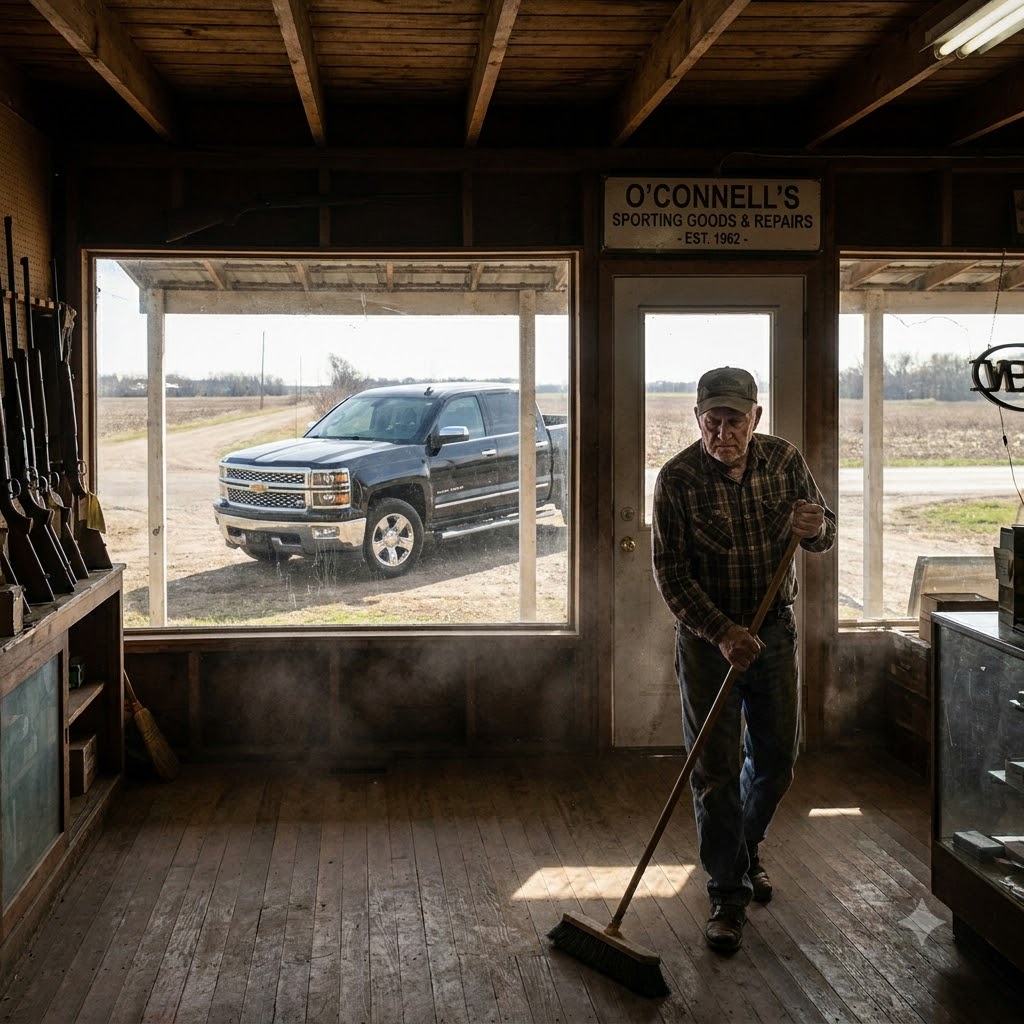
Wyatt dragged the heavy push broom across the spotless linoleum of his shop, corralling a non-existent pile of dust while twenty-four printed cancellation notices sat weighed down by a brass paperweight on the glass counter. The neon sign in the window buzzed an aggressive red, but the chime above the front door had remained dead silent for three consecutive days. He leaned the broom against the tactical display case and stared at the empty parking lot.
A week ago, the floor had been scuffed with the muddy boots of contractors, hunters, and weekend target shooters. Today, the air felt stagnant and heavy. It felt like a quarantine zone.
The rotary phone behind the register shrilled, the harsh mechanical ring echoing off the metal racks. Wyatt grabbed the receiver quickly, hoping it was a mistake on the shipping ledger.
It was Miller, the rangemaster from the county facility. Miller spoke in a rushed, hushed tone, sounding completely out of breath. He told Wyatt to scrap the pallet of nine-millimeter rounds scheduled for Tuesday delivery. Wyatt gripped the plastic handset tight and told Miller that was a four-thousand-dollar order already resting on the loading dock.
Miller let out a long, shaky exhale. He said he was sorry, but the board had voted on it this morning, and they could not risk the exposure.
Wyatt demanded to know what exposure meant. He asked Miller to explain the sudden freeze, reminding him of their five-year business relationship.
Miller paused for several agonizing seconds. He muttered something about the broadcast. He said nobody wanted their names read on the air, not with the kind of heat being stirred up, and then the line went dead with a sharp click.
Wyatt set the receiver down heavily. The broadcast. That was the third time in forty-eight hours someone had used that exact phrase before sprinting away from a conversation. He rubbed his temples, staring at the racks of meticulously cleaned rifles and the rows of polished handguns. His inventory was locked up in steel and glass, representing every dime he had to his name. The lease on the building was due in four days, along with the insurance premium. This invisible panic was strangling his livelihood, and he could not fight an enemy he could not see.
A sharp rattle at the steel door in the back alley broke his concentration. Deliveries only came through the front, and the garbage truck was not due until Thursday. Wyatt unlocked the deadbolt and pulled the heavy metal door open a fraction of an inch, keeping his foot wedged against the frame.
Marcus stood in the damp alleyway. Marcus had been a regular for six years, a guy who usually spent his Friday afternoons leaning on the glass counter and debating the merits of different optic mounts over a cup of bad coffee. Now, Marcus had his shoulders hunched, his hat pulled aggressively low, and his eyes darting frantically toward the street entrance of the alley.
Marcus shoved his way through the gap before Wyatt could speak a word of greeting. Once inside, Marcus pressed his back against the brick wall of the storage room, staying far away from the line of sight of the front windows.
Wyatt told him the front door was open and perfectly functional.
Marcus shook his head violently. He pulled a crumpled fifty-dollar bill from his jacket and slapped it onto a wooden shipping crate. He said he needed two boxes of twenty-gauge shells and told Wyatt to keep the change. He insisted on no receipt, no bag, and absolutely no record of the transaction.
Wyatt walked to the back shelf, grabbed the boxes, and handed them over. He told Marcus he was acting like a fugitive. He ordered his oldest customer to tell him exactly what was going on out there.
Marcus tucked the boxes inside his coat like stolen contraband. He looked at Wyatt with a sickening level of genuine pity. He said people were terrified of getting caught on the wrong side of the microphone. He mentioned the broadcast again, his voice dropping to a desperate whisper, claiming the host was reading out license plates and business logs of anyone seen walking into the shop. Marcus said nobody could afford that kind of collateral damage to their own lives, definitely not for a simple box of shells.
Before Wyatt could press him for a name or a station dial, Marcus slipped back out the alley door, pulling it shut with a heavy, final thud.
Wyatt stood alone in the dim rear corridor. His loyal customers were treating him like toxic waste over a voice on the radio he had never even heard. He marched toward the front of the shop, determined to lock the glass doors, pull the blinds, and turn on the scanner to track down this broadcast himself.
He reached for the pull-chain on the neon ‘Open’ sign in the window.
A massive shadow eclipsed the midday sun, plunging the showroom into sudden gloom. Wyatt froze with his hand suspended in the air.
A towering, pristine black truck jumped the curb and rolled to an aggressive stop, completely blocking the storefront and entirely obscuring the view of the street. The vehicle was a ninety-thousand-dollar monstrosity of chrome and polished enamel, the kind of luxury machine that never hauled a single piece of lumber or touched a gravel road. The heavy diesel engine idled, vibrating the glass panes in their aluminum frames with a deep, menacing rumble.
The driver-side door swung open. A man in a sharply tailored, expensive designer suit stepped onto the cracked concrete of the parking lot. He adjusted his silk cuffs, completely unbothered by the oppressive afternoon heat, and pointed a manicured finger directly at the glass door of Wyatt’s shop.
Wyatt dragged the heavy push broom across the spotless linoleum of his shop, corralling a non-existent pile of dust while twenty-four printed cancellation notices sat weighed down by a brass paperweight on the glass counter. The neon sign in the window buzzed an aggressive red, but the chime above the front door had remained dead silent for three consecutive days. He leaned the broom against the tactical display case and stared at the empty parking lot.
A week ago, the floor had been scuffed with the muddy boots of contractors, hunters, and weekend target shooters. Today, the air felt stagnant and heavy. It felt like a quarantine zone.
The rotary phone behind the register shrilled, the harsh mechanical ring echoing off the metal racks. Wyatt grabbed the receiver quickly, hoping it was a mistake on the shipping ledger.
It was Miller, the rangemaster from the county facility. Miller spoke in a rushed, hushed tone, sounding completely out of breath. He told Wyatt to scrap the pallet of nine-millimeter rounds scheduled for Tuesday delivery. Wyatt gripped the plastic handset tight and told Miller that was a four-thousand-dollar order already resting on the loading dock.
Miller let out a long, shaky exhale. He said he was sorry, but the board had voted on it this morning, and they could not risk the exposure.
Wyatt demanded to know what exposure meant. He asked Miller to explain the sudden freeze, reminding him of their five-year business relationship.
Miller paused for several agonizing seconds. He muttered something about the broadcast. He said nobody wanted their names read on the air, not with the kind of heat being stirred up, and then the line went dead with a sharp click.
Wyatt set the receiver down heavily. The broadcast. That was the third time in forty-eight hours someone had used that exact phrase before sprinting away from a conversation. He rubbed his temples, staring at the racks of meticulously cleaned rifles and the rows of polished handguns. His inventory was locked up in steel and glass, representing every dime he had to his name. The lease on the building was due in four days, along with the insurance premium. This invisible panic was strangling his livelihood, and he could not fight an enemy he could not see.
A sharp rattle at the steel door in the back alley broke his concentration. Deliveries only came through the front, and the garbage truck was not due until Thursday. Wyatt unlocked the deadbolt and pulled the heavy metal door open a fraction of an inch, keeping his foot wedged against the frame.
Marcus stood in the damp alleyway. Marcus had been a regular for six years, a guy who usually spent his Friday afternoons leaning on the glass counter and debating the merits of different optic mounts over a cup of bad coffee. Now, Marcus had his shoulders hunched, his hat pulled aggressively low, and his eyes darting frantically toward the street entrance of the alley.
Marcus shoved his way through the gap before Wyatt could speak a word of greeting. Once inside, Marcus pressed his back against the brick wall of the storage room, staying far away from the line of sight of the front windows.
Wyatt told him the front door was open and perfectly functional.
Marcus shook his head violently. He pulled a crumpled fifty-dollar bill from his jacket and slapped it onto a wooden shipping crate. He said he needed two boxes of twenty-gauge shells and told Wyatt to keep the change. He insisted on no receipt, no bag, and absolutely no record of the transaction.
Wyatt walked to the back shelf, grabbed the boxes, and handed them over. He told Marcus he was acting like a fugitive. He ordered his oldest customer to tell him exactly what was going on out there.
Marcus tucked the boxes inside his coat like stolen contraband. He looked at Wyatt with a sickening level of genuine pity. He said people were terrified of getting caught on the wrong side of the microphone. He mentioned the broadcast again, his voice dropping to a desperate whisper, claiming the host was reading out license plates and business logs of anyone seen walking into the shop. Marcus said nobody could afford that kind of collateral damage to their own lives, definitely not for a simple box of shells.
Before Wyatt could press him for a name or a station dial, Marcus slipped back out the alley door, pulling it shut with a heavy, final thud.
Wyatt stood alone in the dim rear corridor. His loyal customers were treating him like toxic waste over a voice on the radio he had never even heard. He marched toward the front of the shop, determined to lock the glass doors, pull the blinds, and turn on the scanner to track down this broadcast himself.
He reached for the pull-chain on the neon ‘Open’ sign in the window.
A massive shadow eclipsed the midday sun, plunging the showroom into sudden gloom. Wyatt froze with his hand suspended in the air.
A towering, pristine black truck jumped the curb and rolled to an aggressive stop, completely blocking the storefront and entirely obscuring the view of the street. The vehicle was a ninety-thousand-dollar monstrosity of chrome and polished enamel, the kind of luxury machine that never hauled a single piece of lumber or touched a gravel road. The heavy diesel engine idled, vibrating the glass panes in their aluminum frames with a deep, menacing rumble.
The driver-side door swung open. A man in a sharply tailored, expensive designer suit stepped onto the cracked concrete of the parking lot. He adjusted his silk cuffs, completely unbothered by the oppressive afternoon heat, and pointed a manicured finger directly at the glass door of Wyatt’s shop.